Futh
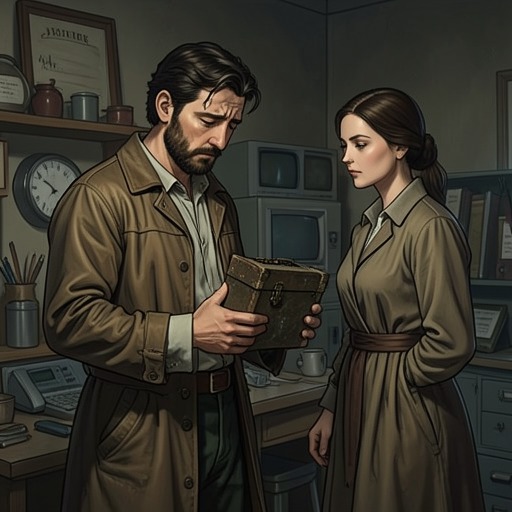
The Lighthouse (Alison Moore Edition)Futh is the novel’s central, inward-looking figure, a man attempting a walking holiday along the Rhine while his marriage to Angela is coming apart. His journey through unfamiliar places is also shadowed by an earlier departure: his mother left the family for New York, and the loss remains a measure of later loneliness. The narrative ties that history to present-day separations, showing how Futh’s practical attempts to travel, move house, and keep in touch coexist with hesitation and a persistent difficulty in finding direction.
Identity and Background
At the start of the journey, Futh is on a ferry in summer, holding the rail as he remembers having travelled abroad with his father when he was twelve. The earlier trip returns through small, incomplete details: his father took him to the ship’s cinema, and Futh remembers the popcorn more clearly than the film. His father mentioned that Futh’s mother had sold popcorn. Because she had already been gone for almost a year, the remark touched a subject that was usually left unspoken. When it was raised, it could also be spoiled by the way his father spoke of her, leaving Futh caught between wanting to hear about his mother and wishing the subject had not been brought up.
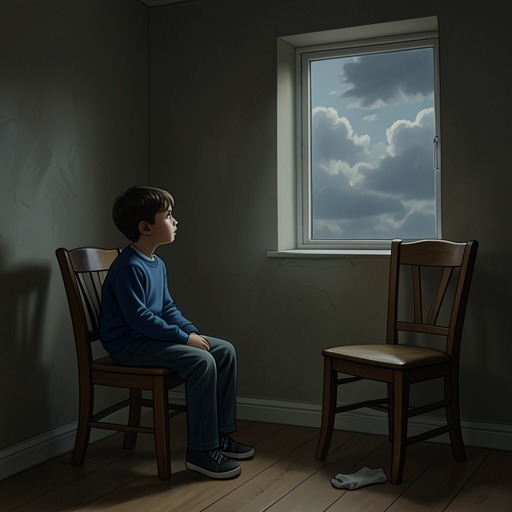
The absence did not come with a way to follow her. His mother said she was going home, meaning New York, but after she left Futh discovered that she had not provided an address. He searched the kitchen pin board and found only the beginning of a shopping list, too indistinct to help him. He then looked for pictures of New York in the library, finding images of the city’s high buildings and lights reflected in the river. The episode establishes a pattern in Futh’s life: a departure becomes a lasting absence, while the information that might make contact possible is missing.
Futh’s present circumstances repeat that sense of distance in a different form. He is separated from Angela and imagines her sorting through his possessions while he is away. His distress connects the threatened loss of this marriage with his earlier experience of his mother leaving; the two are not identical, but the memory of abandonment gives the current separation an older emotional weight. On the ferry, home recedes behind him as he travels toward a week of walking, and the journey gives physical form to the distance he is trying to manage.
Marriage and Separation
Angela’s decision to separate takes Futh by surprise. In retrospect, however, he recalls her eye-rolling and sighs and recognizes that he had seen signs of her dissatisfaction without understanding their significance. The belated recognition is characteristic of his account of the marriage: he can identify the signals afterward, but not necessarily respond to them while they are unfolding.
The couple’s separation also concerns the pregnancy they had lost. When Futh’s father and Gloria ask what will happen about the baby, Futh explains that they have lost it. He reflects that the phrase can sound as though someone is responsible, even though he uses it to describe their loss. This conversation brings the private end of the pregnancy into the family’s response to the separation, and it shows Futh struggling with the implications of the words available to him.
Although the agreement was that Futh would move out, he did nothing for months. Angela eventually found him a flat, packed his belongings, and arranged for a removal firm to take them away. His departure from the shared home is therefore managed largely by Angela, even as Futh is the person who must leave. On the ferry, he imagines her deciding what to keep and what to discard, extending the scene of separation into his thoughts about the objects that represent their shared life.
Family and Social Ties
Futh’s relationship with his father is marked by remembered closeness as well as emotional unease. The childhood ferry holiday is a rare, concrete recollection of time spent travelling together, but it is also the setting in which his mother is recalled through his father’s version of her. Later, while showering on the current crossing, Futh thinks about his father and women in a hotel bathroom, then looks at his reflection and does not see his father in himself. The comparison suggests that the past remains active in Futh’s self-understanding, even when he resists identifying himself with his father.
His postcard-writing reveals how he maintains family connections through modest, conventional gestures. On a warm morning, he posts cards written the previous evening and expects to see his father, Aunt Frieda, and Angela before the cards reach them. He has included Gloria on the card to his father but has not written to Kenny. Although his father has moved in with Gloria, Futh still sees little of Kenny, who generally stays away from the family gatherings. Kenny has his own family and children, while Futh has none; the contrast makes Futh’s position in this family circle more conspicuous without turning the postcard into a simple account of reconciliation.
The Walking Journey and Disorientation
The Rhine holiday offers Futh a temporary structure: walking during the day, staying in hotels, and imagining a return refreshed by fresh air, sunshine, food, and sleep. In practice, the trip is physically taxing. By one morning he is walking in sandals without socks, and later he realizes that he is lost. Standing in a field with his map, he cannot locate the features it depicts. He tries a compass carried in his rucksack but finds that it is broken; the sun, high overhead, offers no useful guidance.
Futh considers retracing his route and wonders where he may have missed a turn, including whether he had been lost in thought. Instead, he decides to continue until he finds someone able to tell him where he is. He walks for more than an hour without seeing anyone and eventually reaches a small village. The episode makes the holiday’s promise of purposeful movement precarious: Futh can keep walking, but movement alone does not tell him which way to go.
His stay in Hellhaus also sits within a journey that repeatedly considers detours. He drives there after leaving Utrecht, and the hotel is to be both his first and final stop. Later, stiff and hungry at dawn, he considers abandoning the final day of walking to visit Utrecht and Carl, who had invited him to stay. He thinks through the practical obstacles—retrieving his car from Hellhaus, finding a bus, carrying his suitcase, and travelling without the address—then goes downstairs to seek a timetable. With no one available and no timetable to find, he walks outside to look for a bus stop. The plan remains a possibility rather than a completed visit, another instance in which an intended connection is complicated by missing information and uncertain travel.
Anxiety and Narrative Significance
Futh’s responses to ordinary choices often reveal how much reassurance he seeks. After encountering Ester in the hotel bar, he leaves for the lift but hesitates before pressing the button for his room. He considers going back to talk to her about supper and wonders whether he should ask for after-sun lotion. His thoughts turn toward the possibility of her coming to his room and soothing his sunburn, but he does not act on the wish; he presses the button that takes him upstairs. The pause is small, yet it concentrates a recurring tension between imagining contact and retreating from it.
Futh’s journey is shaped by this gap between intention and action. He wants to hear his mother remembered, yet his father’s remarks can make the subject painful; he recognizes the signs of Angela’s discontent only after she has asked to separate; he contemplates visiting Carl but cannot readily convert the invitation into a route. A broken compass gives that uncertainty a literal counterpart, while the ferry and the road carry him away from home without resolving what home means to him. Rather than presenting travel as a cure, the narrative uses Futh’s movement through unfamiliar places to expose how strongly earlier abandonment and present isolation continue to govern his sense of direction.