Futh and Angela’s separation
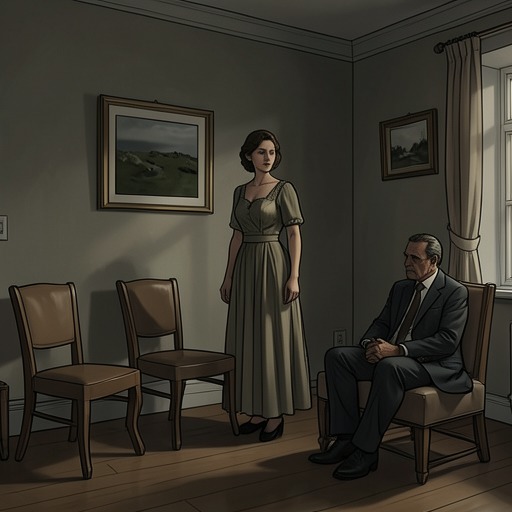
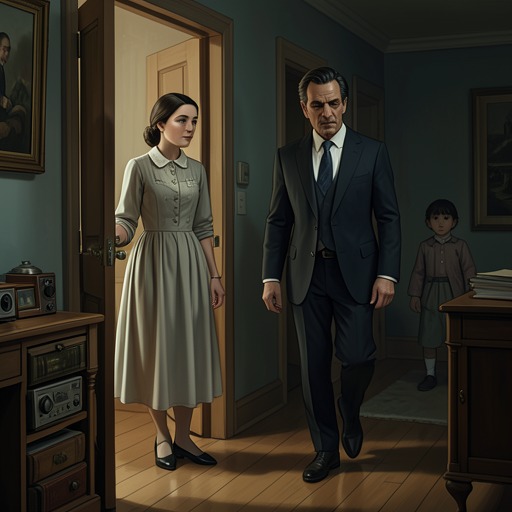
The Lighthouse (Alison Moore Edition)Futh and Angela’s separation is both the immediate circumstance of Futh’s journey to Germany and the private rupture that keeps drawing his thoughts back home. Angela has asked to separate after the loss of their baby, and the marriage has become a past he must somehow carry into a new flat. Although he can name some of the small failures that accumulated between them, he is slow to act on the separation and cannot make the prospect of starting again feel like freedom.
The Separation and Its Background
At the beginning of the novel, Futh is a middle-aged man who has recently separated from Angela. He travels on a North Sea ferry to Germany for a restorative walking holiday, but the change of country does not give him a clean break from the marriage. In the shower, the scent of apple-scented lather prompts him to wonder what Angela is doing: whether she is asleep, just home from a night out, or with another man. He has not been with anyone else for more than fifteen years. The imagined possibilities make the separation tangible as a change in their ordinary Friday evenings, once spent together watching television, and as an uncertain future from which he is now excluded.
Futh’s account of how the marriage failed is specific but belated. He recalls that Angela was irritated by his awkwardness around people, especially women, and that she often thought him insufficiently attentive to other people’s perspectives. He recognizes himself as a bad listener, liable to miss simple instructions, late even when meeting Angela, and reluctant to apologize when he was plainly at fault. He understands these as small habits that accumulated into something larger. His imagined alternative, in which he says and does the right things and Angela stays, is explicitly a reverie: by the time he can rehearse a different response, the separation has already happened.
The Decision and the Pregnancy Loss
Angela, not long after Kenny’s visit and in the run-up to Christmas, tells Futh that she thinks they should separate. He is astonished at the time. Only later does he reconsider the signs he had already seen, remembering her eye-rolling and sighing and wondering whether he ought to have anticipated her decision. His retrospective recognition does not undo the surprise; it shows the distance between noticing a gesture and understanding what it means.
The separation is entangled with the loss of their baby. When Futh’s father and Gloria ask what will happen to the baby, Futh tells them that they have lost it. He reflects on the implication of the word lost, as if it might suggest responsibility, and imagines the loss by comparison with a ship unable to withstand disaster. That comparison gives his speech the shape of an explanation without resolving the grief or assigning a clear cause. The childless marriage he discloses to Carl’s mother during the walking holiday also makes the absence part of how he must describe himself to strangers: he has separated from his wife, and they had no children.
Delay, Departure, and the New Flat
Although it is agreed that Futh will move out, he does nothing about it for months. Angela eventually finds him a flat, packs his belongings, and arranges for a removal firm to take them away. The practical work of ending the shared household therefore falls largely to her, while Futh remains suspended between the decision and its consequences. His immobility contrasts with Angela’s concrete arrangements: she identifies the place, gathers the possessions, and sets the move in motion.
The flat exists in his thoughts during the walk as an approaching destination, but not as a home he has chosen with confidence. He pictures its shared front door, concrete hallway, tenant names on slips beneath buzzers and pigeonholes, and an unknown predecessor’s stained, sagging mattress. The furnishings offer only a bare beginning: carpets and curtains but no lightshades, a sofa without cushions, a kettle and microwave but no washing machine, and a television without a phone. His boxes, labelled by Angela, bring the ended marriage into that unfamiliar space. He wishes he could arrive to find only neutral walls and basic furniture, or leave the belongings behind altogether; at moments, he would rather not return.
What He Carries Away
Futh’s wish to be free of the marriage is not the same as having escaped it. He remains aware of the silver lighthouse in his pocket, whose little weight presses against his leg, and imagines that it could travel in his suitcase instead. The object is a concrete reminder of what he carries, even when he wants to be lighter. His thoughts extend from the unwanted boxes to an older fantasy: as a child he imagined running away, changing his name and appearance, and becoming impossible to find. Now he considers staying in Germany or going to New York, and wonders who would first notice if he disappeared. These are possibilities he entertains, not actions he takes; the planned return is still ahead.
The prospect of the flat also involves losses that are smaller but intimate. Futh misses his stick insects and the smell of their vivarium. Angela will keep them because pets are not allowed in his new accommodation, although she has never liked them and he worries that she will forget to feed them. His longing links the separation to the ordinary arrangements of a shared life: even care for the insects must now be entrusted to the person from whom he is separating.
An Unsettled Aftermath
As the circular walk nears its end, Futh knows that he will return to Hellhaus before going back to England, but he corrects the idea of going home: he will be going to his new flat. The distinction captures the unsettled status of the separation. The marriage is over in practical terms, yet its possessions, habits, losses, and imagined alternatives continue to occupy him. His return is not a reunion with Angela, nor does the evidence establish a new life already begun; it is an approach toward rooms and belongings that he has not yet made his own.
The separation gives the walking narrative its counter-direction. Futh moves through Germany, following a route that eventually brings him back to its starting point, while his thoughts repeatedly turn toward the household he has left and the flat that awaits him. That circular movement does not resolve the marriage. Instead, it keeps the distance between physical departure and emotional release in view: he can walk away from home for a week, but he cannot leave the shared past behind simply by moving his belongings.