Futh’s persistent anxiety
The Lighthouse (Alison Moore Edition)Futh’s persistent anxiety is expressed less as a single crisis than as a habit of anticipating entrapment. He imagines disasters before they happen, checks rooms for escape routes, and can read darkness or a high window as a problem of survival. The pattern recurs in sharply different settings, from an aircraft taking off to a third-floor bedroom and a forest path beside the Rhine. Its force lies in the gap between imagined catastrophe and what actually occurs: the flight is uneventful, and the forest eventually opens onto streetlit streets, but the possibility of being unable to escape shapes how Futh experiences both.
Anticipating danger
Futh describes having had panic attacks on aeroplanes. Recalling a flight to New York, he remembers being unable to stop imagining a fire or a terrorist aboard while the plane was taking off, and the prospect of being unable to get out. Nothing happened; the flight was fine, and he used a relaxation technique. The episode shows both sides of his anxiety: his mind runs ahead to an emergency, while a learned method helps him endure the real situation. The uneventful outcome does not make the imagined danger trivial to him; the fear is concentrated in the possibility of being trapped before there is any evidence of disaster.
The conversation with Carl gives this fear a social frame without making their experiences identical. Carl says he once had such an uneasy feeling on a plane that he got off, and that he avoids both the tube and the Channel Tunnel because he dislikes being underground. Futh, by contrast, recounts staying on the plane and managing his panic through relaxation. Their exchange identifies a shared unease around enclosed travel, but also makes clear that the response can differ: avoidance for Carl, an effort to control fear while remaining aboard for Futh.
Escape as a habit
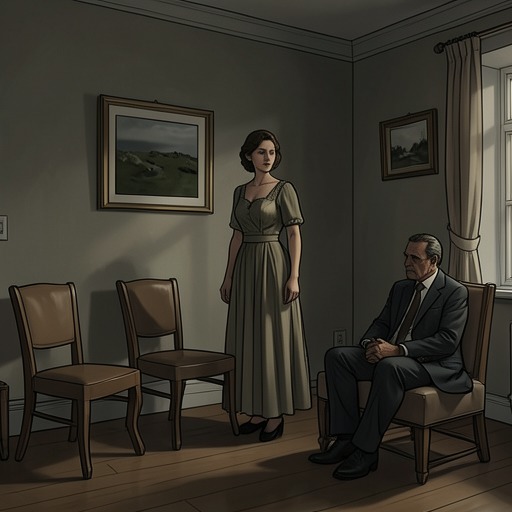
Futh’s need to know how he could get out extends beyond travel. When staying in a room, he routinely works out an escape route and imagines emergencies in which fire or a psychopath blocks the exit. He traces the habit to his twenties, when he lived in an attic flat. Concerned about fires in the stairwell and burglars, Aunt Frieda gave him a rope ladder. The ladder is a concrete means of escape, but the habit persists as mental rehearsal: Futh wants to know in advance that an alternative way out exists.
In another room, that rehearsal becomes an inspection of the window and the space below it. After supper, he opens the window and looks in the dark for a roof to climb onto, a pipe to hold, or a soft place to land. Instead, there is pavement far below. He wonders whether a jump from that height could be made without breaking anything. A moth flies in beneath the window as he is considering the possible route; the scene places an ordinary intrusion alongside an unusually stark calculation of height and bodily risk. The room is not shown to contain an actual emergency. What unsettles Futh is the need to test whether escape would be possible if one arose.
The room he did not check
On a later morning, Futh realizes that he cannot remember looking out of his room’s window the previous day or checking for an escape route. The omission brings relief because the room is on the third floor, with nothing outside to climb onto and nothing that could break a fall. Had he noticed this, he thinks, he would have spent half the night worrying and the other half having bad dreams. His anxiety therefore depends not only on what he sees but on what he has or has not yet considered: failing to inspect the window briefly spares him the usual cycle of imagining an impossible exit.
The relief is carefully qualified. Futh does not say that the room has become safe; rather, he is glad he did not discover its lack of an escape route earlier. The distinction captures the persistence of the habit. Safety is measured through advance knowledge and imagined alternatives, while an unchecked danger can remain temporarily outside his thoughts. His fear operates in anticipation, but the anticipated knowledge itself can become a source of distress.
Fear in the forest
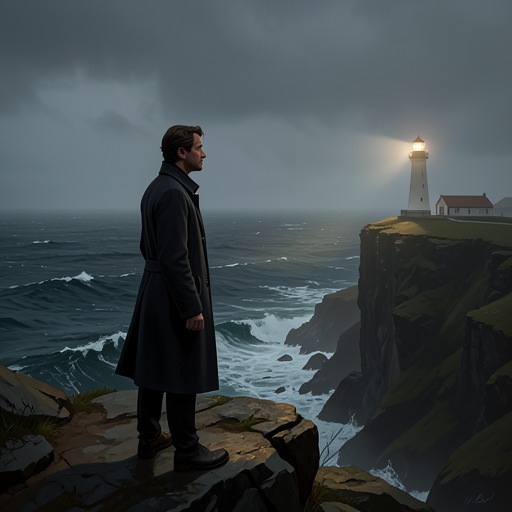
During his walk near the Rhine, the same concern takes a more immediate form. As afternoon darkens beneath the forest canopy, Futh’s feet hurt and his plasters have come away, but he keeps going because he doubts he could put his boots back on if he removed them. With the light fading and the viewpoints disappearing, the path seems to lead deeper into the trees. He begins to feel that he may never find his way out, and imagines the trees shifting and spreading around him to enclose him. Unable to see clearly where he is treading, he considers turning back and recalls an account of deep-sea divers who confuse which way is up, believing themselves to be surfacing even as they descend.
This episode joins physical exhaustion to the fear of losing orientation and becoming trapped. The darkness makes it difficult for Futh to tell what lies underfoot; the comparison with divers gives the disorientation a precise shape, a mistaken sense of direction that can carry someone farther from safety. Yet he does not turn back. He continues until the trees thin and he emerges into twilight, where streetlights guide him back toward civilization. He has passed the midpoint of his circular walk and has more miles behind him than ahead; he expects to return to Hellhaus by the end of the week. The episode does not remove his fear, but it ends with movement rather than enclosure: the imagined forest prison gives way to a route onward, marked by lights and a known destination.