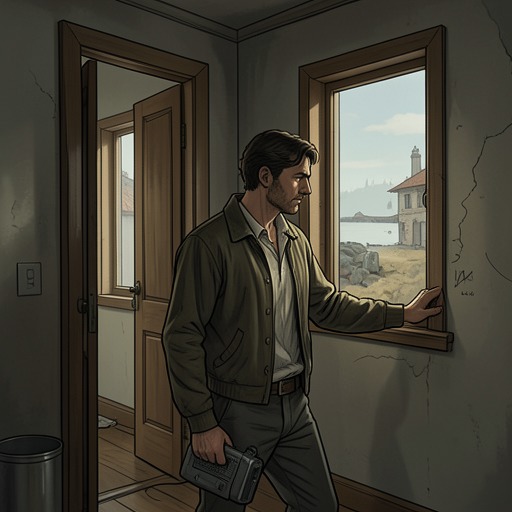
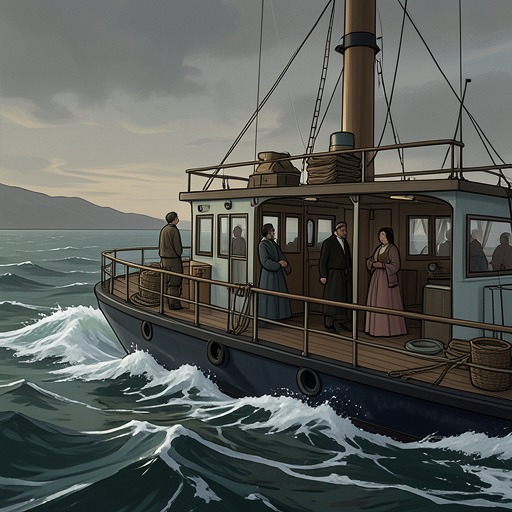
Futh’s week-long Rhine walk
The Lighthouse (Alison Moore Edition)Futh’s week-long Rhine walk is both a demanding circular journey through Germany and the frame for a return to the losses that continue to shape him. He sets out after a difficult first night at the Hellhaus Hotel, walking toward a return he imagines as sanctuary while carrying an unresolved omission from his past.
Route and Circumstances
Futh is a middle-aged man, recently separated, who has come to Germany for a restorative walking holiday. After spending his first night at the small, family-run Hellhaus Hotel, he puts the previous evening’s encounter with its hostile barman behind him and begins his week-long circuit along the Rhine. He plans to walk at least fifteen miles a day, almost a hundred miles altogether, despite admitting that he has not walked much lately.
The walk is bookended by the Hellhaus Hotel. Before setting out, Futh makes his way out of Utrecht around noon and drives toward Hellhaus; after the circuit, he returns to the hotel, where he will spend both his first and last nights. This outward journey, week on foot, and return give the holiday a clear shape, even as the experiences and memories within it resist any simple resolution.
Memories Carried on the Walk
As he travels, Futh turns over several histories: his childhood, a complicated friendship with the son of a lonely neighbour, his parents’ broken marriage, and the failure of his own marriage. These recollections are not incidental diversions from the route. The story he repeatedly returns to is his mother’s abandonment of him as a boy, an absence that left a void he has sought to fill through substitute attachments.
The journey also recalls an earlier trip to Germany with his newly single father. Futh remains conscious of something he neglected to do on that visit, and the omission threatens to have devastating repercussions during this trip. The specific omission is not identified here, but its presence makes the holiday more than an escape: the landscape and forward motion do not prevent the past from bearing on what may happen next.
Return and Narrative Significance
At the end of the week, Futh completes the circular walk and comes back to the Hellhaus Hotel sunburnt and blistered. He regards the hotel as a sanctuary, but his return is charged with dramatic irony: events have been unfolding there while he was away, and he does not know about them. The physical circuit closes without granting him knowledge of what has changed in his absence.
The walk therefore places bodily exertion beside emotional recurrence. Futh covers nearly a hundred miles, yet his thoughts keep circling back to abandonment, failed relationships, and an earlier act left undone. Its route promises departure and return; its deeper movement is a repeated encounter with unresolved history, ending not in secure refuge but in the gap between the sanctuary Futh expects and the events he has yet to discover.