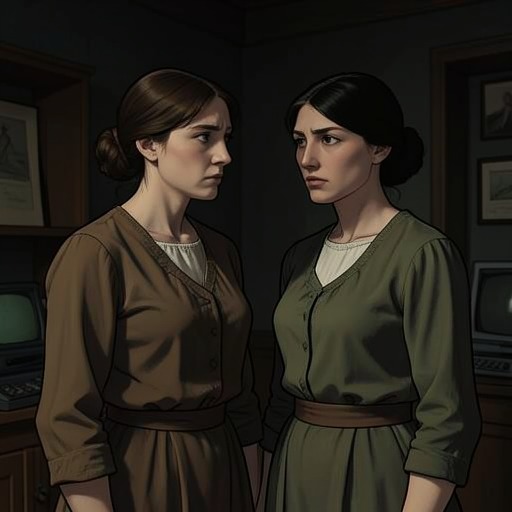
Ida
The Lighthouse (Alison Moore Edition)Ida is the mother of Bernard and Conrad, and her relationship with Ester moves from early intimacy to a strained, increasingly distant connection. She welcomes Ester into the family while Ester is engaged to Conrad, but later sees her marry Bernard, Conrad’s brother. Ida’s kitchen initially gives Ester a sense of belonging; after the marriage, that apparent welcome coexists with pointed reminders of Bernard’s attachment to another woman and expectations that Ester bear children.
Identity and Early Welcome
Ida accepts Ester into the family as soon as Conrad brings her home, calling her daughter-in-law well before the engagement. During Ester’s visits, the two women spend much of their time together in Ida’s kitchen, helping with food. The family joke that Ida sees more of Ester than Conrad does captures how close their daily companionship appears to be. Ester is not an accomplished cook, but she likes assisting Ida and talking as they work.
The kitchen also connects Ida’s home to Ester’s childhood memories. Cooking there recalls Lotte, the au pair who cared for Ester while her mother travelled for work. Ester remembers being given small tasks, such as peeling potatoes and greasing baking trays. The association helps explain why time in Ida’s kitchen matters to her: it offers not just a family role, but a familiar form of companionship built around shared work.
Confidences and the Broken Engagement
Their conversations include disclosures about earlier relationships and pregnancy. Ida tells Ester about a rebellious boyfriend she dated before marrying the father of her sons, and about how frightened she was to discover she was pregnant with Bernard before she was married. Ester, in turn, tells Ida about a relationship with a married man before Conrad and an earlier pregnancy that she did not continue. When Ester worries aloud about what she has confessed, Ida answers with understanding, saying that Ester was young. Their exchange establishes a private trust that makes Ida’s later criticism more consequential.
Before Bernard’s visit ends, Ester begins a relationship with him and breaks off her engagement to Conrad. When Bernard returns to see her at Ida’s house, they meet while the rest of the family is away. Afterward, Ester encounters Conrad coming upstairs as Bernard emerges from the bathroom. Conrad looks at them but says nothing and goes into his room; his silence is unbearable to Ester. On a later visit, she does not enter the house. Ida opens the door, calls for Bernard, and then silently faces Ester until Bernard appears and takes her away. Ida does not voice the accusations Ester imagines she might make. The silence leaves the breach visible without turning it into a confrontation.
Wedding Warning and Uneasy Visits
On the day Ester marries Bernard, Ida finds her alone in the register-office toilets. She adjusts Ester’s hair ornaments and criticizes the charm bracelet she had given her: the bracelet began as Ida’s first Christmas present to Ester, and later gifts included a love-heart given on Ester’s engagement to Conrad. Ida tells her that Bernard loves someone else. The warning places a painful doubt at the centre of the wedding day, linking a series of affectionate family gifts to Ida’s insistence that Ester is not Bernard’s first choice.
After the wedding, Bernard visits Ida once a month. Ester initially goes with him, grateful to be invited back into the home but unable to forget Ida’s warning. On their first visit as a married couple, Ida is outwardly hospitable: she displays Ester’s flowers in her best vase, makes coffee, brings breakfast to the couple in bed, supplies a magazine while lunch is prepared, and refuses Ester’s offers to help. That care does not restore their former ease. Ester takes gin in her handbag and drinks during stops for petrol and visits to the bathroom, a private response to the strain of the visits.
Conrad still lives at home, and Ester hopes to see him, but he avoids the visits. Once, she asks Bernard in the car whether he expects his brother to be there. Bernard initially gives no answer; later he challenges her interest in Conrad and asks whether she has changed her mind about being with him. Ester says she has not, though she sometimes wonders whether she chose wrongly. She does not see Conrad, does not ask Bernard about him again, and Bernard does not raise the subject. Ida’s house thus holds an absence that neither brother nor Ester addresses openly.
Children, Comparison, and Estrangement
Ida repeatedly raises the subject of grandchildren. Over coffee, she asks when she can expect them. Ester says that they might not have children, although she believes she has already made clear that she does not especially want them. Ida replies that Bernard wants children and brings up women from his past: Andrea, who has a baby boy, and Susanne, who has asked after him. At breakfast, Ida mentions that Therese has three children, including twin boys. Her comparisons place Ester’s childlessness alongside other women’s family lives and keep the question of Bernard’s former attachments in view.
Ester later tells Bernard that, on their wedding day, Ida said there was one girl he had ever loved. Bernard acknowledges that this may be true. The exchange confirms the significance of Ida’s warning without identifying the woman, and leaves Ester facing a doubt that her marriage has not resolved.
On Ester’s last visit, Ida invites a young woman, Liese, to dinner. Liese is a nursery nurse who is fond of children; Ida notes that she is twenty and adds that she herself was already pregnant with Bernard at that age. The introduction sharpens the pressure Ester has encountered over grandchildren by placing a young, child-oriented woman at the family table. Ester and Bernard argue on the drive back to Hellhaus, as they do after visits to Ida. Eventually Ester suggests that Bernard visit his mother alone. At first she makes excuses; later she gives no reason, and Bernard does not ask. The visits continue, but Ida and Ester’s shared domestic closeness has given way to separation.