The breaking of the silver perfume vial
The Lighthouse (Alison Moore Edition)The breaking of the silver perfume vial is a childhood accident that turns an inherited keepsake into a lasting mark on Futh’s body and memory. On a hot family outing to the cliffs in Cornwall, England, the glass breaks in his palm just after his mother has insulted his father. Its perfume runs into his wound and over his boots; for years afterwards, Futh raises his scarred hand to his nose in search of the scent of violets. The scene joins a physical injury to the abrupt exposure of tension within his parents’ marriage.
Background and the Heirloom
The accident takes place during the summer between primary and secondary school, at the start of the holidays and in the midst of a heatwave. Futh’s family is staying in a caravan, where closed windows and drawn blinds keep the interior relatively cool through the midday heat. After lunch and a siesta, Futh can escape into the bright day. The cliffs offer a breeze, but it is still possible to burn there unexpectedly.
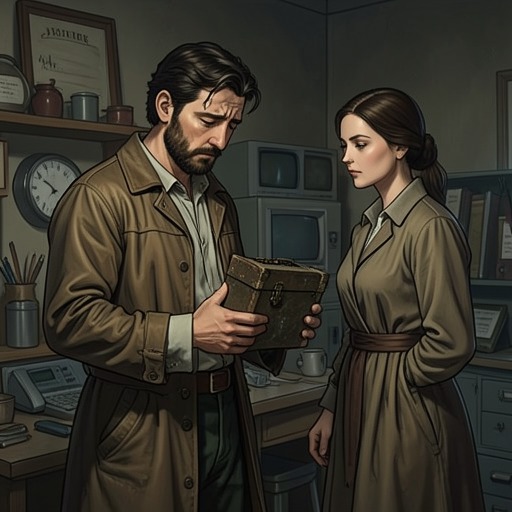
The silver lighthouse perfume case has already passed through several hands. It is an antique heirloom acquired from Futh’s father’s German grandmother. When Futh’s father receives it from Futh’s grandfather, the older man asks him to return it to Ernst, his brother. Instead, outside the house, Futh’s father gives it to Futh’s mother. She admires the silver case and the glass vial, approves of the scent, and applies perfume to her wrists and throat. The car fills with the smell of violets. The object thus carries both a family obligation and a familiar, intimate scent before Futh takes it from his mother’s handbag on the cliffs.
The Cliffside Incident
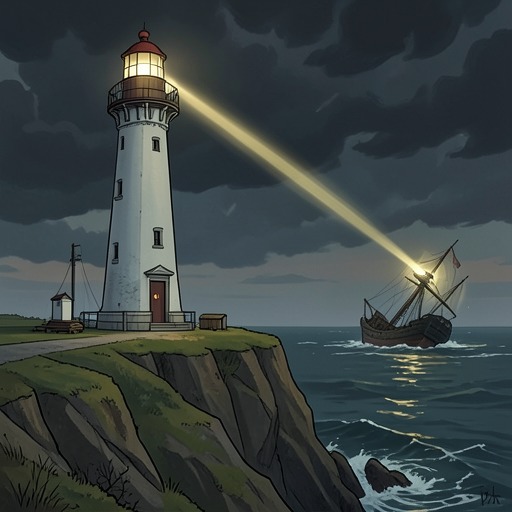
Futh’s parents have eaten a picnic on the grass. His father has opened a bottle of Pomagne, which no one else wants; there are oranges, but only his mother eats one. She lies back with her eyes closed, her port-wine stain visible beneath the strap of her bikini top. His father talks about the lighthouse and the shipwrecks that continued after it was built, despite the warnings it gave to ships. He describes its flashing light and the foghorn. Looking at the lighthouse, Futh wonders how wreckage can persist despite such precautions.
While his father continues speaking, Futh wanders over the dry grass, looking for shade or a breeze and wanting to keep moving. He holds the silver case in one hand and removes the glass vial with the other. He wants to smell the perfume but is not allowed to take out its stopper. When he returns to his parents, his mother’s eyes are still closed and her face is turned towards the sun. Then she tells his father how much he bores her. After a pause, his father quietly packs away the picnic and closes the cool-box. Futh watches gulls fighting over the leftovers; when he looks down, the vial has broken in his palm.
Injury and Immediate Consequences
The broken glass cuts the fleshy pad beneath Futh’s thumb. Perfume pours onto the cut, stinging as it runs between his fingers and soaks his boots. The scent rises from him as the volatile contents escape into the air. The case and vial have shifted from objects Futh can handle and protect into the immediate cause of pain: the family heirloom is broken, and its contents cannot be kept or recovered.
The scene does not say that Futh deliberately breaks the vial. It presents the break as something he sees after turning his attention from the gulls to his hand. His father’s response to the insult is also quiet and practical: he packs the food without answering in the moment. In this sequence, the spoken humiliation, the pause, and the sudden injury stand beside one another, but the narrative does not claim that the accident is an intentional reaction to the argument.
Memory and Significance
The scar outlasts the accident. Years later, Futh notices the thin, pale mark on his palm while travelling, and the memory returns to the hot cliffs, the picnic, his parents, and the lighthouse. For a long time after the summer, he lifts his palm to his nose, searching for the smell of violets. A minor injury therefore becomes a physical route back to a particular family scene; scent connects the inherited object to Futh’s mother and to the day her words exposed the strain between his parents.
The lighthouse’s warnings give the remembered scene a further contrast: its light and foghorn are meant to alert people to danger, yet shipwrecks still occur. Futh’s childhood question about that contradiction echoes the episode’s own uneasy juxtaposition of precautions, family routine, hurtful speech, and an unforeseen break. The perfume cannot remain safely contained by its stopper or case, just as the family moment cannot be reduced to the ordinary picnic around it. In the later recollection, the scar and the vanished scent preserve what the accident made bodily and what the family did not resolve aloud.