The compass from Kenny’s room
The Lighthouse (Alison Moore Edition)The compass from Kenny’s room is a small object carried from Futh’s childhood into his adult travels. Offered to him by Gloria while he is looking through Kenny’s belongings, it later fails at the moment he most needs direction: lost on a hot walking route, Futh takes it from his rucksack and discovers that it is broken. The compass links an early scene of uncertain intimacy to the adult journey’s repeated frustration of movement and arrival.
Origin and Transfer
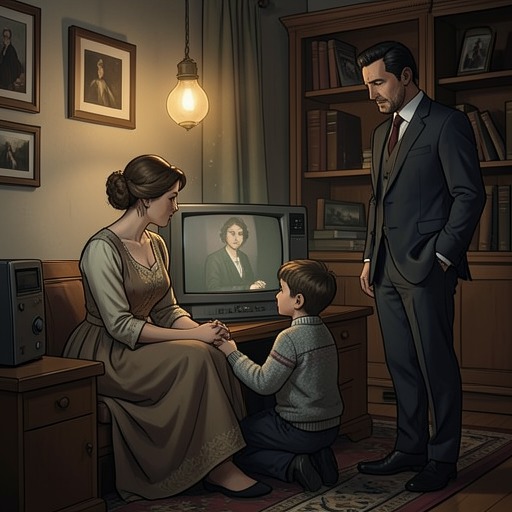
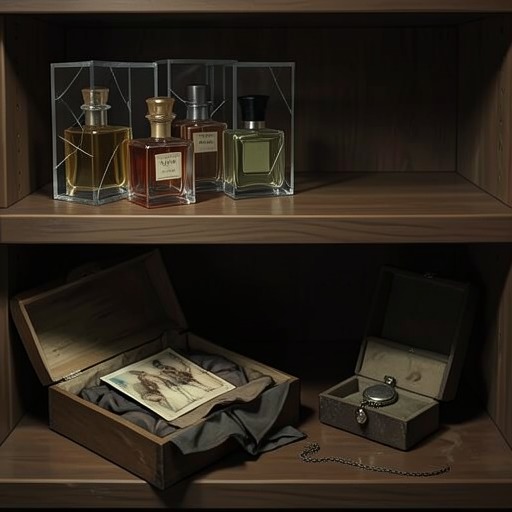
The compass enters Futh’s possession in Kenny’s bedroom. Gloria is sorting through Kenny’s things and offers Futh a jumper that is too small for Kenny; when Futh picks up the compass, she tells him he can have it if he wants. After Gloria leaves him to look through the belongings, he puts the compass in his back pocket and takes an old car-maintenance manual from the box.
The surrounding objects give the transfer a particular context. Futh is planning to learn to drive when he is old enough and imagines taking sandwiches and a blanket into the countryside or driving to Dover with his passport. The compass sits beside these early fantasies of independent travel, but the scene does not establish that it belonged to Kenny or explain its earlier history. Its importance comes from being one of the things Futh carries away from the room, then keeps into adulthood.
Failure on the Walking Route
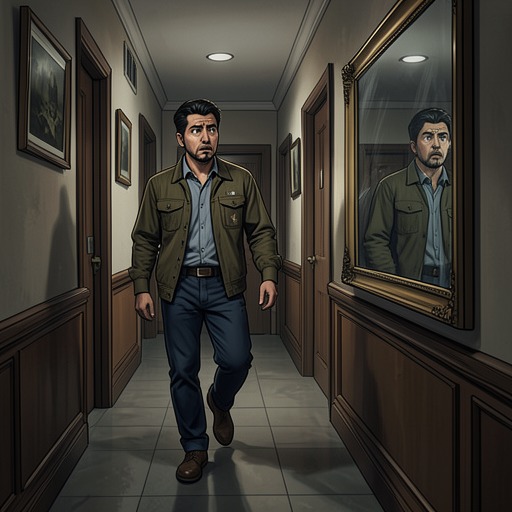
During his Rhine walk, Futh realizes in the early afternoon that he is lost. Standing in a field, he compares his map with the landscape, searching for features that should be visible but are not. He has no sense of direction, so he fishes the compass out of a side pocket of his rucksack. It gives him no useful bearing; he finally recognizes that it is broken.
Neither the high sun nor the map resolves the problem. Futh looks back along the trampled-grass path and considers retracing his steps, wondering where he may have missed a turning while lost in thought. Instead, he decides to continue until he finds someone who can tell him where he is. He walks for well over an hour without seeing anyone or finding shelter from the sun before reaching a small village. The compass’s failure is thus concrete rather than merely emblematic: it cannot perform its basic task when Futh is disoriented and exposed.
A Keepsake in a Wider Pattern of Blocked Movement
The broken compass belongs to a wider pattern in which Futh’s attempts to get somewhere are obstructed. Earlier, while driving toward Hellhaus, he realizes that he has missed his motorway turning; unable to turn around between junctions, he continues in the wrong direction. Later, after becoming lost on foot, he considers changing his plans to visit Carl in Utrecht. He searches for a bus timetable, waits at a stop for a bus that does not arrive, and eventually catches an evening bus to Hellhaus. These episodes are not caused by the compass, but they echo the same gap between a planned route and Futh’s uncertain progress.
On reaching Hellhaus, he finds his car where he left it but discovers a flat tyre. The spare in the boot is also flat—the tyre he had removed earlier—so he gives up the plan to go to Utrecht. The sequence makes the compass’s failure part of a larger material landscape of unreliable movement: routes are missed, transport does not come when expected, and a vehicle cannot take him onward. The compass remains a personal object from Futh’s past, but on the walk it also becomes an unusable tool, making his dependence on uncertain maps, other people, and chance newly visible.
Narrative Significance
The compass connects the boy who imagined driving away with the adult who struggles to orient himself. In Kenny’s room it is a portable possibility, accepted alongside an old manual and a fantasy of setting out; on the Rhine route it is exposed as broken. That reversal gives the object its force without making it the cause of every mishap: Futh’s missed motorway turn, delayed bus, and disabled car each arise separately, yet together they make the compass’s uselessness resonate beyond the field where he discovers it.
The object also shifts from being almost incidental among Kenny’s belongings to becoming conspicuous through failure. While it works—or before Futh tests it—it can remain a simple possession in his pocket or rucksack. Once he needs it and finds it broken, its material condition interrupts the expectation that carrying a compass means having a way forward. The novel’s treatment of it therefore joins memory to physical limitation: an item preserved from childhood accompanies Futh into adult travel, but it cannot guarantee orientation, escape, or arrival.