Ernst
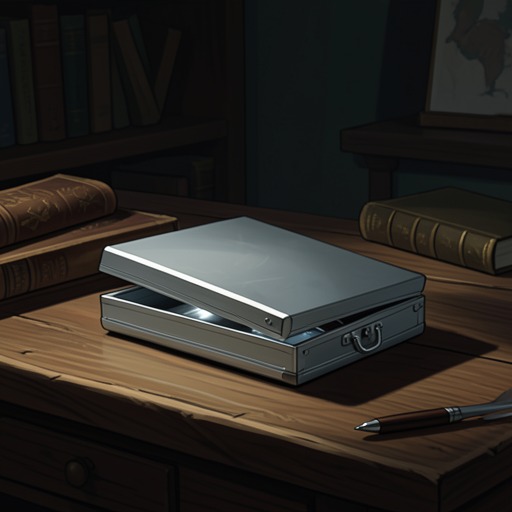
The Lighthouse (Alison Moore Edition)Ernst is Futh’s great-uncle, the brother of Futh’s grandfather, and the intended heir to the family’s silver lighthouse. When Futh and Futh’s father finally find him in Germany, the visit becomes both a reunion with a living relative and a dispute over an object whose ownership and history have gone unresolved across generations.
Identity and Inheritance
Ernst is introduced through the recollections surrounding Futh’s grandfather. During a visit to his widowed grandfather’s flat in London, Futh had watched him repeatedly take the small silver lighthouse out of his pyjama pocket and put it away again. The grandfather asked Futh’s father whether he had ever met Ernst, his brother, and wondered whether Ernst might still be alive. The object had belonged to the brothers’ mother; the grandfather had passed it to Futh’s father, and it eventually came into the possession of Futh’s mother.
That history gives Ernst’s later appearance a claim as well as a name. He maintains that the lighthouse should have been his to inherit, that it has value, and that it ought to be returned. His position is not presented simply as nostalgia: the object’s passage through the family has left a concrete question of inheritance unsettled.
The Visit in Germany
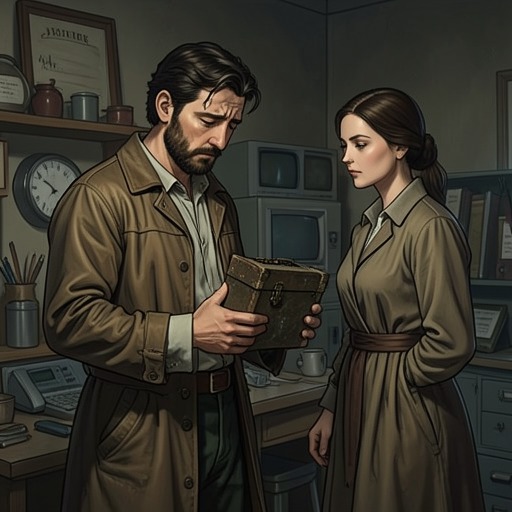
Futh and Futh’s father go to Ernst’s house without making contact beforehand. They do not know whether he is still alive, whether he remains in his parents’ house, or whether the house still stands. Their hotel is close enough for a day trip, so they go without expecting much. Instead, they arrive at lunchtime to find the house standing, well maintained, and evidently lived in. With the road busy and the only parking some way off, they walk to the door and wait after Futh’s father knocks. A net curtain twitches upstairs; the wait lasts long enough that they are nearly ready to leave when the door finally opens.
Futh expects a figure like the grandfather he remembers from childhood: ill, faded, and shrunken. Ernst is instead unexpectedly large and solid. He frowns at the visitors, but steps aside and invites them in. The contrast between Futh’s diminished memory of one brother and the physical presence of the other makes the family connection immediate but not familiar.
Conversation and the Lighthouse
Inside, Ernst serves Futh milk, pours coffee, and speaks with Futh’s father in German. Futh cannot follow most of their conversation. When Ernst tells him that he looks like his brother did at the same age, Futh does not understand; Ernst asks whether he speaks German, and, on learning that he does not, says he should learn. The exchange marks both a resemblance across generations and the language barrier that keeps Futh outside the older men’s discussion.
Futh’s father explains that his brother had told them to come and see Ernst. Ernst asks whether the grandfather sent anything for him. The answer is no. He then asks whether Futh’s father knows the circumstances of his own father’s leaving home, shifting the conversation from the missing inheritance to a larger piece of family history. The encounter raises that history without resolving it in the exchange.
When the silver lighthouse is discussed, Ernst objects that it should not have been given to Futh’s mother: it belonged to his mother and was his to inherit. A small domestic gesture accompanies the claim. An insect crawls across the table towards him; Ernst crushes it carefully with the back of his teaspoon, wipes the spoon on his trouser leg, and then uses it to stir his sugared coffee. The measured action sits beside his firm insistence that the object has value and ought to be returned.
Narrative Role and Limits
The visit makes Ernst the living point at which a family heirloom’s history becomes a present disagreement. The silver lighthouse connects the grandfather’s private handling of it, its transfer to Futh’s father, and Ernst’s claim of inheritance; its material continuity contrasts with the family’s uncertain knowledge of one another. Futh’s father says he and Futh’s mother are separated, that he has no address for her, and that the bottle has been broken. The encounter therefore offers no practical return of the object: Ernst states what he believes is owed, while the family circumstances and the damaged bottle leave that claim unresolved.