Ester and Bernard’s affair and marriage
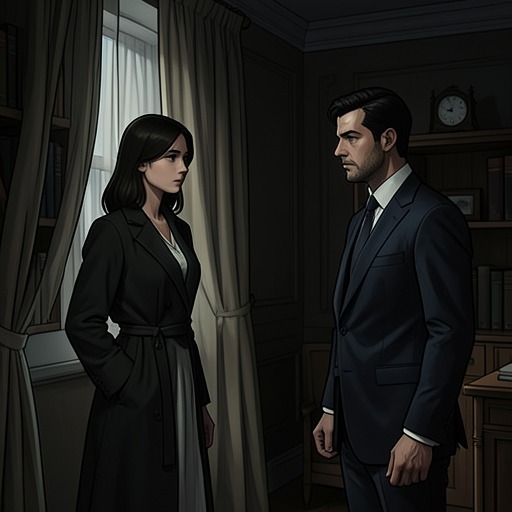
The Lighthouse (Alison Moore Edition)Ester and Bernard’s affair and marriage begin at the engagement party Ester is preparing with Bernard’s brother, Conrad, and end the engagement before it can become a marriage. Their relationship is marked from its start by unequal recollections, an exposed intimacy that Conrad meets with silence, and Bernard’s swift decision to marry Ester and take her far from her former life. Years later, the Hellhaus Hotel makes the consequences visible in another scene of private rooms, an abruptly departing Ester, and Bernard’s command that a guest leave.
The Engagement Party and First Recognition
On the day of her engagement party, Ester is in the kitchen with Ida, icing buns while Conrad gets drunk in the living room. She has taken off her high heels and is wearing Ida’s slippers; pink roses are expected for the party. When the doorbell rings, Ester wipes the icing sugar from her hands and goes to answer it, expecting a flower delivery.
The man outside is Bernard, Conrad’s older brother, whom Ester has never met. She recognizes him as soon as the door opens: she notices his eyes taking her in, his smiling mouth, and his voice identifying her as Ester. Bernard moves past her into the hallway to remove his coat and shoes, while she remains holding the open door with sunlight coming in. The encounter is presented as an immediate recognition between them, but not as a shared memory they later agree upon.
Ester believes the attraction happened for both of them at that same moment. Bernard later tells her that it happened for him only afterward, when he was looking at her calves between the hem of her dress and the ankle straps of her stilettos. The narrative gives the difference shape through Ester’s comparison to an emergency vehicle heard at different times: she remembers the instant of arrival, while Bernard places his awakening later. Their competing accounts leave the beginning of the affair unstable—not because the attraction is in doubt, but because they cannot agree on when it began.
The Affair and the Broken Engagement
Before Bernard’s visit ends, Ester has taken up with him and broken her engagement to Conrad. The affair soon becomes an intimate breach of the family household. On Bernard’s first return, he and Ester meet at Ida’s home while everyone else is out. Bernard no longer lives there and sleeps, when he visits, on a sofa bed in the living room. He suggests Conrad’s bedroom, but Ester refuses; Bernard is reluctant to use his parents’ bed, yet eventually they go there.
Afterward, while Bernard showers, Ester looks over the objects on Ida’s dressing table and admires a hairbrush inlaid with mother-of-pearl. The front door slams. Ester dresses quickly, takes her handbag, and waits uncertainly on the bedroom side of the door. When she opens it and reaches the top of the stairs, Bernard comes out of the bathroom with a towel around his waist and Conrad comes upstairs. Conrad sees Ester and Bernard together, then walks silently into his room. Ester says that this silence is unbearable. The affair is exposed, but the expected confrontation does not come; Conrad’s refusal to speak leaves the discovery more painful for Ester than an open scene might have been.
Ester meets Bernard at Ida’s house again, but this time she does not enter. Ida opens the door, turns to call for Bernard, and then looks silently at Ester until Bernard appears and takes her away. The account emphasizes what Ida does not say: she neither openly condemns Ester nor welcomes her. The household’s disapproval is conveyed through the pause and the look rather than a spoken accusation.
Marriage, Distance, and Reproach
The broken engagement remains a point of conflict even between Ester and Bernard. Bernard asks what kind of woman would do what Ester did; she reminds him that he did it too, and that Conrad was his brother. Bernard answers that he never liked Conrad, while pointing out that Conrad had been Ester’s fiancé. The exchange exposes their shared responsibility but not a shared understanding: Bernard invokes his dislike of his brother, whereas Ester insists on the obligation they both betrayed.
Bernard marries Ester quickly. Ester is sure he acts as if he fears she may change her mind, return to Conrad, or choose another man. She goes with Bernard to the small town where he lives. In her interpretation, the move keeps her far from his brother, her former boyfriends, and everyone else she knows; she sees the resulting loneliness as a means by which Bernard expects to secure her faithfulness. The marriage thus follows the affair not as a reconciliation with the family but as a removal from the people and places that could recall its beginnings.
A wedding present preserves a quieter trace of Bernard’s courtship. The perfume he gave Ester is held in a wooden case shaped like a lighthouse, with a glass vial marked Dralle and Veilchen and an engraved bird on the stopper. Years later, she finds it in the back of a dressing-table drawer, a perfume she has not worn for years, and smells the violets. Its lighthouse shape recalls the silver lighthouse in Futh’s suitcase at the hotel, while its place among Ester’s stored possessions makes the wedding gift part of a past she no longer actively wears.
The Marriage Replayed at the Hotel
The novel places the earlier affair beside a later encounter at the Hellhaus Hotel, where Ester and Bernard live as proprietors. Futh arrives carrying a suitcase, and Ester has been waiting for him through the afternoon and evening. She brings his supper upstairs, using her master key when he does not answer. She is reluctant to speak with him, annoyed that he is late and has not apologized, though she also feels obliged—and inclined—to feed him.
When Ester leaves Futh’s room, Bernard sees her hurrying toward the stairs. Moments later Futh appears in the doorway, partly concealed, with a bare shoulder and one foot on the hallway carpet, then withdraws and locks the door. The arrangement echoes the earlier discovery at Ida’s house: Bernard sees Ester leaving a man’s room, and the man is visible behind a closing door. The episode does not establish that Ester and Futh have had an affair; it presents a compromising appearance that Bernard witnesses, recalling the beginning of his own relationship with Ester.
The next morning, Futh notices a new bruise on Ester’s face beneath her makeup. Bernard refuses to answer his question about breakfast, then tells him, “You should go.” Futh cannot make sense of the instruction and eventually packs. The bruise and the abrupt expulsion place pressure around the marriage without narrating what happened between Bernard and Ester during the night. In this way, the hotel scene does not resolve the old affair so much as repeat its structure of witnessed intimacy, silence, and uncertainty, now within the business and home Ester shares with Bernard.