Combe Island as a refuge of solitude and security
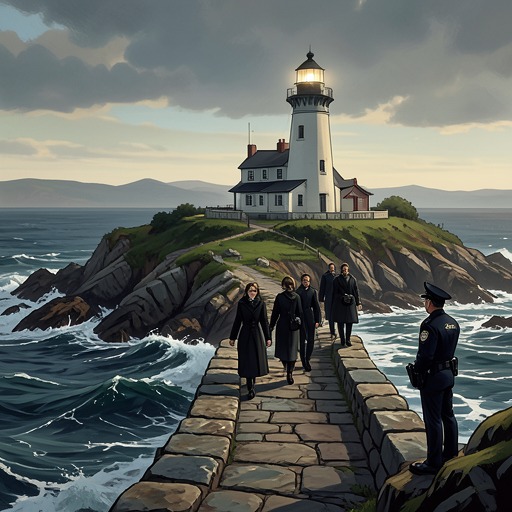
The LighthouseCombe Island as a refuge of solitude and security is both a practical sanctuary and a place whose meaning depends on the person who arrives there. Founded as a retreat for people under the strain of high responsibility, the island offers controlled access, quiet, and protection from unwanted attention. Mark Yelland experiences that seclusion as restorative freedom; for Nathan Oliver, returning to Combe brings both the hope of renewed creative life and the force of a difficult personal past.
Purpose and design
Combe Island’s modern purpose dates to 1930, when Henry Holcombe established a charitable trust and transferred the island and property to it. His plan was to provide rest and seclusion for people whose work placed substantial demands on them. The trust’s stated scope included responsibility in public service and in fields such as the armed forces, politics, science, industry, and the arts. Although the founding language referred to men, the accepted convention extended its meaning to women.
The island could accommodate no more than five visitors at a time, in Combe House or one of the stone cottages, according to their choice. Admission was selective: visitors generally came on the recommendation of a trustee or someone who had stayed there before. The small number of guests and the personal nature of referrals made retreat possible without turning the island into a public resort. Combe’s seclusion was designed as a service, not simply a consequence of its remoteness.
Security and controlled access
Solitude remained central to the trust’s purpose, but security had become increasingly important. Visitors could arrive without their protection officers and expect to be safe and undisturbed. A helicopter pad provided an arrival route from the air; by sea, the small harbour was the only possible landing place. Casual visitors were not allowed, mobile phones were forbidden, and the island maintained a very low profile. Its isolation therefore rested on both geography and rules governing who could enter and how visitors could be contacted.
The result was an unusual combination: the island offered privacy not by leaving visitors entirely unprotected, but by making their access difficult to intrude upon. For people accustomed to threats, surveillance, or constant professional demands, the absence of ordinary communication and unsolicited contact could itself be part of the refuge. Combe’s arrangements turned distance into a form of protection while preserving the quiet needed for reflection.
Mark Yelland’s retreat
Mark Yelland’s experience shows how completely the island could interrupt the pressures of life beyond it. On his third visit, he again requested Murrelet Cottage, on the south-east coast. Its position on a slight ridge gave it one of Combe’s finest views, while its relative isolation suited a visitor who did not want company. On his earlier stays, he had spoken to no one for the full two weeks. Food arrived according to written instructions left with empty canisters and thermos flasks, so that he could avoid the formal evening meal at Combe House as well as casual conversation.
For Yelland, the cottage’s stone-walled quiet offered a rare chance to examine his work, relationships, and life without the problems that normally demanded his attention. He could sleep with the door unlocked and the windows open, without a protection officer or vigilant police. The threats that defined his life elsewhere—hostile voices, threatening mail, and calls directed against him and his family—did not follow him into that retreat. At first he had wondered whether such complete solitude would be bearable; instead, he found that its introspection was liberating rather than painful. He returned to his professional life changed in ways he could not explain.
His arrangements also show that retreat did not mean abandoning every practical obligation. Home Office regulations required a Licence Holder or deputy Licence Holder to remain in the laboratory or be on call. Yelland left an experienced deputy in charge, who could handle the crises he expected to arise. Only an extreme emergency would bring a call to Murrelet Cottage. The protected interval therefore depended on a carefully arranged substitute: he could withdraw because someone reliable remained responsible for the work he left behind.
Oliver’s return and the meaning of home
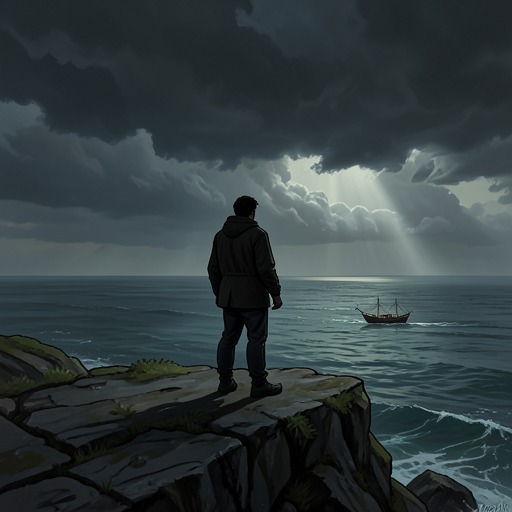
Nathan Oliver’s return gives Combe a different emotional charge. Seven years before the events described, stepping ashore from the launch had brought him an exhilaration he likened to discovering a long-sought territory. From Peregrine Cottage, looking toward the distant Cornish coast, he felt that returning had been right. He hoped that the island’s sea-girt peace might slow the effects of physical decline and restore his words. In this sense, Combe promised not only rest but the recovery of capacities he feared were failing.
Yet Oliver’s strongest attachment was to Atlantic Cottage, where he had been born and believed he would die. His desire was rooted in more than convenience or space: the sea’s recurring pulse connected him to a family past shaped by it. His grandfather had been a seaman who died at sea, and his father had been a Combe boatman. Oliver had lived with his father in Atlantic Cottage until the age of sixteen, enduring alternating drunken rages and maudlin affection before leaving to make his way as a writer. For years, Combe represented danger and the painful experiences he had tried to leave behind. His return thus complicates the idea of the island as a universal sanctuary: what offered Yelland release from present pressures also drew Oliver back toward the place where old wounds had taken shape.
Combe Island’s refuge is consequently neither mere landscape nor uncomplicated escape. Its rules and remoteness provide genuine solitude and security, but its cottages and coastline also hold personal histories that visitors bring with them. Yelland finds healing in distance from his professional life; Oliver seeks restoration in the very place bound to his early hardship. The island can protect its visitors from interruption, but it cannot make their pasts disappear. Its significance lies in that tension between shelter and return.