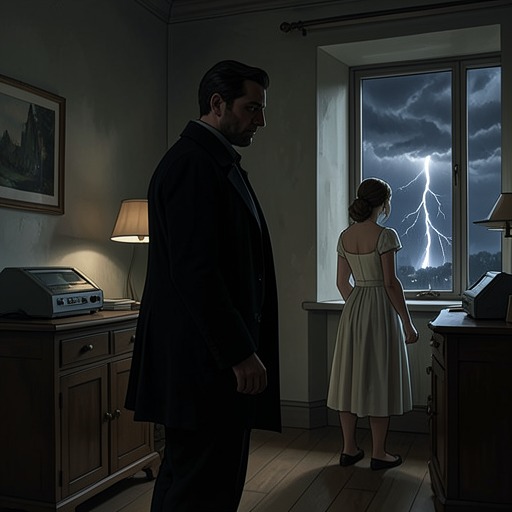
Emma Lavenham
The LighthouseEmma Lavenham is Adam Dalgliesh’s beloved and eventual fiancée, a partner whose relationship with him is both intensely intimate and repeatedly interrupted by his work. Their scarce time together brings concentrated happiness, but it also leaves a practical question unanswered: whether the love they share will become a marriage. Emma’s own words reveal that she wants that commitment even while she cannot explain why it matters so much; during the Combe Island crisis, her careful concern for Dalgliesh makes the cost of their separation newly visible.
Identity and Position
Emma’s life is divided between her own work and the brief periods she can spend with Dalgliesh. When he is called away to investigate a possible murder, he knows that their planned evening and the following day together must be abandoned. He expects Emma may already be travelling through London and reaches for her mobile, accustomed to urgent work intruding on their arrangements. Neither treats such disruption as exceptional: both have commitments that can take priority, and the unreliability of their time together makes it more precious.
The relationship is not built around constant contact. Emma respects the boundary around Dalgliesh’s work, and he recognizes that she does not complain when a case takes him away. That restraint is a form of consideration, but it leaves important things unsaid. At the beginning of the investigation, he has three words he wants to tell her but cannot bring himself to say over the phone. Even their private life, then, contains a limit imposed by distance and by the difficulty of speaking plainly at the moment it matters.
Love and Separation
Dalgliesh first told Emma he loved her in a letter rather than face to face. He later worries that the choice may have been cowardice, an attempt to avoid seeing rejection in her expression. There was no rejection. Their time together is described as intensely happy: sexual passion sits alongside planned visits to restaurants, theatres, galleries, and concerts, informal meals in Dalgliesh’s flat, and quiet conversations and silences. The details matter because their relationship is not merely a promise made in the gaps between cases; it has a rich, ordinary texture whenever they are together.
Yet the time they share remains intermittent. Their anticipated weekend is lost to the Combe Island summons, one more instance of Dalgliesh’s profession taking precedence. He tells himself that they have endured such disappointments before and that a missed meeting makes the next reunion more triumphant. Beneath that rationalization is a less settled fear: their concentrated weekends may not amount to living together, and Emma may consider the arrangement sufficient. His letter had been a proposal of marriage, he believes, and she had accepted, but marriage has not subsequently been discussed between them.
Emma’s Wish to Marry
Emma’s private conversation with Clara Beckwith gives the question a different emphasis. She does not doubt her love or commitment to Dalgliesh, nor does she think they could be happier than they are. Nevertheless, she says she wants to marry him and finds her own desire difficult to justify logically. A legal bond seems unnecessary when their commitment already feels complete, but its very inexplicability does not make the wish disappear.
Clara points out that Dalgliesh proposed in writing before they had slept together, a sequence that suggests the proposal was not simply a response to sexual intimacy. Emma still cannot be certain that he wants marriage now. She wonders whether he, too, has concluded that their pattern of living and working apart, then meeting briefly and happily, is enough. This uncertainty echoes his private fear, but neither has yet converted it into a direct conversation. The relationship’s tension is not a lack of affection; it is the possibility that each is waiting for the other to say what the other may already want.
Distance During the Crisis
During the investigation, Emma’s silence has a meaning Dalgliesh can only speculate about. At dawn on Combe Island, looking east, he longs to hear her voice but knows she will not call. He wonders whether she is protecting his concentration and acknowledging the separateness of their working lives. He also considers whether she understands that he needs to enter the unfamiliar territory of a case without being questioned about it. He does not call her either, as though an unspoken agreement keeps their personal relationship apart from the detective’s work.
That separation is complicated by Dalgliesh’s identity as a poet. He wonders whether Emma understands that his verse draws on the painful and tragic lives encountered through his profession, and whether she recognizes the contradiction in a man who guards his own privacy while his work requires him to enter the privacy of others. Emma is absent from the investigation, but these reflections show how closely she is bound to his inner life: even at a distance, he measures his solitude against the possibility of her understanding.
When Dalgliesh becomes ill, Kate Miskin phones Emma on his behalf. Emma recognizes almost immediately that the call concerns him, and her confident voice changes as soon as Kate confirms it. She asks how ill he is and whether the situation is serious. On learning what little Kate can tell her, Emma acknowledges that Dalgliesh was already tired when he took the case. She knows she cannot come to him or speak with him directly, and does not want him burdened by worry about her feelings. Instead, she asks Kate to pass on her love and to tell her the truth, however bad it may be. Her restraint does not diminish her fear; it gives that fear a practical form, a request for honest news and a message carried across the barrier.
Change and Narrative Significance
The book’s eventual decision by Dalgliesh and Emma to marry answers the uncertainty that has shadowed these scenes. It gives a definite future to a relationship that has already been emotionally secure but vulnerable to distance, interrupted plans, and mutual hesitation. Emma’s wish for a legal commitment is therefore not presented as evidence that love is lacking. Rather, it identifies a difference between being devoted during rare, intense reunions and deliberately making a shared life beyond them.
Emma’s role also clarifies what Dalgliesh’s professional self cannot resolve. He can accept a missed weekend as part of duty, and he can analyze his fear of binding or losing the woman he loves, but neither reflection substitutes for speaking to her. Emma, meanwhile, is neither simply waiting for him nor demanding that he abandon his work: she articulates her own desire to marry, respects the limits imposed by the case, and insists on receiving the truth when he is in danger. Their eventual commitment gives those parallel forms of restraint and longing a shared direction.