Francis Benton-Smith
The LighthouseFrancis Benton-Smith enters the investigation as a cautious new sergeant still uncertain of his place among colleagues and within his own mixed-race identity. His reserve conceals a capable detective: Adam Dalgliesh values his intelligence, courage, and common sense, qualities that become concrete in the dangerous work on Combe Island, where Benton-Smith helps recover evidence and helps save Millie Tranter.
Identity and Background
Benton-Smith lives alone on the sixteenth floor of a former local-authority block near Shepherd’s Bush. Fifteen floors of similar flats lie below his, and long shared balconies offer little privacy. The building has been renovated and repainted, but its architecture strikes him as an unhappy compromise between economy, civic pride, and conformity. Its view is equally unremarkable: industrial buildings, high-rise blocks, old terraces, the Westway, and a yard crowded with derelict cars. The image of that rusting wreckage gives the landscape a bleak undertone, while at night its lights transform it into something more mysterious.
His parents’ marriage forms a contrast to his own feeling of displacement. His mother, Indian and a paediatrician, married his father, an English headmaster twelve years older, when she was seventeen. They had fallen passionately in love and remained devoted to each other. Benton-Smith knew that they loved him and cared about his welfare, but as a child he sometimes entered a room to find them alone together, saw their momentary disappointment before their welcoming smiles, and felt like an intruder in their self-sufficient world. Their intimacy was not a rejection of him, yet it taught him how difficult it could be to enter a closeness already complete.
The family’s religious differences did not appear to trouble his parents: his father was an atheist, his mother a Roman Catholic. Benton-Smith was raised and educated in her faith, then gradually left it behind during adolescence; neither parent seemed to notice or challenge the change. Their annual visits to India brought another form of estrangement. His father was at home there, greeted with affection and able to move easily between Indian and English customs. Benton-Smith, despite being praised by relatives for his appearance and intelligence, remained ill at ease. He describes himself as unable to find secure footing on either continent. Later, he resists treating mixed ancestry as a complete explanation for that uncertainty: the London world he knows is full of people with mixed racial, religious, and national backgrounds, many of whom seem to manage their identities more easily.
Early Career and Private Life
As a new recruit, Benton-Smith has learned to tread carefully. He hopes for tolerance, respect, and acceptance from his colleagues, and senses that he has earned some of each, but also that he remains under wary observation. He resents being treated as if his racial sensitivities require constant protection, while recognizing that his own reserve contributes to the distance. The difficulty is not simply shyness: he feels that colleagues do not know him, and that he does not fully know himself.
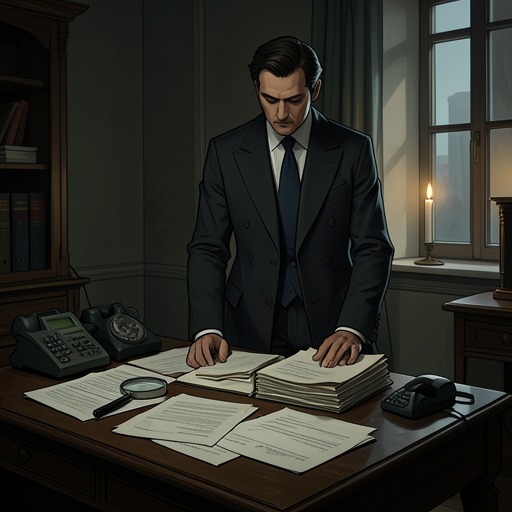
Before the Combe Island assignment, he is working in an interim job at the Metropolitan Police and waiting for the designated mobile phone that may bring a place on an investigation. He keeps it beside his bed and reaches for it each night to reassure himself that it is still there; on his way to work, he carries it in the hope that it will ring. When it finally does, he answers at once. The brief message transforms his day. His bag is already packed, and he has been told to bring his camera and binoculars, both better than those available to the other team members. The investigators are to work without calling in backup, a photographer, or scene-of-crime staff unless necessary. The limited arrangements deepen the mystery and heighten his anticipation of the unknown island.
His personal life is similarly tentative. At the time of the call, he has been involved with Beverley for five months. He is close to falling in love, watching with affectionate fascination as she practises yoga after sex, but expects the affair to end. Beverley prefers relationships with a clearly defined time limit, explaining that boredom usually arrives after six months. She has not yet announced that their time is up, but Benton-Smith doubts that his cooking or their sex life will earn an extension. His calls to his mother and Beverley before departure are likely to inconvenience them, he thinks, but not cause either pain. The episode reinforces his tendency to anticipate the limits of intimacy even when he is beginning to care.
The Investigation and His Detective Work
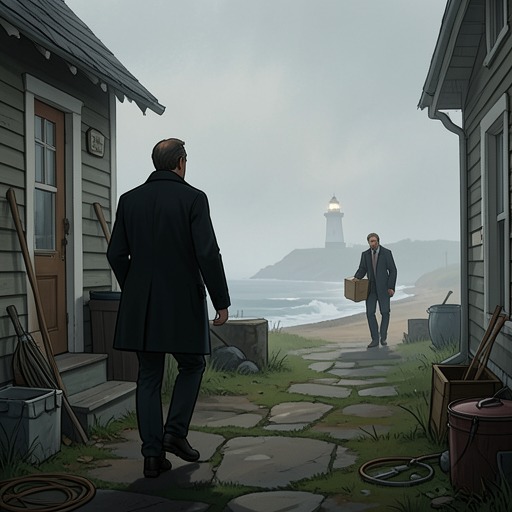
Adam Dalgliesh has chosen Benton-Smith for the squad without regret. From the helicopter carrying the team south, Dalgliesh watches him study the landscape and wonders whether he sees it as a composed, patterned scene or imagines a wider, less domesticated country beyond it. Dalgliesh considers intelligence, courage, and common sense established strengths; Benton-Smith’s sensitivity remains harder to assess. He also expects Kate Miskin and the new sergeant to work together professionally, even if they do not become friends.
The island investigation turns on establishing what happened to Nathan Oliver. Edith Glenister assesses the time of death as between half past seven and nine in the morning, probably nearer the earlier time. Her examination identifies two distinct finger-shaped bruises on the neck, and she concludes that Oliver died by manual strangulation before his body was hanged. Later, her autopsy report confirms asphyxiation from strangulation and substantial internal damage. These findings give the investigation a firm distinction between the killing and the staged hanging, the problem Benton-Smith and the rest of the team must pursue.
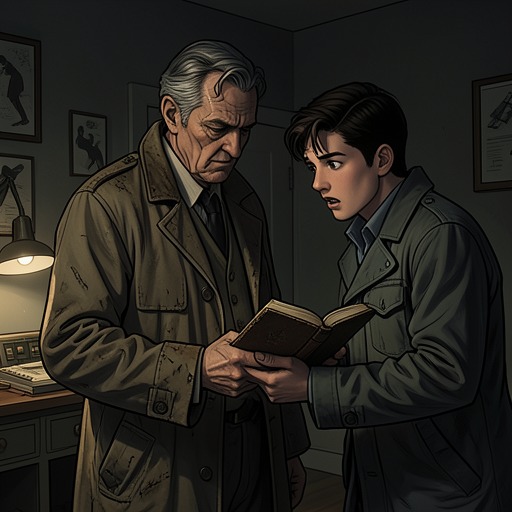
Benton-Smith’s most direct contribution to the physical evidence comes during the search of a refrigerator. Kate Miskin gently probes a tub of butter with a skewer and finds something beneath its surface. Benton-Smith photographs the tub as she removes the upper layer, exposing foil and two small packages. One contains a blood phial bearing Oliver’s name and a date; the other contains a sample of hair wrapped in tissue. Benton-Smith reasons that the paperwork for the tests Guy Staveley wanted may have been discarded, but that the handwritten name and date on the label should still identify the blood clearly. He photographs the contents, including the bin, and helps preserve and seal the items as exhibits. The discovery converts a concealed stash into evidence that can be identified and formally handled.
Climbing, Courage, and Rescue
Benton-Smith’s family history becomes practical when the investigation requires a dangerous climb. He tells Jago Tamlyn that his grandfather, Hugh Benton-Smith, taught him to climb. The route identified as the only way up lies roughly thirty yards south of the Combe Island Chapel; Jago judges it a very severe climb and checks Benton-Smith’s experience. He has climbed Tatra on the Dorset coast, near St. Anselm’s Head. When the risk becomes immediate, Benton-Smith chooses to go ahead.
He puts on a climbing harness fitted with karabiners, slings, and nuts, selects a helmet, and accepts search gloves and an exhibit bag from Kate Miskin. As he and Jago Tamlyn prepare, the familiar routine returns to him: rope over the shoulder and around the back, equipment checked, no one speaking. He associates the silent preparation with the courage and resolution his grandfather taught him to summon. His humour does not disguise the danger; he recognizes that he may be climbing beside a murderer, and that fear is part of the decision rather than a reason to pretend the risk is absent.
His courage is again decisive during the confrontation at the lighthouse, where Padgett has taken Millie Tranter and threatens her. As Millie cries out and turns a stream of abuse on Kate Miskin, Benton-Smith quietly offers to try. He moves around the rail more confidently than Kate can, reaches Millie, and speaks close to Padgett. Kate cannot hear what he says; the narrative presents the pause as if two acquaintances were talking with mutual understanding, without revealing Benton-Smith’s words. He then lifts Millie over the rail with both arms. Kate catches her, and Benton-Smith takes her from Kate while Kate stands and arrests Padgett.
Afterward, Kate gives a factual report and minimizes her own role. When she reaches Benton-Smith, she tells Dalgliesh that she could not have managed without him and adds that he showed more than ordinary courage in continuing to push her through a window. Dalgliesh replies that Benton-Smith did what was expected; Kate insists that he did more. The exchange marks a change in his standing within the team: the reserve that had made acceptance uncertain is answered by trust earned through action.
Narrative Role and Character
Benton-Smith’s trajectory joins private uncertainty to professional competence without suggesting that one simply disappears into the other. He begins as a man who feels unmoored between cultures and hesitant about intimacy, attentive to the distance between himself and other people. Yet he repeatedly acts in situations where hesitation would matter: he welcomes the island assignment, makes a difficult climb, handles delicate evidence methodically, and enters the lighthouse confrontation when Kate needs help. Dalgliesh’s initial assessment of his courage and common sense is borne out, while Kate’s account supplies the more personal measure of his value: she trusts him when the danger is immediate.
The narrative also gives Benton-Smith an important role in making cooperation visible. Dalgliesh expects him and Kate to respect and work with each other, not necessarily to like each other; at the lighthouse, that professional partnership becomes physical and reciprocal. Benton-Smith helps Kate reach Millie, then takes the rescued girl as Kate makes the arrest. His actions do not resolve his earlier questions of belonging, but they show that belonging can be built through the dependable choices other people witness. The man who once felt unable to find a secure footing between worlds proves, on the island’s narrow and hazardous ground, capable of giving others one.