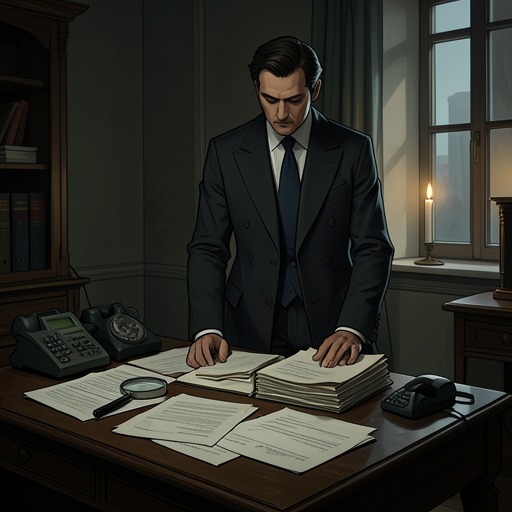
Geoffrey Harkness
The LighthouseGeoffrey Harkness is an Assistant Commissioner at New Scotland Yard whose authority shapes how the investigations on Combe Island can proceed. He does not direct the island inquiries from the scene; instead, he responds to developments reported by Adam Dalgliesh and Kate Miskin, weighing the case for outside support against the demands of continuing work under difficult conditions.
Position and Role
Harkness enters the investigation when Dr. Glenister’s post-mortem findings officially establish that Nathan Oliver died of manual strangulation, not hanging. Adam Dalgliesh contacts him at the Yard with that confirmation. Harkness is displeased by the verdict’s implications, but turns promptly to the operational question: whether the case should pass to Devon and Cornwall Police or remain with the team already on Combe Island.
His decision-making is shaped by competing institutional considerations. Transferring the case would be the reasonable course, he says, but would be unpopular with people in London; conversely, Adam Dalgliesh’s presence on the island gives a practical reason for his team to continue. Harkness asks whether they can expect a result within two days, while Adam Dalgliesh cannot offer a reliable prediction. The exchange sets out the pressure for a swift outcome without pretending that the investigation can be timed in advance.
The Murder Investigation
After the murder is confirmed, Harkness recognizes that the inquiry needs specialist resources, including scene-of-crime officers and fingerprint experts. His response is not simply to insist that the island team manage alone: he identifies the technical support required while confronting the question of which police force should provide it. The choice exposes the tension between the investigation’s immediate needs and the institutional consequences of handing it over.
His brief intervention also marks a change in the case’s status. What had been an inquiry into a death now requires the resources and procedures of a confirmed murder investigation. Harkness’s call helps establish the scale of that change, even though the practical work—measuring distances, examining the lighthouse and questioning suspects—remains with the officers on the island.
SARS and Command Decisions
Later, a SARS outbreak complicates the investigation, and Kate Miskin reports to Harkness from Combe Island. He reacts as though the complication were a personal affront for which she might be responsible, but Kate also senses that he is satisfied to be the first to hear the news, before it has broken nationally. His response combines irritation with attention to the importance of reporting the situation promptly.
Harkness separates the infection-control question from the police priority as he sees it: the double murders. He accepts that Kate and Francis Benton-Smith may themselves be infected, yet directs them to carry on together for at least three more days, through Friday, and says he will speak with the chief constable in Exeter. The local force can handle exhibits, while technical officers can potentially work without approaching infected people; Harkness notes that Home Office authorization will be needed. His plan is therefore provisional but concrete: maintain the island team, arrange local support, and review the situation after the three-day period.
Relationship to the Island Team
Harkness’s relationship with the investigators is conveyed through command calls rather than personal scenes. He expects Adam Dalgliesh to assess what can be achieved on the island, and later relies on Kate and Francis Benton-Smith to continue the inquiry when the outbreak has narrowed the available options. His questions and instructions keep the work connected to headquarters, but the evidence does not show him dictating the detectives’ findings or solving the case himself.
When Kate says she does not know how Adam Dalgliesh is faring and has avoided troubling Dr. Staveley for news, Harkness asks after him and says he will contact Dr. Staveley himself, speaking to Adam Dalgliesh if he is well enough. That concern sits alongside his operational insistence: even with the lead investigator’s health uncertain and the team facing possible infection, the murders remain the immediate priority. Harkness’s role is thus defined by the decisions that make continued investigation possible, and by the pressure those decisions place on the officers carrying it out.