Nathan Oliver
The LighthouseNathan Oliver is a celebrated novelist whose connection to Combe Island is at once a birthright, a source of refuge, and a persistent cause of conflict. The island’s rules secured his admission, but not the welcome or accommodation he wanted; his demand for a permanent place there sharpened existing disputes and brought his private life into collision with the people who lived on the island. His murder exposes the buried cost of that history: Oliver was Dan Padgett’s father, and when Dan confronted him, Oliver rejected both the relationship and any obligation to support him.
Identity and Return to Combe Island
Oliver was born on Combe Island and was widely acknowledged as one of the world’s greatest novelists. He returned every three months, staying for two weeks, a pattern he had maintained for seven years. Under the Trust deed, a person born on the island could not be refused admission. Oliver was its only living native-born visitor, but that right did not settle how long or how often he could stay, nor did it oblige the residents to accommodate his demands.
His visits followed a settled routine. He came with his daughter, Miranda Oliver, and his secretary and copy-editor, Dennis Tremlett. The household’s meals were organized through Mrs. Burbridge: Miranda telephoned instructions, and Dan Padgett delivered the light lunch. Oliver preferred dinner at Peregrine Cottage, where Miranda cooked. These arrangements made his visits familiar to the island’s staff, but familiarity did not make them harmonious. Rupert Maycroft recalled that Oliver was demanding, critical, liable to nurse grievances, and often uncivil. As he grew older, residents found him increasingly difficult.
Work, Ambition, and the Demand for a Home
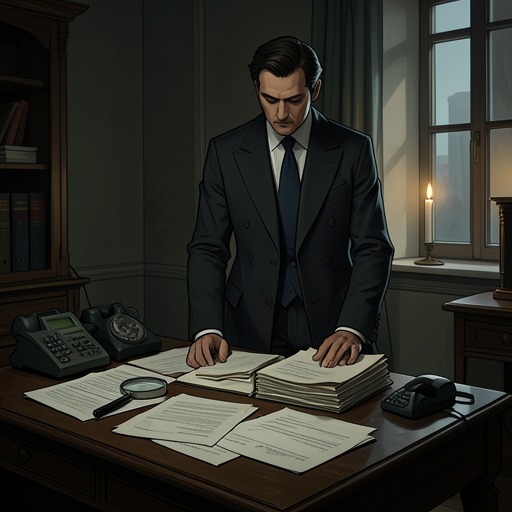
Oliver’s work was governed by exacting habits. On the Friday before his body was found, he spent four hours editing his latest novel with Tremlett. He preferred to work on preliminary proofs typeset from the manuscript, an eccentric practice his publishers accepted despite the inconvenience. He revised extensively, sometimes changing the plot, writing in a minuscule hand on the backs of the typeset pages. Tremlett then copied the alterations more legibly onto another set. The process conveys both Oliver’s command over his work and his dependence on an assistant to carry his revisions forward.
That confidence was shadowed by anxiety about decline. His latest novel had not been as well received as its predecessors, and Oliver was desperate to write another as good as the novel before it. Emily Holcombe understood his wish to live permanently on the island as a demand for solitude in service of that purpose. She also recognized the pressure behind it: Oliver feared that his talent was fading and wanted the island’s quiet as a place to work.
But the accommodation he wanted was Atlantic Cottage, Emily Holcombe’s home. She had returned to the stone cottage on the cliff edge intending to live there for the rest of her life, and she had no intention of surrendering it to Oliver. Her right to remain was protected under the Trust’s terms. Maycroft, who managed the island, likewise refused to ask her to leave. For Emily, Oliver’s genius did not excuse selfishness; for Oliver, the island’s importance and his birthplace strengthened his claim to stay. His wish for solitude therefore depended on displacing someone else from her home.
Oliver made that pressure explicit in a meeting with Maycroft. He said that his will divided his remaining estate equally between Miranda and the Combe Island Trust, and warned that he would change it unless the Trust assured him he could visit whenever he wished and receive the accommodation he needed for his work. He also insisted that an earlier incident involving damage to property had been deliberate, not accidental. The threat joined financial leverage to his claim of belonging: he believed in what the Trust had once done, but made his bequest conditional on getting his own way.
Relationships and the Cost of His Contempt
Oliver’s relationship with the island’s residents was more complicated than simple dislike. Emily considered him a major writer but rejected the idea that talent entitled him to behave worse than other people. At the same time, she acknowledged that his disruptive visits punctured the residents’ complacency. He made them feel like escapees from ordinary life, and like relics of a past represented by the old lighthouse. In that sense, he could be a necessary irritant even to people who resented his presence.
Others remembered a more personal record of offence. Mrs. Burbridge described his bad temper, discourtesy, complaints about Dan’s inefficiency and food arriving late, and frustration when the boat was not available for a trip around the island. She distinguished these slights from what she regarded as his gravest wrong: his role in Adrian Boyde’s return to drinking. The episode was separate from Oliver’s eventual murder, but it had left a lasting mark on the community. His conduct accumulated grievances well before his hidden family history came to light.
The most consequential relationship Oliver did not acknowledge was with Martha Padgett, Dan’s mother. Before her death, Martha confided to Adrian Boyde that Dan was Oliver’s son. Boyde was bound by the seal of the confessional and could not disclose the secret himself; he appears to have urged Martha to tell Dan. Her illness and her wish to bring her son to Combe Island made the disclosure newly urgent. Oliver’s public statement that he visited the island regularly had also breached the Trust’s confidentiality agreement, making it possible for Martha to bring Dan there in the hope that father and son might meet.
Murder and the Staged Hanging
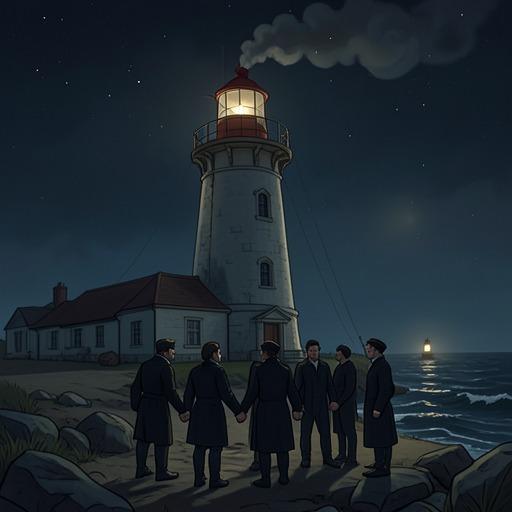
On the morning of his death, Oliver left Peregrine Cottage at about 7:20 without his usual cooked breakfast. His body was discovered at ten by Maycroft, with Daniel Padgett among those who came to the lighthouse. At first the hanging body, suspended from the white railings by a climbing rope, presented the appearance of suicide. The emerging mist lifted to reveal the lighthouse, sea, and sky around it; the horror of the scene was witnessed by Jago Tamlyn and Millie Tranter, who screamed when they saw him.
The physical evidence contradicted that appearance. Professor Edith Glenister identified distinct bruises consistent with fingers on Oliver’s neck and explained that the hanging had occurred after his death. The marks made by the ligature were compatible with a climbing rope, and the body showed that Oliver had been strangled before it was suspended. Her autopsy report confirmed death by asphyxiation from manual strangulation. A fracture in the cartilage of the throat indicated pressure from a sharp grip; a bruise at the back of the neck showed that his head had been forced against a hard surface. Oliver was frailer than he looked, so the force required to kill him did not need to be great. Someone had also tried to wipe the rope along its length.
The investigation initially had to contend with an apparently missing meeting note. Dr. Speidel had written to request a meeting with Oliver at the lighthouse at eight o’clock, but the note had not been found there, and the investigators had not initially searched Oliver’s pockets. The timing of Oliver’s departure, the note’s delivery, and the possibility that its time had been altered formed part of the puzzle. The eventual solution did not rest on the apparent appointment alone, but on reinterpreting details that had seemed incidental.
Paternity, Rejection, and Narrative Significance
While gravely ill, Adam Dalgliesh reconsidered the clues by asking who had left the island, rather than concentrating only on who had arrived. Martha’s recent death and Dan’s supposed loss of Oliver’s blood sample became central. The sample had not been in the bag Dan dropped overboard; the discarded contents were old shoes, handbags, and library books. Dalgliesh also recognized the significance of Dan’s removal of hair with its roots, which could provide material for DNA testing. Dan had been carrying evidence that could support his claim of parentage.
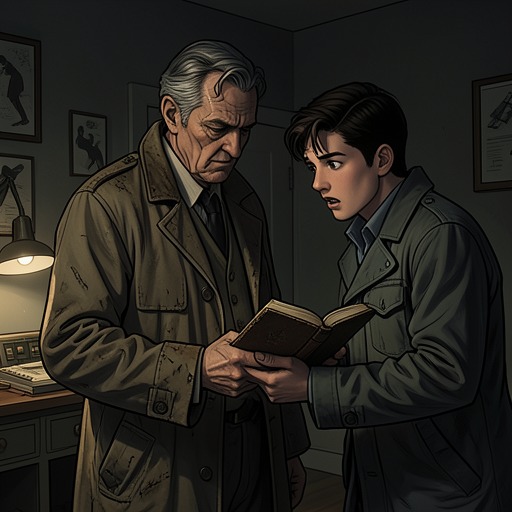
The reconstructed confrontation explained why the violence occurred when it did. Dan followed Oliver up to the lantern and told him the story of his birth. Oliver answered with contempt, saying that even if Dan had been a child he would have accepted only financial responsibility, and that as a man Dan was owed nothing. He dismissed Dan’s claim as an attempt at blackmail. Dan then lunged at him and fastened a hand around his throat. The murder arose from a recent revelation, but its force was rooted in an entire life of deprivation and humiliation, and in Oliver’s refusal to recognize the son who had come seeking acknowledgment.
Oliver’s death thus turns the island’s disputes over privacy, belonging, and residence into a more intimate reckoning. He had insisted that birth gave him a claim on Combe Island, while denying the claim that Dan’s birth gave Dan on him. His will, his demand for accommodation, and his control over his work all reveal a man accustomed to making other people answer to his needs. The staged hanging could disguise the method of his death, but not the consequences of the relationships he had left unresolved.