Obligation to keep confessional secrets
The LighthouseThe obligation to keep confessional secrets becomes a decisive moral constraint in the chain of events surrounding Martha Padgett’s hidden family history. Because Martha trusted Adrian Boyde with the truth that Dan Padgett was Nathan Oliver’s son, Boyde could not simply pass that secret to the police when suspicion later turned toward Dan. The novel presents confidentiality not as an abstract rule but as a burden whose protection of one confidence may leave others exposed to danger.
Boyde as Confidant
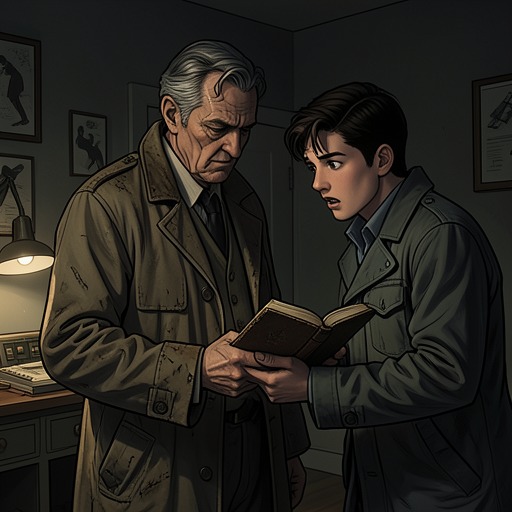
Martha confided in Boyde while he helped care for her. She and Mrs. Burbridge were the only people who regarded him as a priest, and Martha entrusted him with the secret under the Seal of the confessional. The account therefore locates his responsibility in the role Martha believed him to occupy; it does not establish that he was formally ordained. Her confidence disclosed a consequential fact: Dan, who hated Nathan Oliver, was Oliver’s son.
That knowledge gave Boyde a sharply limited position. He knew the truth that could alter Dan’s understanding of himself and his father, but the trust under which he learned it prevented him from revealing it on Martha’s behalf. The distinction matters: secrecy did not mean that the truth was unimportant, but that Boyde could not choose unilaterally to expose it.
Confidentiality and Martha’s Decision
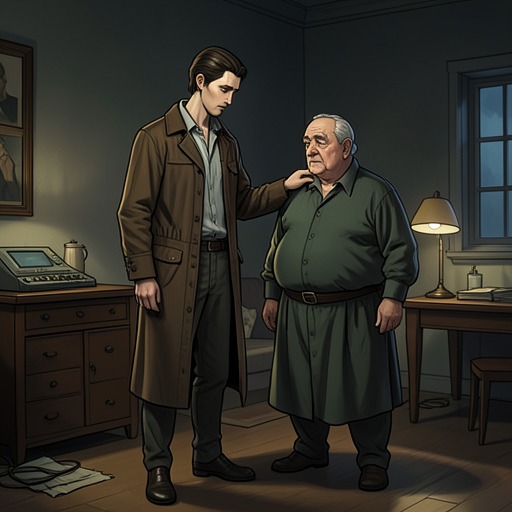
In Dalgliesh’s reconstruction, Boyde may have encouraged Martha to tell Dan herself. If so, he was trying to preserve the confidence while directing its holder toward disclosure: Martha, rather than her confidant, had to decide to tell her son. Her wish to come to Combe Island with Dan in June 2003 is understood as part of that effort. She may have hoped that Dan and Oliver would meet and that Oliver might acknowledge his son, though the novel presents the precise hopes behind her decision as inference rather than settled fact.
The timing gives the secret a wider consequence. Oliver had publicly discussed his regular visits to Combe Island in April 2003, breaking the Trust’s confidentiality agreement about the island. Dalgliesh connects that publicity to Martha and Dan’s arrival, and ultimately to the events that followed. The confidence itself did not cause the violence, but it left a family truth undisclosed until circumstances had made its revelation especially volatile.
Boyde’s Silence After Oliver’s Death
After Oliver was murdered, Boyde may have suspected Dan. Dalgliesh reasons that Boyde had a further piece of information: on Saturday morning he had called at Puffin Cottage to speak with Dan and found it empty. That fact could have been reported to the police, but doing so would have brought Boyde close to disclosing what he had learned as Martha’s confessor. The narrative does not present his motive as certain; Dalgliesh considers whether Boyde instead saw his duty as persuading Dan to confess and seek spiritual repair.
That possible course placed pastoral intervention against the urgency of investigation. Boyde may have returned to Puffin Cottage on Monday night for one last attempt to reach Dan, and may have understood the danger of doing so. These remain elements of Dalgliesh’s reconstruction, not confirmed statements of Boyde’s intentions. The outcome, however, is clear: Boyde was killed, and the secret he had been entrusted to keep remained entangled with the effort to identify the killer.
Consequence and Meaning
The obligation to keep the confidence does not make Boyde’s silence uncomplicated or cost-free. It protects Martha’s trust and respects her authority over her own disclosure, yet it also constrains what Boyde can tell investigators when his knowledge might matter. The novel holds both sides of that tension together rather than treating confidentiality as either a simple virtue or a convenient excuse.
After the murders, Kate finds Dalgliesh alone in the chapel, looking at the blood stains. Mrs. Burbridge has wondered whether the floor should be scrubbed, but has decided to leave the door open and let time and the elements act on it. The surviving mark gives the moral conflict a physical aftermath: the confidences that were kept, the truths that came too late, and the violence that followed cannot be made to disappear merely by choosing silence.