Quarantine and isolation
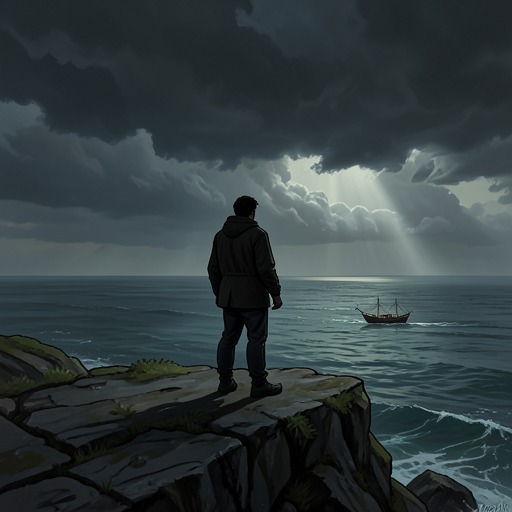
The LighthouseOn Combe Island, quarantine is not a backdrop to the murder investigation but a force that reshapes its pace, procedures, and relationships. After Dr. Speidel is diagnosed with SARS, the island faces a potentially fatal disease at the same time as a killer remains at large. Medical precautions make routine contact difficult, outside support uncertain, and even the transfer of a body or prisoner a carefully managed operation. Isolation becomes at once a practical necessity and an emotional condition: people must keep their distance, while the work of caring for the sick and solving the crimes continues at close quarters.
Outbreak and Immediate Risks
The danger becomes explicit when Guy Staveley reports that Dr. Speidel has SARS. He had considered the possibility when Dr. Speidel was transferred to Plymouth, and the diagnosis is now confirmed. Guy is in contact with the authorities about quarantining the island and warns that bringing in reinforcements may not be possible. The news compounds an already difficult murder investigation and makes the medical situation harder to manage.
The risk is personal as well as communal. Adam Dalgliesh helped Dr. Speidel after he collapsed and accompanied him back to his cottage; Jo Staveley nursed him. Guy identifies them as the two people most at risk after that exposure. Dalgliesh’s later memories of being supported into a buggy, moved across the island, and put to bed by masked medical staff register how quickly illness can take control of a person’s movements. Even while feverish and short of breath, he insists that he must remain on Combe Island, partly because of the unfinished investigation and partly because he fears Emma will not know where he has gone.
Care, Work, and Restricted Contact
The outbreak creates a sharp division between the people waiting for news and the work that cannot stop. Through Tuesday, Kate Miskin’s thoughts keep returning to the sickroom high in the tower. She restrains herself from calling Guy or Jo, trusting that they will telephone if there is news, and returns to her own duties. Domestic routine offers a modest counterweight to fear: Mrs. Burbridge asks about supper, while Kate and Benton-Smith work out how to use their adjoining apartments as an incident room and a place to eat.
The disease also changes the handling of evidence and bodies. When the helicopter arrives to collect Adrian Boyde’s body and the exhibits, masked figures keep their distance and complete the handover at a table set about twenty yards from the aircraft. Boyde’s hands have been covered with mittens to preserve possible evidence beneath the nails, and his body is zipped into a bag before it is lifted aboard. The procedure takes time; the helicopter leaves only after the formalities are complete. At the same time, oxygen cylinders and medical equipment are unloaded for the island’s care of the sick. The same aircraft thus serves an investigation that needs evidence removed and a medical response that needs supplies brought in.
Quarantine also dictates the investigation’s rhythm. Kate postpones further interviews until Wednesday because the day has been shocking and the team already has written statements. The pause is not a resolution of the case but a consequence of the circumstances: people are under strain, medical priorities have intervened, and the investigators must work within the limits of the response. For Dalgliesh, the cost is especially acute. When his mind clears, his body is weaker; coughing makes breathing difficult, and oxygen is eventually supplied through tubes in his nostrils.
The Case Against the Need to Isolate
The outbreak does not remove the legal and investigative demands of the murders. While ill, Dalgliesh fears that his case against Dan Padgett may remain circumstantial without the blood phial and the lock of Martha Padgett’s hair. Motive and opportunity alone are insufficient, he reasons, because other islanders also had reasons to hate Nathan Oliver and could have reached the lighthouse unseen. He is also concerned that the medical interpretation of Oliver’s injuries may be contested in court, despite Edith Glenister’s finding that Oliver died from manual strangulation and her view that the bruises could not have been self-inflicted. The investigation must therefore secure evidence strong enough to survive legal scrutiny, even as quarantine complicates access and communication.
When Padgett is arrested, the island’s isolation cannot become a reason to keep him there indefinitely. Kate contacts London and the Devon and Cornwall Constabulary to arrange his transfer. The authorities consider the risks and legal procedures, but agree that he must be moved; a helicopter is expected in about forty-five minutes. The decision makes clear that quarantine governs how the transfer is organized, not whether the suspect can be removed from the island and dealt with through the ordinary legal process.
The Quarantine Period and Its Aftermath
After the arrest, the interval until the quarantine expires becomes a period of enforced quiet. Because some residents may be witnesses at trial, the murders are not discussed collectively and are spoken of only in private between individuals. The investigators are treated as visitors seeking peace and solitude, an accommodation that lets them remain on the island without turning the post-arrest period into a continuation of formal questioning.
Isolation has different meanings for the members of the team. When he can walk, Dalgliesh moves to Seal Cottage, where Kate and Benton leave him in peace. Files from New Scotland Yard arrive by helicopter, and he appears to resume work there. Kate, by contrast, disconnects her phone and lets the island’s quiet assist her recovery. The quarantine period is therefore not merely a suspension of ordinary movement: it creates space for convalescence and withdrawal, even while the case and its consequences remain present.
Narrative Significance
Quarantine sets physical limits around a story already concerned with secrecy, privacy, and the difficulty of reaching the truth. Masks, separated handovers, the sickroom, and the helicopter make contact visible as something that must be regulated. Yet the need for distance does not dissolve responsibility. Guy and Jo care for the sick; Kate and Benton preserve evidence and continue the investigation; Dalgliesh presses to communicate the deductions on which the case depends; and the authorities arrange Padgett’s transfer despite the danger.
The aftermath extends this tension between confinement and refuge. During the quarantine period, the team is allowed a measure of solitude, and Combe Island becomes a place of recovery as well as restriction. Kate’s phone remains disconnected; Dalgliesh works apart at Seal Cottage. The island’s enforced separation therefore has a double effect: it impedes ordinary investigation and movement, but also protects a quiet interval in which the survivors can recover before returning to the demands waiting beyond the island.