Shearwater Cottage
The LighthouseShearwater Cottage is the northernmost cottage on Combe Island’s western shore and, during the investigation into Nathan Oliver’s death, the island lodging of Dr. Speidel. Its importance lies less in any architectural description than in its position: Atlantic Cottage lies about a quarter of a mile to the south, and the route from that vicinity toward the lighthouse gives Speidel a way to approach without being seen. The cottage becomes both the starting point for his concealed journey and the place where Adam Dalgliesh later speaks with him privately.
Setting and Occupants
The island’s western shore is described from north to south. Shearwater Cottage stands at the northern end of that sequence, with Atlantic Cottage approximately a quarter of a mile farther south. The account identifies Dr. Speidel as its occupant; he had arrived the previous Wednesday, on his first visit to the island. No detailed description of the cottage itself is given, so its significance is chiefly geographical and practical: it locates Speidel among the island’s visitors and places his lodging near the route he takes toward the lighthouse.
Speidel arrives already unwell. He later explains that he began to feel ill on the boat, developed a troublesome cough, and had spent a restless night with some fever. He nevertheless chose not to cancel his visit, believing that rest and fresh air would be enough, while also expressing concern that he might bring influenza to the island. His illness shapes the circumstances of his movements and conversation, but does not keep him from making the planned journey to meet Oliver.
The Route to the Lighthouse
At eight o’clock on the morning Oliver’s body is discovered, Speidel is due to meet him in the lighthouse. Delayed after his feverish night, he starts late and reaches the lighthouse at six minutes past eight. Rather than order the buggy, he walks. After passing Atlantic Cottage, he descends to the under-cliff path and follows it until it becomes impassable, about twenty metres from the lighthouse. He says he had hoped to go unobserved; the route thus connects the apparently ordinary location of his lodging with a deliberately discreet approach to the central scene of the investigation.
The lighthouse door is locked when Speidel arrives, and he cannot enter. His failed appointment nonetheless gives Dalgliesh a specific time and circumstance to assess: Speidel says he was there shortly after eight, but did not gain access. The cottage’s place on the western shore helps make the account intelligible, while the concealed path distinguishes his journey from an ordinary arrival by vehicle. The narrative does not establish that he saw Oliver or witnessed the death; the significance of the route is that it places Speidel near the lighthouse at the time he had arranged to meet the writer.
A Base for Testimony
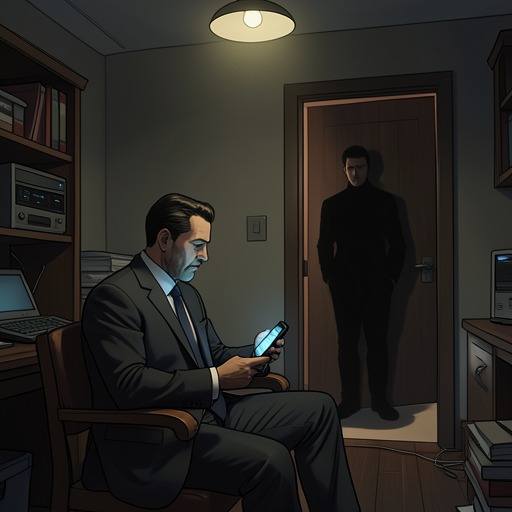
After meeting with Dalgliesh, Speidel returns to Shearwater Cottage in the buggy with him. They travel in silence, first along the rough road and then over scrubland. Dalgliesh has questions but judges the moment unsuitable for asking them. At the cottage, he helps Speidel into the sitting room and supports him as he sinks into a chair. The modest, practical details of arrival—illness, assistance, and a seated conversation—replace the pressure of the lighthouse route with a more settled setting for questioning.
From the sitting room, Speidel asks whether Oliver left a note, then asks Dalgliesh whether he believes the death was murder. His questions show that the cottage is not simply a point on the island map: it is where his connection to Oliver’s planned meeting continues as testimony. The first visit and short stay make Shearwater a temporary base rather than a long-established home, but its relationship to Atlantic Cottage and the lighthouse gives it a precise role in reconstructing the morning.
Narrative Significance
Shearwater Cottage links two kinds of access to the lighthouse. Speidel’s outward journey is secretive and incomplete: he walks from the area near his lodging, follows the under-cliff path, and finds the door locked. His return is accompanied by Dalgliesh, and his account is followed by direct questions about a note and the possibility of murder. The contrast turns the cottage into a point of transition between an unobserved approach and an official investigation.
The location therefore matters through movement and testimony, not through mystery attached to the building itself. Its northern position on the western shore fixes where Speidel is staying; its relation to Atlantic Cottage helps establish the route he describes; and its sitting room provides the setting for his exchange with Dalgliesh. What begins as a lodging on a visitor’s first island visit becomes a useful frame for evaluating his timing, his attempted meeting, and the limits of what he claims to know about Oliver’s death.