Cair Paravel Castle
The Lion, the Witch and the WardrobeCair Paravel Castle is the ancient, sea-girt fortress that stands as the rightful capital of Narnia and the symbolic heart of its true sovereignty. Located at the mouth of the great river on the eastern sea, it is the prophesied seat of the four thrones, whose occupation by two Sons of Adam and two Daughters of Eve is destined to end the White Witch's reign and her life. The castle is first mentioned by the Faun Tumnus as the great castle on the eastern sea, and it remains a distant, shining goal throughout the children's journey, finally becoming the site of their coronation and the beginning of their golden rule.
Geography and Prophetic Significance
Cair Paravel is situated on a little hill at the mouth of the great river, where the land of Narnia meets the sea. It is described as a castle with windows that reflect the sunset, appearing to Peter from a distance as a great star resting on the seashore. The castle contains the Great Hall with an ivory roof, a west door hung with peacock's feathers, and an eastern door that opens directly onto the sea, where mermen and mermaids swim close to the castle steps. The castle's four thrones are central to an ancient prophecy: when two Sons of Adam and two Daughters of Eve sit in those thrones, it will be the end not only of the White Witch's reign but of her life. This prophecy is the reason the Witch has been watching for humans for many years and why she seeks to capture all four children before they can reach the castle.
Role in the Prophecy and the Witch's Fear
The White Witch's fear of Cair Paravel is explicit. When the Dwarf suggests that keeping Edmund alive might be useful for bargaining, the Witch counters that if only three of the four thrones were filled, the prophecy would not be fulfilled. She contemplates falling upon the three at Cair Paravel after Aslan leaves, revealing that the castle represents not just a political capital but the very mechanism of her doom. The prophecy is also tied to the Deep Magic: the Witch's power over traitors is absolute unless the four thrones are filled, making Cair Paravel the ultimate counterweight to her authority.
Aslan's Revelation and the Coronation
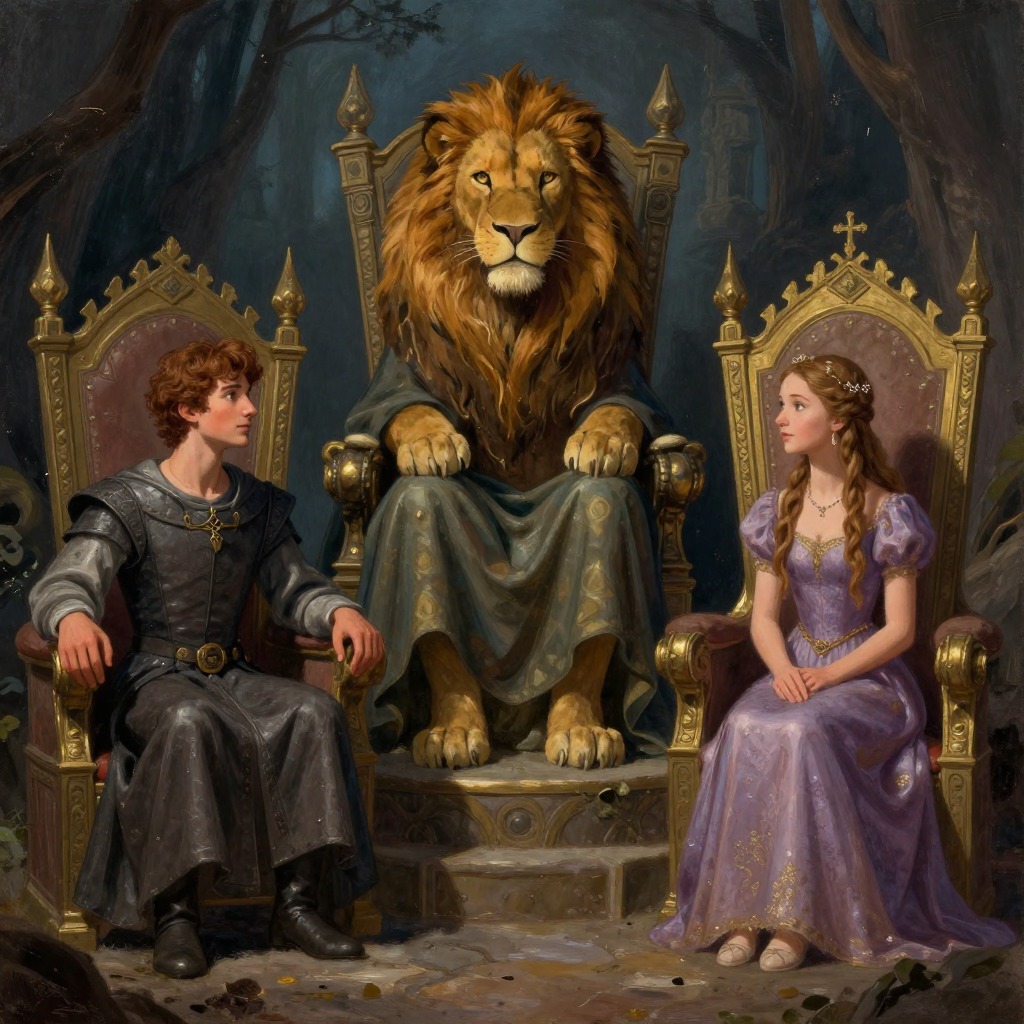
Aslan shows Peter a far-off sight of Cair Paravel from the eastern edge of the Hill of the Stone Table, telling him, "That, O Man, is Cair Paravel of the four thrones, in one of which you must sit as King. I show it to you because you are the first-born and you will be High King over all the rest." After the final battle, the children march eastward down the side of the great river and reach the castle at about tea-time. In the Great Hall, in the presence of all their friends and to the sound of trumpets, Aslan solemnly crowns them and leads them to the four thrones amid shouts of "Long Live King Peter! Long Live Queen Susan! Long Live King Edmund! Long Live Queen Lucy!" Aslan declares, "Once a king or queen in Narnia, always a king or queen. Bear it well, Sons of Adam! Bear it well, Daughters of Eve!"
The Golden Age and the Return
From Cair Paravel, the four monarchs govern Narnia well and long. They destroy the remnants of the White Witch's army, make good laws, keep the peace, and enter into friendship and alliance with countries beyond the sea. Peter becomes a great warrior called King Peter the Magnificent; Susan grows into a tall and gracious woman called Queen Susan the Gentle; Edmund becomes a graver and quieter man, great in council and judgement, called King Edmund the Just; and Lucy remains always gay and golden-haired, called Queen Lucy the Valiant. Years later, while hunting the White Stag, the Kings and Queens follow the beast into a thicket and find themselves tumbling out of the wardrobe door, no longer in their royal hunting array but just as Peter, Susan, Edmund, and Lucy in their old clothes. The Professor later assures them that they will get back to Narnia again some day, for "once a King in Narnia, always a King in Narnia."