Edmund Pevensie
The Lion, the Witch and the WardrobeEdmund Pevensie is the third of the four Pevensie children, a boy whose early resentment, greed, and betrayal of his siblings to the White Witch drive the central crisis of The Lion, the Witch and the Wardrobe, yet whose subsequent rescue and transformation into the wise and just King Edmund the Just constitute the novel's most complete arc of redemption.
Identity and Background
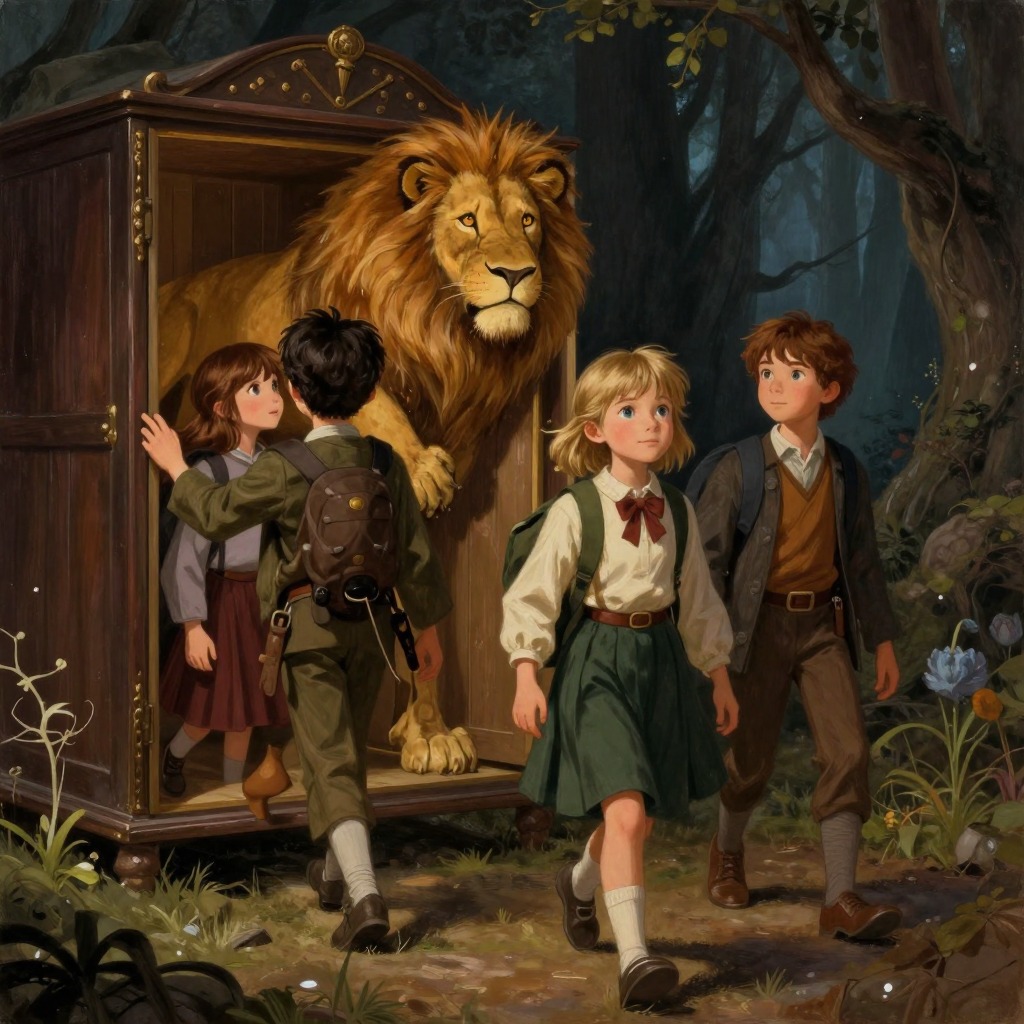
Edmund is the next youngest of the four children, younger than Peter and Susan but older than Lucy. He is introduced as a boy who, when tired, becomes bad-tempered and spiteful. On the first evening at the Professor's house, he pretends not to be tired and snaps at Susan, mocking her for "trying to talk like Mother." He is sent away from London during the war because of the air-raids, along with his siblings, to the house of an old Professor in the heart of the country. The Professor is a very old man with shaggy white hair, and Edmund wants to laugh at his odd appearance, having to keep on pretending he is blowing his nose to hide it.
Arc Through the Plot: From Betrayal to Redemption
Edmund's first entry into Narnia occurs when he follows Lucy into the wardrobe, intending to tease her about her "imaginary country." He finds himself in a snowy wood and, instead of Lucy, encounters a sledge drawn by two reindeer, carrying a great lady in white fur with a golden wand and crown—the White Witch. She questions him, learns he is a Son of Adam, and, after a moment of threatening him with her wand, changes her manner, offering him a hot drink and enchanted Turkish Delight. The more he eats, the more he wants, and the Witch extracts information about his siblings, particularly that there are four of them: two Sons of Adam and two Daughters of Eve. She promises to make him a Prince and later King of Narnia if he brings the others to her house, and she instructs him to keep their meeting a secret. Edmund returns to his own world and, when Lucy excitedly tells the others about Narnia, he spitefully denies it, claiming they were only pretending. This lie causes Lucy great misery and makes Peter furious, calling Edmund a "poisonous little beast."
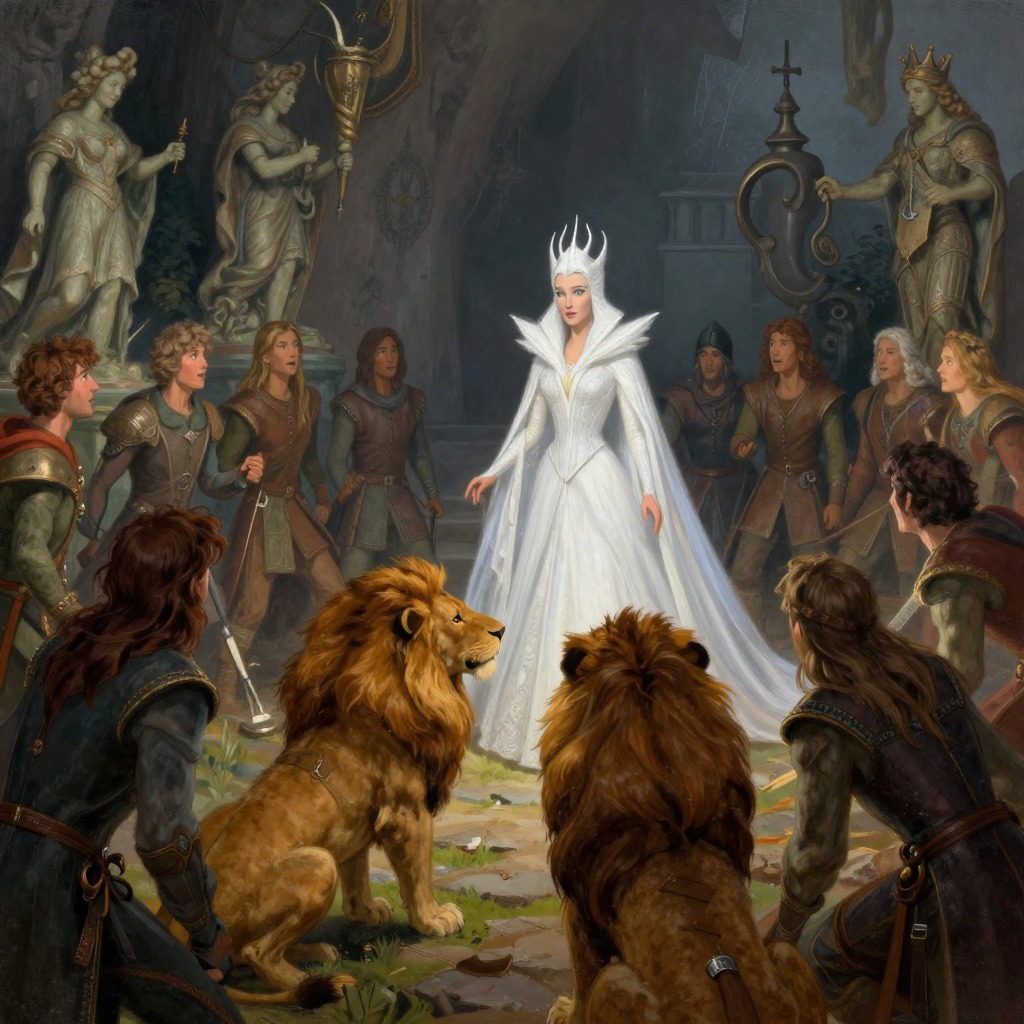
When all four children enter Narnia together, Edmund's earlier visit is exposed. He feels resentful and mutters to himself, "I'll pay you all out for this, you pack of stuck-up, self-satisfied prigs." At the Beavers' house, while the others listen to prophecies about Aslan and the four thrones at Cair Paravel, Edmund secretly slips away. He goes to the White Witch's castle, a grim fortress full of stone statues, and reports everything he has heard, including the plan to meet Aslan at the Stone Table. The Witch, furious at the news of Aslan, orders her sledge prepared without bells and sets out to intercept the others. Edmund, now a prisoner rather than a prince, is given only stale bread and water, and is forced to walk with his hands tied behind him as the Witch's dwarf drives him on through the melting snow. The Witch, enraged by the arrival of spring and the appearance of Father Christmas, turns a party of happy animals to stone and strikes Edmund across the face when he pleads for them. Just as the Witch prepares to kill Edmund—sharpening her stone knife and baring her arms—Aslan's rescue party, sent after the wolf Fenris Ulf was killed, arrives, scattering the Witch and her dwarf, who escape by magic. Edmund is rescued and brought to Aslan's camp.
Relationships and Conflict
Edmund's relationship with his siblings is marked by spite and resentment. He jeers at Lucy after her first visit to Narnia, calling her "batty," and later lies to Peter and Susan, claiming they were only pretending. Peter, in turn, calls him a "poisonous little beast" and says he has "always liked being beastly to anyone smaller than yourself." Edmund's relationship with the White Witch is one of manipulation and false promise: she uses enchanted Turkish Delight to bind his desire and promises him a crown, but once he has served her purpose, she treats him with contempt, calling him "fool" and "brat." His deepest conflict is internal: he knows deep down that the White Witch is bad and cruel, but he suppresses this knowledge, telling himself that "she was jolly nice to me, anyway, much nicer than they are." After his rescue, Aslan speaks with him privately, and though the conversation is never recorded, it is one Edmund never forgets. He then shakes hands with each of his siblings and says, "I'm sorry," and they all say, "That's all right."
Change and Ending
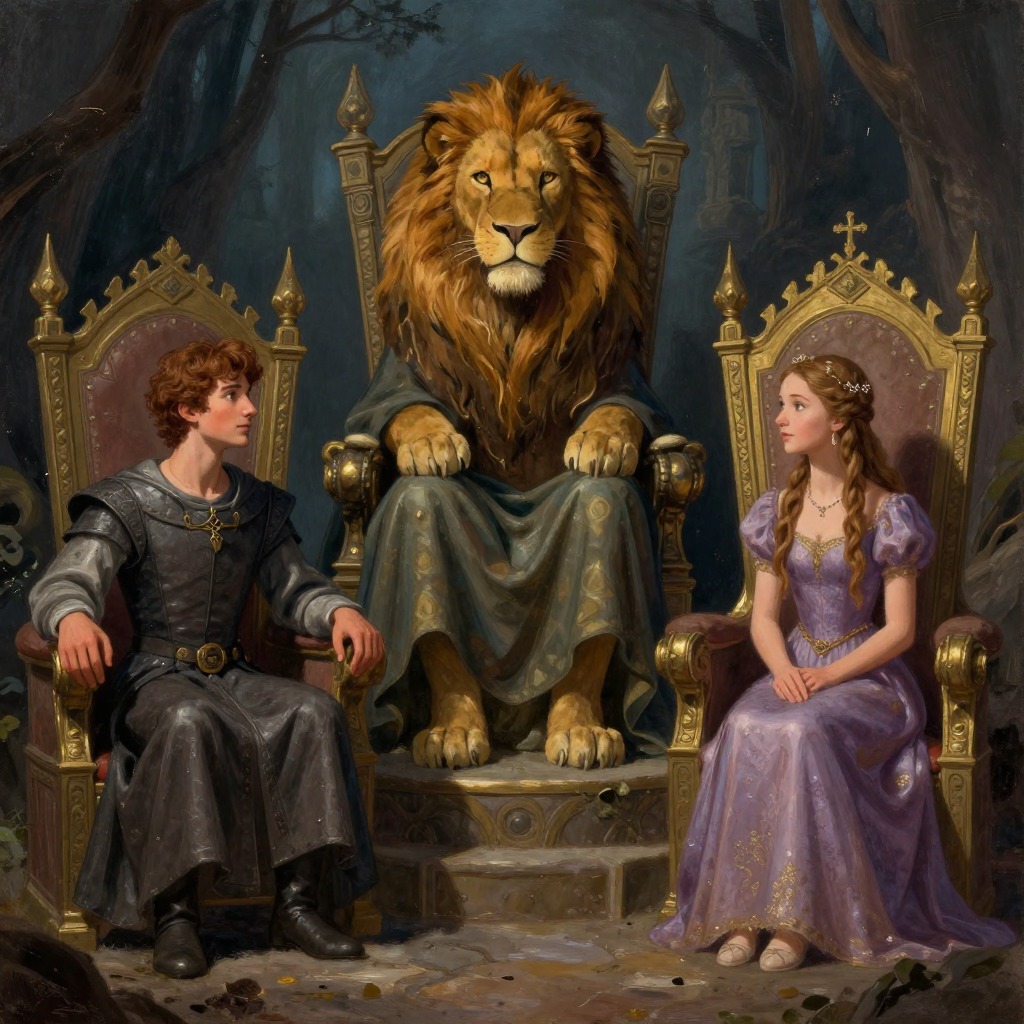
Edmund's transformation is completed on the battlefield. During the final battle against the White Witch, when she is turning Aslan's troops to stone with her wand, Edmund fights his way through three ogres and smashes his sword down on her wand, breaking it. This act turns the tide of the battle, but Edmund is terribly wounded. Lucy uses her cordial, given by Father Christmas, to heal him, and Aslan makes him a Knight. After the coronation, Edmund becomes a graver and quieter man than Peter, great in council and judgement, and is called King Edmund the Just. He and his siblings rule Narnia for many happy years, stamping out the remnants of the Witch's army, making good laws, and keeping the peace.
Thematic Significance
Edmund's arc embodies the novel's central theme of redemption through sacrificial love. His betrayal is the catalyst for Aslan's willing death, which fulfills the Deep Magic and unlocks the Deeper Magic that defeats death itself. Edmund's journey from spiteful traitor to just king demonstrates that even the most flawed individual can be transformed by grace and courage, and that true kingship is earned not through ambition but through self-sacrifice and service.