Eternal Winter Spell
The Lion, the Witch and the WardrobeThe Eternal Winter Spell is the White Witch's enchantment that holds Narnia in perpetual winter without Christmas, a central condition of the story's conflict that is broken by Aslan's arrival.
Nature and Origin of the Spell
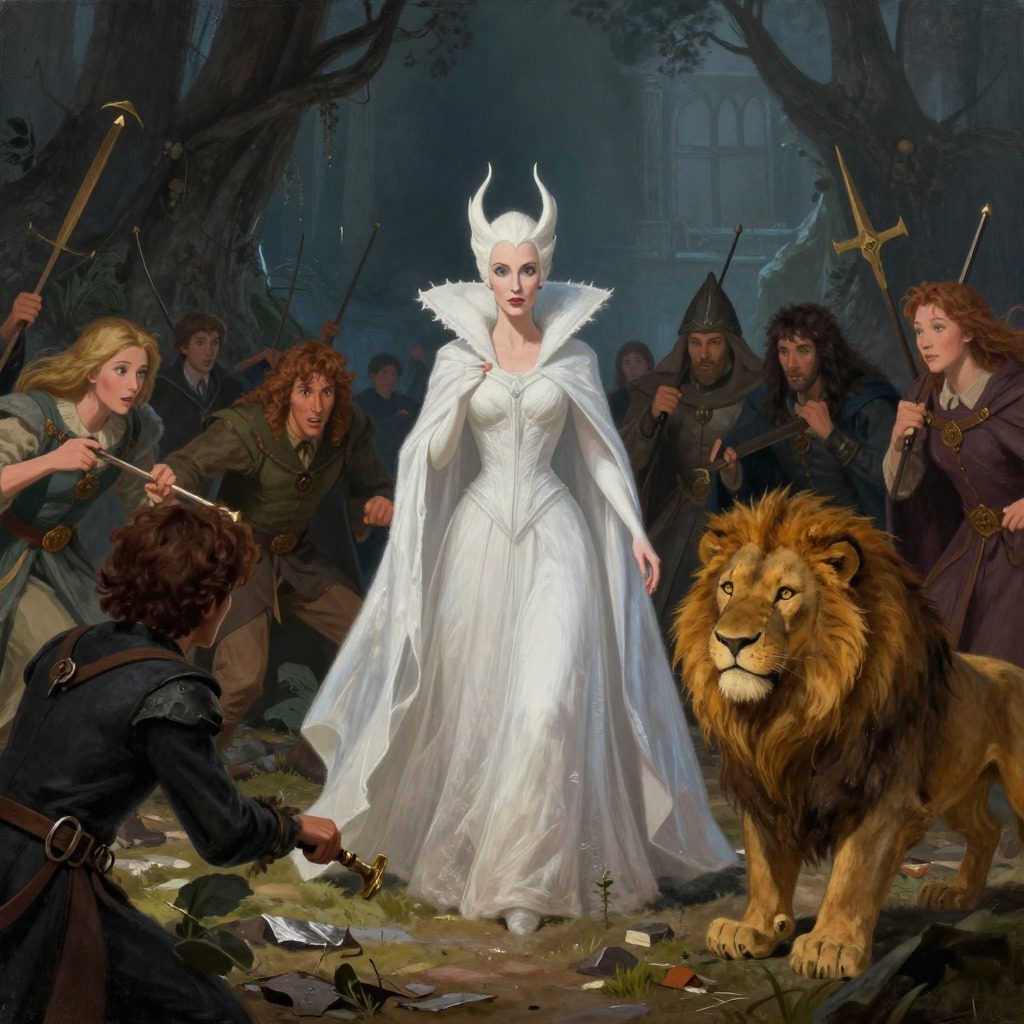
The Eternal Winter Spell is a magical enchantment cast by the White Witch over the entire land of Narnia. Its most distinctive feature is that it creates an unending winter—always cold, always snow-covered—yet it never allows Christmas to come. As Mr. Tumnus explains to Lucy, "It's she that makes it always winter. Always winter and never Christmas; think of that!" The spell is not merely a climatic condition but a political and spiritual oppression, as the Witch uses it to maintain her tyrannical rule. The winter is described as having lasted "for ever so long," suggesting years or even decades of unbroken cold. The land is covered in snow, rivers are frozen, and the forest is silent and lifeless, with no birds or animals stirring. The spell is tied to the Witch's power: she drives about on a sledge drawn by reindeer, her wand in hand, and the winter serves as both a symbol and a tool of her dominion.
Effects on Narnia and Its Inhabitants
The spell's effects are pervasive and devastating. The landscape is locked in a perpetual state of winter: snow covers the ground, trees are bare or laden with snow, and the rivers are frozen solid. The Beavers' dam, for instance, is covered with ice, and the pool above it is a "level floor of dark green ice." The cold is constant and biting, and the lack of Christmas means there is no seasonal respite, no celebration, no hope. The creatures of Narnia live in fear and deprivation. Mr. Tumnus describes the Witch's rule as having "got all Narnia under her thumb," and the winter is a direct expression of that control. The animals and magical beings are scattered, hiding, and oppressed. The Witch's spies—trees and animals loyal to her—are everywhere, and the threat of being turned to stone hangs over anyone who defies her. The spell also suppresses the natural cycles of life: there is no spring, no growth, no renewal. The land is trapped in a state of deathlike stillness.
The Breaking of the Spell
The spell begins to break when Aslan is said to be "on the move." The first sign of its weakening is the arrival of Father Christmas, who tells the children, "She has kept me out for a long time, but I have got in at last. Aslan is on the move. The Witch's magic is weakening." This is a direct challenge to the Witch's power, as her spell had prevented Christmas from occurring. The thaw that follows is dramatic and rapid. As Edmund and the Witch travel, the snow turns to slush, then to mud, and patches of green grass appear. Streams begin to flow, birds sing, and flowers—celandines, snowdrops, crocuses, primroses—bloom. The Dwarf exclaims, "This is no thaw. This is spring. What are we to do? Your winter has been destroyed, I tell you! This is Aslan's doing." The Witch's winter is not merely melting; it is being actively undone by a deeper magic. The transformation from January to May occurs in a matter of hours, and the forest becomes lush, green, and alive. The spell is finally and completely broken when Aslan sacrifices himself and is resurrected, an event that cracks the Stone Table and unleashes a deeper magic that reverses death itself. The spring that follows is not just a seasonal change but a cosmic restoration, and the Witch's power is ultimately destroyed in the final battle.
Significance
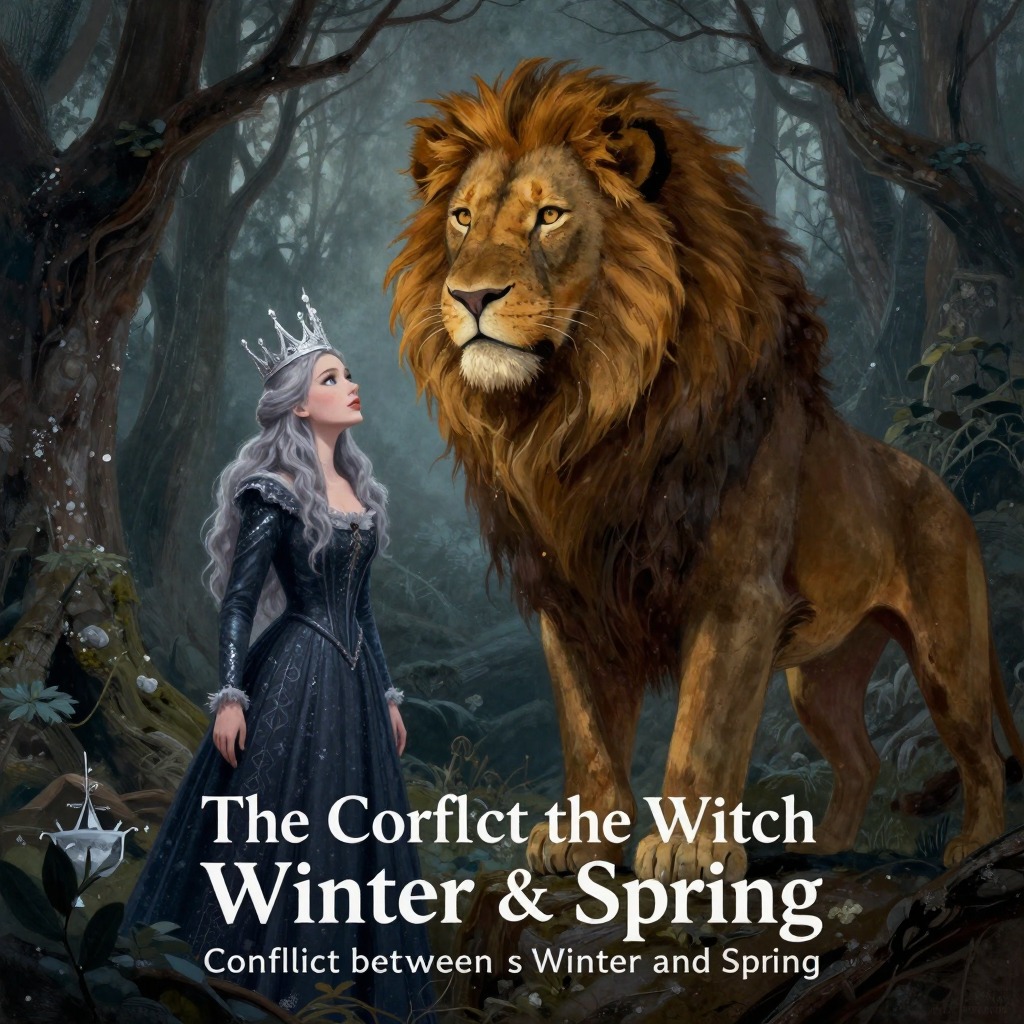
The Eternal Winter Spell is a central symbol of the White Witch's tyranny and the spiritual barrenness of Narnia under her rule. It represents a world without hope, without joy, without the promise of renewal. The breaking of the spell is the first major victory against the Witch and a sign that Aslan's power is greater than hers. The contrast between the endless winter and the sudden, vibrant spring underscores the theme of redemption and the triumph of good over evil. The spell also serves as a narrative device that creates the initial conditions of the story—a frozen, oppressed land that the children must help liberate. Its dissolution is a key turning point, marking the beginning of the end for the Witch's reign and the restoration of Narnia to its rightful order.