Lamp-post
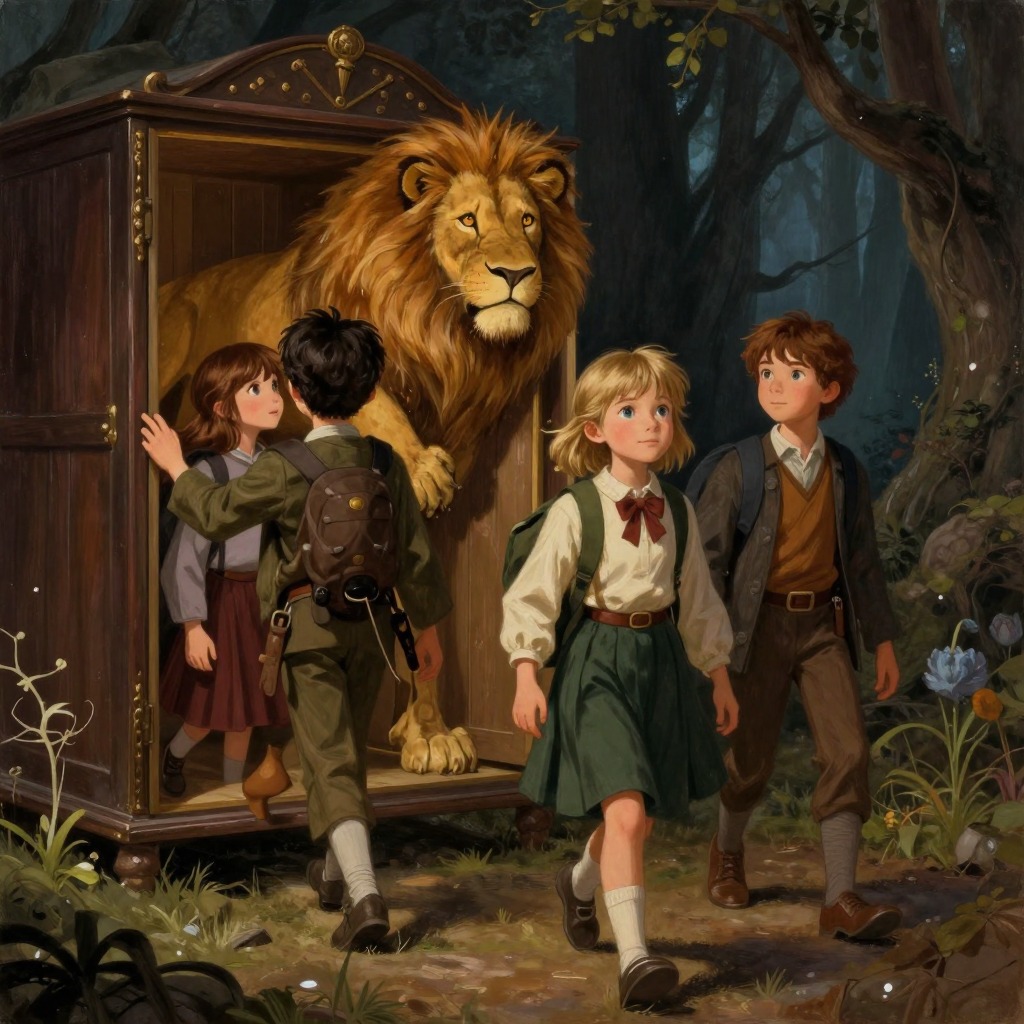
The Lion, the Witch and the WardrobeThe Lamp-post is the very first object Lucy Pevensie sees when she steps out of the wardrobe into the snow-covered wood of Narnia. After walking for about ten minutes through the trees, she reaches it and stands wondering why there is a lamp-post in the middle of a wood. It is at this spot that she first meets the Faun Tumnus, who emerges from among the trees into its light. The Lamp-post thus marks the precise point of entry into Narnia and the site of the children's first encounter with its inhabitants.
Location and Description
The Lamp-post stands in a wood, at a point that Tumnus later describes as lying between the lamp-post itself and the great castle of Cair Paravel on the eastern sea. It is a solitary iron post with a lantern set on top, and when the children see it years later as grown kings and queens, they recognize it as a "tree of iron" or a "pillar of iron with a lantern set on the top thereof." The post is old, and the wood around it has grown up thick and high since it was first placed there, so that if the lantern were lit it would give light to no one. The Lamp-post is the only artificial light source in the otherwise wild forest, and its presence is anomalous—a piece of the human world lodged in the heart of Narnia.
Role as a Boundary Marker
The Lamp-post functions as a fixed point of orientation for the children's journeys between worlds. When Tumnus releases Lucy after their tea, he leads her back to the Lamp-post and tells her she can find her own way from there back to "Spare Oom and War Drobe." Later, when the White Witch meets Edmund, she points with her wand to the same Lamp-post and tells him that straight on beyond it is the way to the World of Men. She also instructs him that to find her house, he must find the Lamp-post and look for two hills beyond it. The Lamp-post thus serves as the crucial navigational landmark that connects the human world to the Witch's domain and to the rest of Narnia.
The Lamp-post in the Children's Return
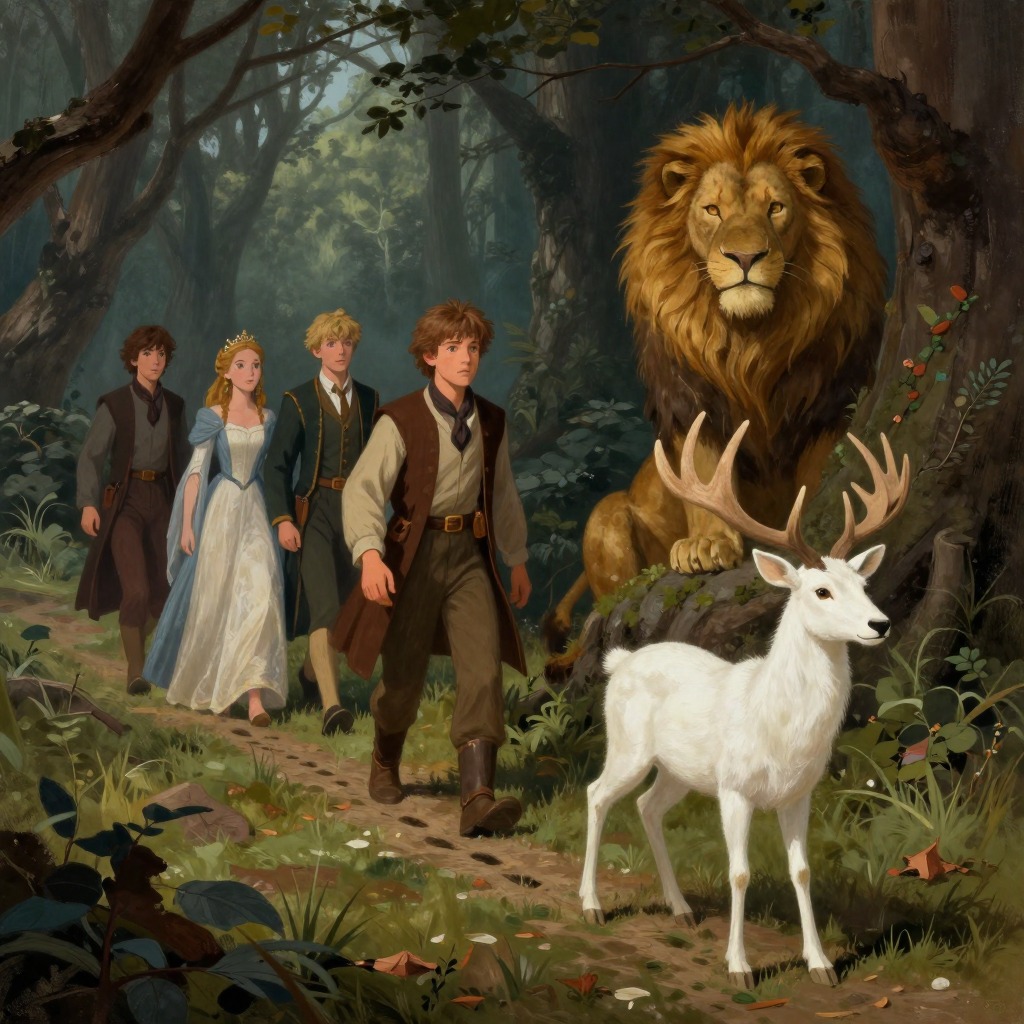
At the end of their reign, when the four kings and queens hunt the White Stag and follow it into a thicket, they come upon the Lamp-post again. They recognize it as a strange device—a lantern set where trees cluster so thickly that it could give light to no one. Edmund says it works upon him strangely, as if he has seen the like before in a dream or the dream of a dream. Lucy feels that if they pass this post and lantern, they shall either find strange adventures or some great change of their fortunes. Despite their forebodings, they press on, and within a few paces they find themselves making their way not through branches but through coats, and they tumble out of the wardrobe door back into the empty room, no longer kings and queens but just Peter, Susan, Edmund, and Lucy in their old clothes. The Lamp-post is thus the last landmark of Narnia they see before returning to their own world, and its appearance triggers the recognition that they are crossing back across the boundary.
Thematic Significance
The Lamp-post is a threshold object that belongs to neither world fully. It is an iron post with a lantern—a piece of manufactured, human-made technology—yet it stands in a wild, enchanted forest. It is old, predating the thick wood that has grown up around it, and its origin is never explained. It marks the point where the ordinary and the magical meet, and it is the one fixed reference point that the children can use to orient themselves in a world where time and space behave differently. The Lamp-post is also the site of the first meeting between a human and a Narnian, and the last thing the children see before they leave Narnia for good. It is a symbol of the permeable boundary between worlds, and of the way that the most ordinary objects can become charged with meaning when they are encountered in an extraordinary context.