Lucy Pevensie
The Lion, the Witch and the WardrobeLucy Pevensie, the youngest of the four children, is the first to discover the magical land of Narnia. Her initial encounter with the Faun Tumnus sets the entire adventure in motion, and her unwavering truthfulness in the face of disbelief from her siblings establishes her as a character of remarkable integrity. She is later crowned Queen Lucy the Valiant, a title that reflects her bravery and steadfastness throughout the Narnian quest.
Identity and Introduction
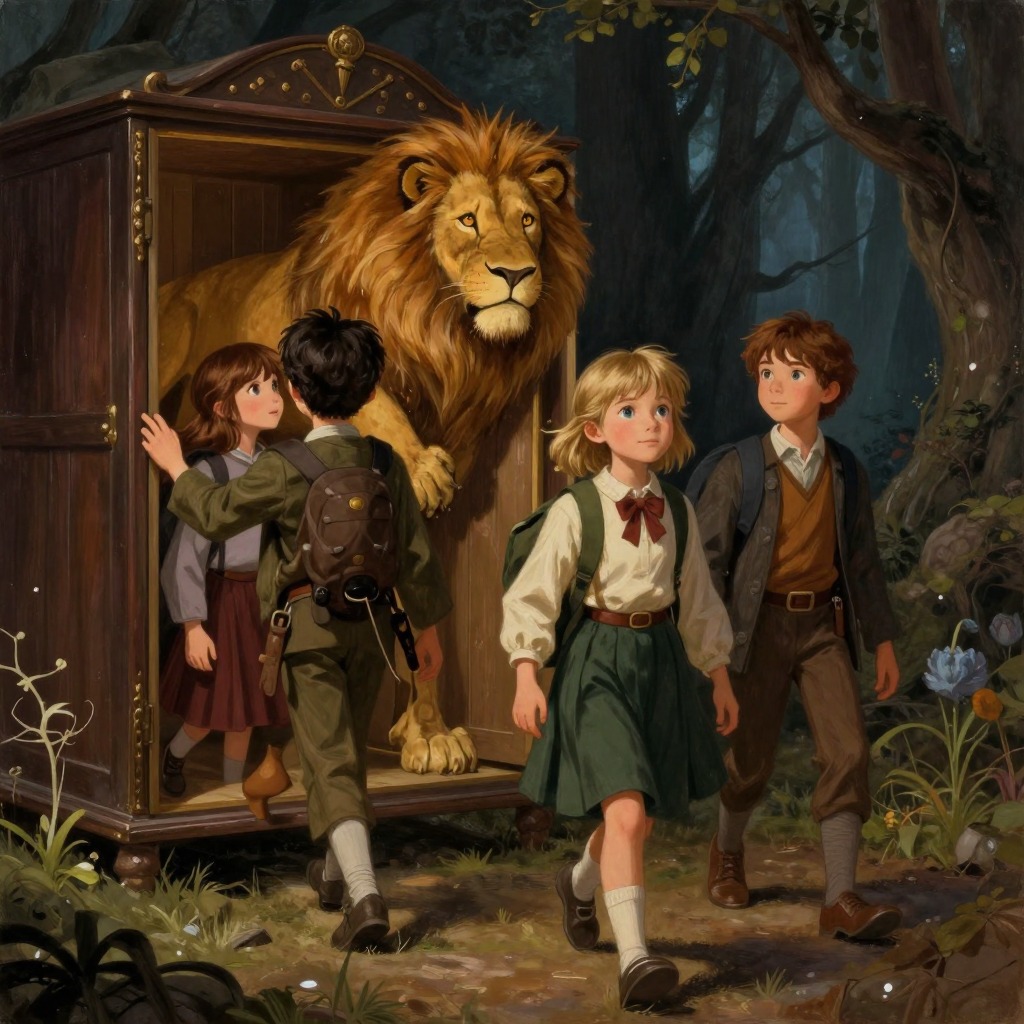
Lucy is introduced as the youngest of the four Pevensie children, sent away from London during the war to the house of an old Professor. She is described as being a little afraid of the Professor's odd appearance on the first evening, but she quickly becomes curious and adventurous. It is Lucy who, on a rainy day, decides to explore the wardrobe in the spare room, stepping into the snow-covered wood of Narnia. Her first encounter is with the Faun Tumnus, whom she meets at a lamp-post, and she accepts his invitation to tea, showing her trusting and friendly nature.
Arc Through the Plot
Lucy's journey in Narnia is marked by her role as the discoverer and the moral compass. After her first visit, she faces disbelief from her siblings, particularly Edmund, who mocks her story. Despite this, she remains truthful, even when it causes her misery. When the four children finally enter Narnia together, Lucy leads them to Tumnus's cave, only to find it ransacked and a notice of arrest for the Faun. She insists they must rescue him, saying, "We simply must try to rescue him." This sense of responsibility drives her actions. She later receives gifts from Father Christmas: a small dagger and a bottle of cordial made from fire-flowers, which she uses to heal the wounded after the final battle. Her most profound moment comes when she and Susan witness Aslan's sacrifice and resurrection, a scene that deepens her understanding of sacrifice and love.
Relationships and Conflict
Lucy's primary relationship is with Tumnus, whom she befriends on her first visit. Despite his initial intention to betray her to the White Witch, he repents and helps her return home, and Lucy forgives him completely. She also forms a close bond with Aslan, feeling a sense of joy and peace in his presence. Her relationship with Edmund is strained when he denies her story, but after his rescue and redemption, they reconcile. Lucy's conflict with the White Witch is indirect but central, as the Witch's tyranny threatens her friends and the land of Narnia.
Change and Ending
Lucy undergoes significant growth from a curious child to a courageous queen. She learns to trust her instincts and stand by the truth, even when it is difficult. After the final battle, she uses her cordial to heal Edmund, and Aslan crowns her Queen Lucy the Valiant. She rules Narnia wisely and happily, known for her golden hair and gay spirit. The story ends with the four children returning through the wardrobe, but Lucy's transformation is permanent, as she carries the memory of her reign and the lessons learned in Narnia.
Thematic Significance
Lucy embodies the themes of faith, truth, and compassion. Her unwavering belief in Narnia, despite skepticism, highlights the importance of trust and imagination. Her forgiveness of Tumnus and her willingness to risk her safety for him demonstrate the power of mercy. As the first to enter Narnia and the last to leave its memory, Lucy represents the childlike wonder and moral clarity that are essential to the story's message. Her title, Queen Lucy the Valiant, underscores her courage, which is not just physical but also moral, as she consistently chooses what is right over what is easy.
The character of Lucy Pevensie was partly inspired by the real-life evacuee children who stayed at Lewis's home, The Kilns, during the Second World War. In September 1939, three schoolgirls—Margaret, Mary, and Katherine—came to live with Lewis, an experience he later said gave him a new appreciation of children. Shortly after their arrival, he began drafting a children's story on a scrap of paper that survives as part of another manuscript. The manuscript of The Lion, the Witch and the Wardrobe was completed by the end of March 1949 and was dedicated to Lucy Barfield, Lewis's goddaughter, who received it by the end of May. The first edition was published by Geoffrey Bles in London on 16 October 1950, by which time three additional Narnian chronicles had already been finished.