Susan's horn
The Lion, the Witch and the WardrobeSusan's horn is a small ivory horn given to Susan Pevensie by Father Christmas during the thaw that marks the breaking of the White Witch's winter. It is a magical object that, when blown, will bring help to the user wherever they are, and it plays a pivotal role in the story by summoning Aslan's forces and precipitating Peter Pevensie's first battle and his knighthood as Sir Peter Fenris-Bane.
Gift and Purpose
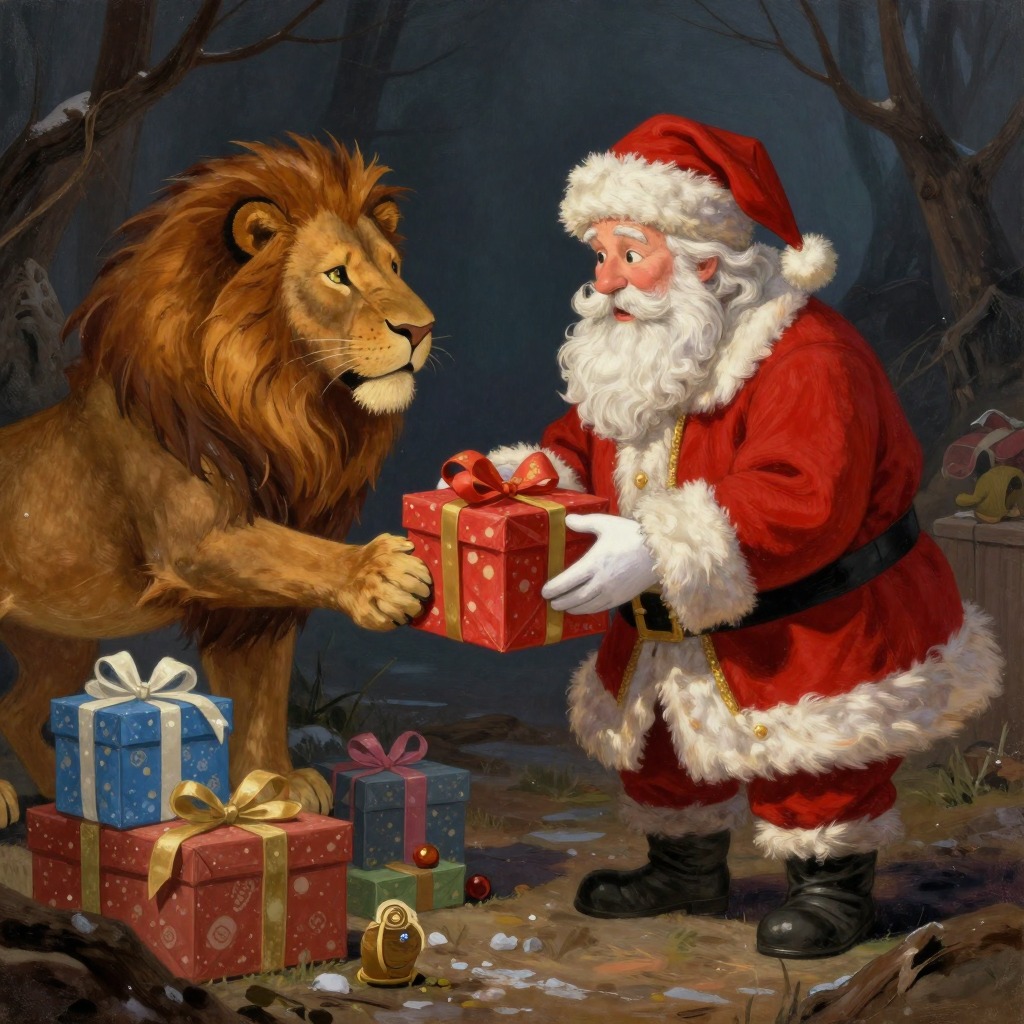
Father Christmas presented the horn to Susan along with a bow and quiver of arrows, instructing her to use the bow only in great need and not to fight in the battle. He told her, "when you put this horn to your lips and blow it, then, wherever you are, I think help of some kind will come to you." The horn is thus a tool of last resort, a means of calling for aid rather than a weapon for direct combat, reflecting Susan's role as a non-combatant in the coming war.
Use in Battle
Susan blew the horn during the attack on the camp at the Hill of the Stone Table, when a wolf—the second wolf sent by the White Witch—cornered her in a tree. The sound of the horn was heard by Aslan and Peter, who were at the eastern edge of the hill looking toward Cair Paravel. Aslan recognized the sound immediately, saying to Peter in a low voice, "It is your sister's horn." He then commanded the other creatures to hold back, declaring, "Let the Prince win his spurs," and sent Peter running to the pavilion. There Peter found Susan clinging to a tree branch, her foot inches from the wolf's snapping teeth, and he killed the wolf in his first battle, an act that led Aslan to knight him as Sir Peter Fenris-Bane.
Narrative Significance
The horn functions as a narrative trigger that transforms Peter from a boy into a warrior and a knight. Its sound not only summons help but also creates a moment of decisive action that advances the plot and establishes Peter's role as the leader of Aslan's army. The horn's magic is reliable and immediate, contrasting with the deceptive magic of the White Witch's enchanted Turkish Delight, and it underscores the theme that true help comes from selfless courage and trust in Aslan's cause.