The Emperor-Beyond-the-Sea
The Lion, the Witch and the WardrobeThe Emperor-Beyond-the-Sea is the highest authority in the cosmology of Narnia, a figure never seen in the story but whose power and decrees underpin the entire moral and magical order of the land. He is the father of Aslan, the great Lion who is the true King of Narnia, and it is his magic—the Deep Magic—that was inscribed into Narnia at its very creation. The Emperor-Beyond-the-Sea is referenced only by other characters, yet his will defines the stakes of the central conflict between Aslan and the White Witch, making him a silent but decisive presence in the narrative.
Identity and Divine Authority
Mr. Beaver first introduces the Emperor-Beyond-the-Sea when explaining Aslan's nature to the children. He declares that Aslan is "the King of the wood and the son of the great Emperor-Beyond-the-Sea," establishing the Emperor as a figure of supreme, almost divine, authority who stands above even the Lion himself. This lineage positions Aslan not as an independent sovereign but as the rightful heir and representative of a higher cosmic order. The Emperor is never described in physical terms; his existence is known only through the laws he established and the prophecies that speak of his will.
The Deep Magic and the Law of Treason
The White Witch invokes the Emperor-Beyond-the-Sea when she claims Edmund as her lawful prey. She demands, "Tell you what is written on that very Table of Stone which stands beside us? Tell you what is written in letters deep as a spear is long on the trunk of the World Ash Tree? Tell you what is engraved on the sceptre of the Emperor-Beyond-the-Sea?" She then asserts that the Emperor's magic, placed into Narnia at the very beginning, decrees that "every traitor belongs to me as my lawful prey and that for every treachery I have a right to a kill." This reveals that the Deep Magic is not a neutral force but a legal code, one that grants the Witch a legitimate claim over Edmund's life. Aslan does not deny this law; he confirms its truth, saying, "It is very true; I do not deny it." The Emperor-Beyond-the-Sea is thus the lawgiver whose decrees cannot be overturned by mere force, even by Aslan himself.
The Limits of the Emperor's Magic
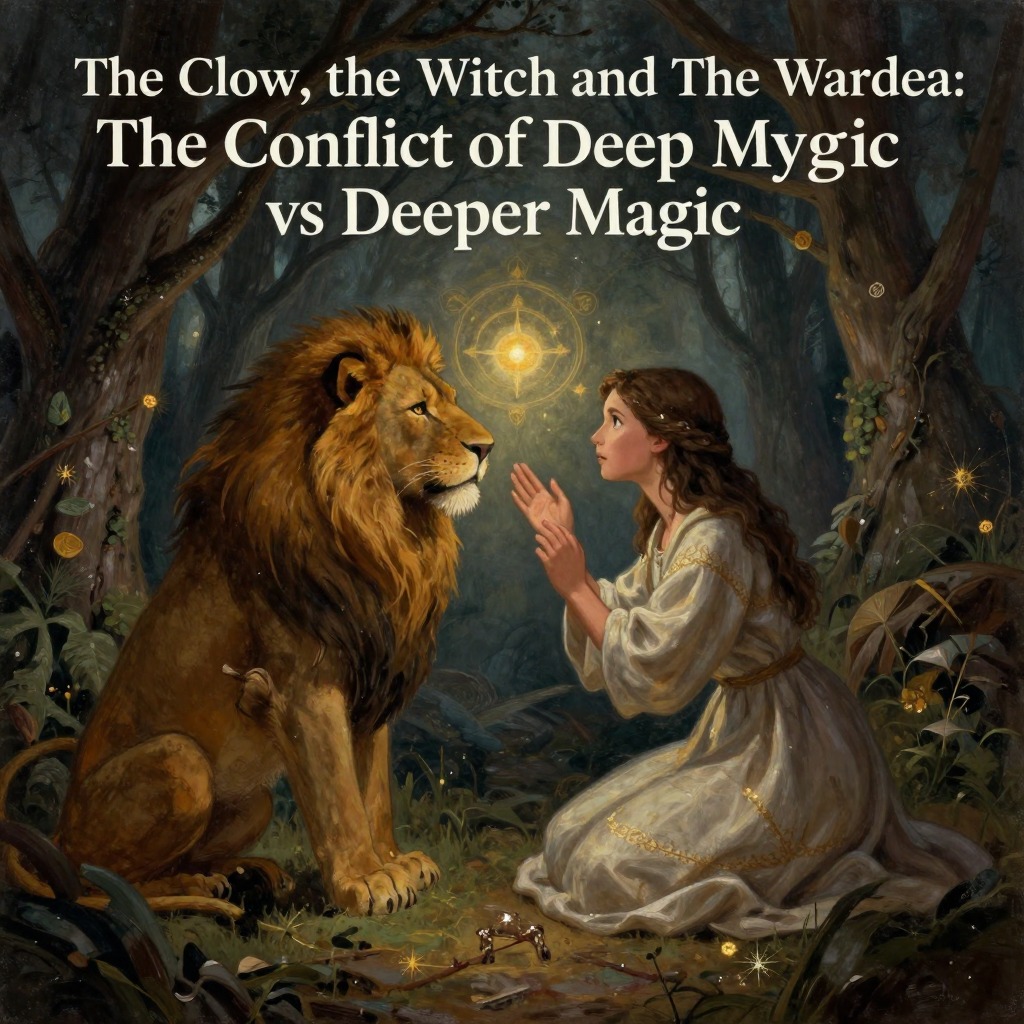
While the Emperor-Beyond-the-Sea's Deep Magic binds Aslan, it is not the ultimate power in Narnia. After Aslan's sacrificial death and resurrection, he reveals to Susan and Lucy that there exists "a magic deeper still which she did not know. Her knowledge goes back only to the dawn of Time. But if she could have looked a little further back, into the stillness and the darkness before Time dawned, she would have read there a different incantation." This Deeper Magic, which predates the Emperor's own creation, allows for a willing victim to die in a traitor's stead, causing Death itself to work backwards. The Emperor-Beyond-the-Sea, therefore, represents the highest known authority within the created order of Narnia, but he is not the ultimate source of all reality; there is a power that precedes even him.
Narrative Significance
The Emperor-Beyond-the-Sea functions as the absent sovereign whose laws structure the plot's central crisis. His Deep Magic creates the seemingly insurmountable obstacle that forces Aslan to sacrifice himself, and the revelation of the Deeper Magic that transcends his decrees provides the story's theological resolution. He is a figure of absolute, impersonal law, contrasted with Aslan's personal, sacrificial love. The Emperor is never a character in the action but rather the conceptual foundation upon which the entire moral drama of Narnia rests, embodying the idea that even the most powerful beings are subject to a higher, pre-existing order.