Wardrobe
The Lion, the Witch and the WardrobeThe Wardrobe is the central magical object in the spare room of the Professor's vast country house, the device through which the Pevensie children first discover and repeatedly access the land of Narnia. It is an ordinary-looking piece of furniture—a large wardrobe with a looking-glass in its door—that, under certain conditions, becomes a gateway to an entirely separate world. Its discovery and the rules governing its function set the entire plot of the story in motion and define the relationship between the mundane and the magical.
Discovery and First Use
Lucy Pevensie, the youngest of the four children, is the first to discover the Wardrobe's secret. While exploring the house on a rainy day, she enters a room that is quite empty except for this one big wardrobe and a dead blue-bottle on the window-sill. Despite feeling almost sure it would be locked, she tries the door, which opens quite easily, and two moth-balls drop out. Inside, she finds several coats hanging up—mostly long fur coats. Stepping into the wardrobe and pushing through the coats, she expects to feel woodwork against her fingertips but instead feels something soft and powdery and extremely cold under her feet. A moment later, she finds herself standing in the middle of a wood at night-time with snow under her feet and snowflakes falling through the air. Crucially, she leaves the door open, knowing that it is very foolish to shut oneself into any wardrobe, a precaution that allows her to see the open doorway of the wardrobe behind her and catch a glimpse of the empty room from which she set out, providing a visible path back.
The Wardrobe's Unreliable Nature
The Wardrobe does not always function as a portal. When Lucy returns from her first visit and brings her siblings to see the magic, they find only a perfectly ordinary wardrobe. Peter goes in and raps his knuckles on it to make sure that it is solid. The back of the wardrobe is visible, with hooks on it, and there is no wood and no snow. This inconsistency leads to Lucy's misery and her siblings' disbelief, as the Wardrobe refuses to reveal its magic on demand. Later, Edmund enters the wardrobe on his own, not because he believes in the magic but to tease Lucy. He jumps in and shuts the door, forgetting what a very foolish thing this is to do, and finds himself in Narnia. The Wardrobe's magic is thus shown to be unpredictable and not subject to simple demonstration.
The Group Entry and the Final Return
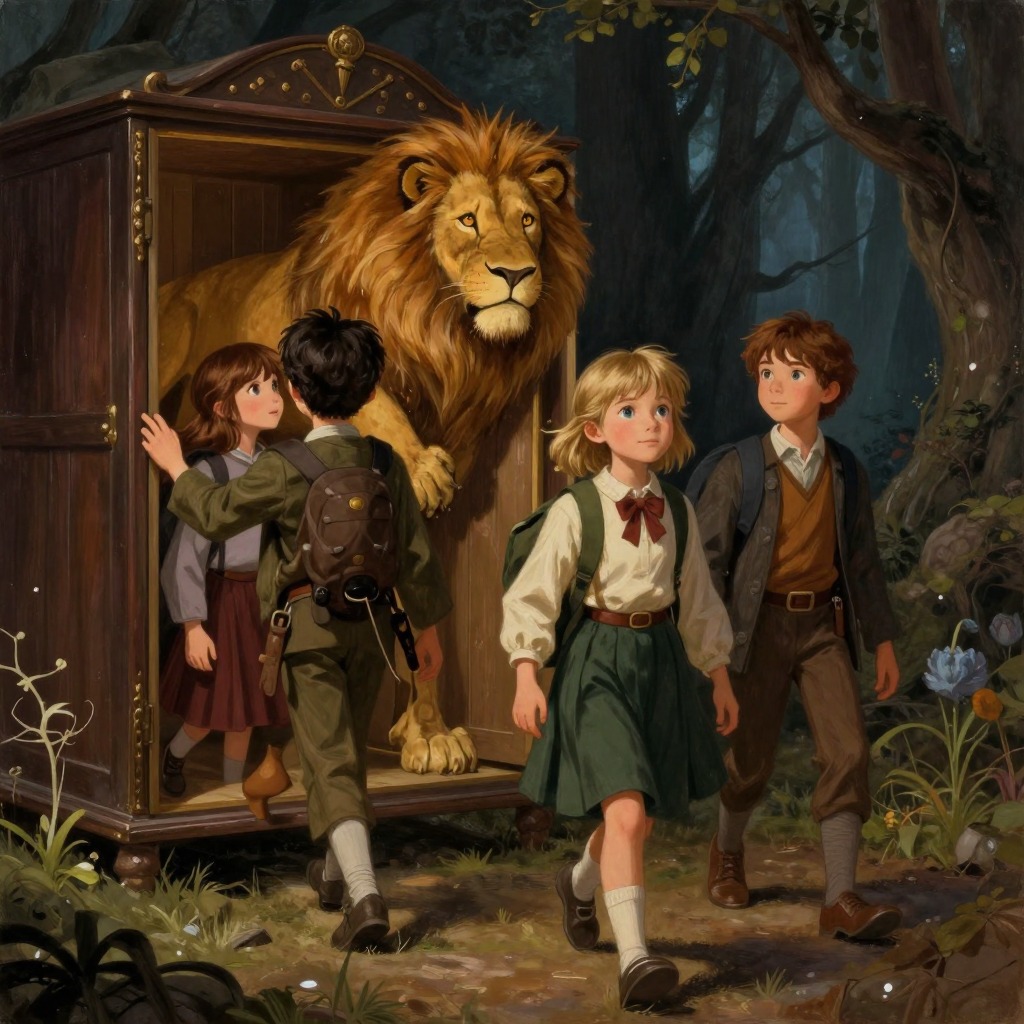
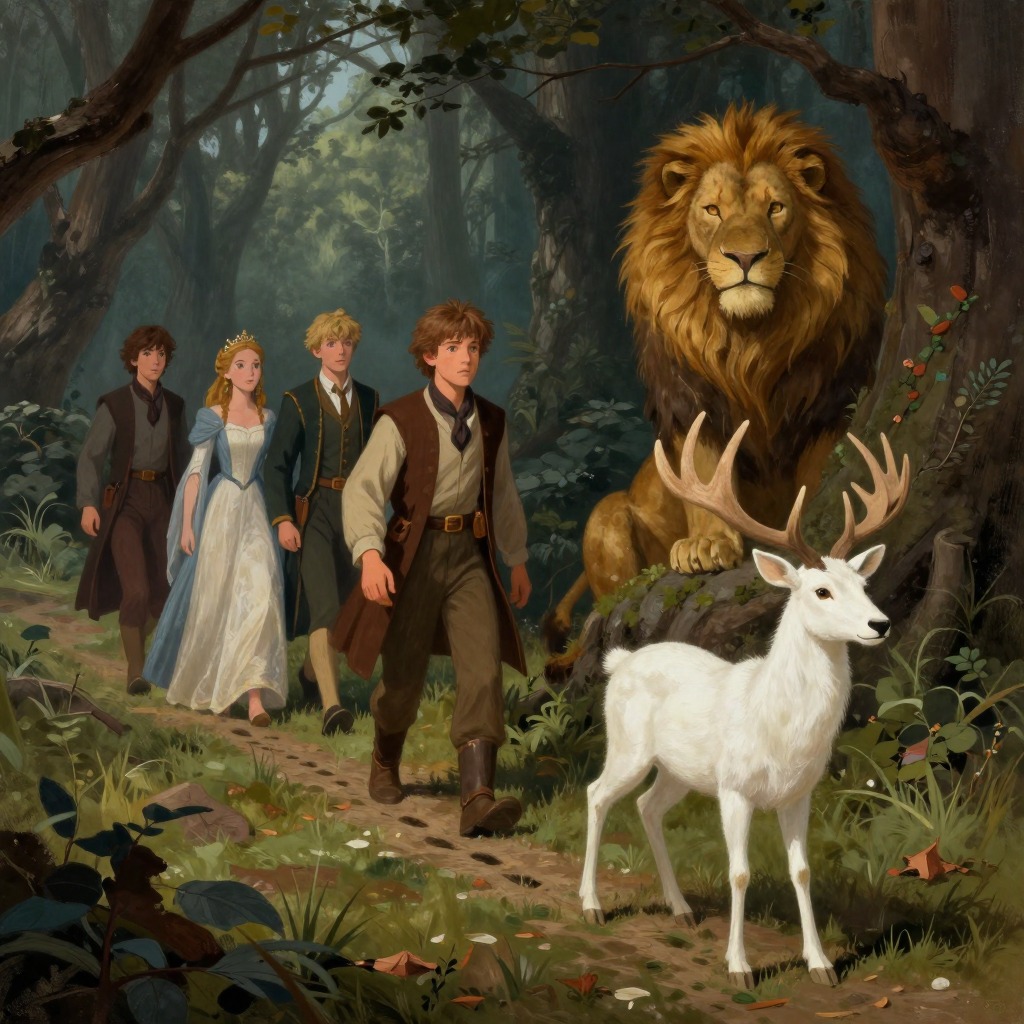
The four children enter Narnia together for the first time when they are forced to hide from Mrs. Macready and a party of sight-seers. They bundle into the wardrobe and sit there, panting, in the dark. Peter holds the door closed but does not shut it, remembering that you should never shut yourself up in a wardrobe. This time, the transition is gradual: they first notice the cold, then the wet, and finally realize they are sitting on snow-covered ground among trees. The Wardrobe has become the gateway for all four of them. Years later, after they have grown into kings and queens, they find themselves back in the wardrobe while hunting the White Stag. They enter a thicket and before they have gone a score of paces, they notice they are making their way not through branches but through coats, and next moment they all come tumbling out of the wardrobe door into the empty room, no longer in their hunting array but just in their old clothes. The Wardrobe thus serves as both the entrance and the exit for their entire Narnian adventure.
Narrative and Thematic Significance
The Wardrobe functions as a liminal object, a piece of everyday furniture that contains an entire world. Its dual nature—ordinary and magical, reliable and unpredictable—embodies the story's central theme of hidden wonders existing just beyond the mundane. The Professor later explains that the Wardrobe's route to Narnia is not to be used twice, and that the children will get back to Narnia some day only when they are not looking for it. The Wardrobe is not a stable, mechanical portal but a magical object that operates on its own terms, reinforcing the idea that true adventure cannot be forced or repeated at will. Its presence in the spare room of a very strange house, which even the Professor knows very little about, underscores the mystery and the possibility of other worlds existing all over the place, just round the corner.