Susan Pevensie
The Lion, the Witch and the WardrobeSusan Pevensie is the second eldest of the four Pevensie children, a girl defined by her practicality, caution, and protective instincts. She is the first to voice concern about the dangers of Narnia and the last to embrace its wonders, yet her steady presence and growing courage make her an indispensable part of the quest that ends the White Witch's reign. Her arc moves from disbelief to reluctant acceptance, from fear to quiet bravery, and finally to a regal grace that earns her the title Queen Susan the Gentle.
Identity and Introduction
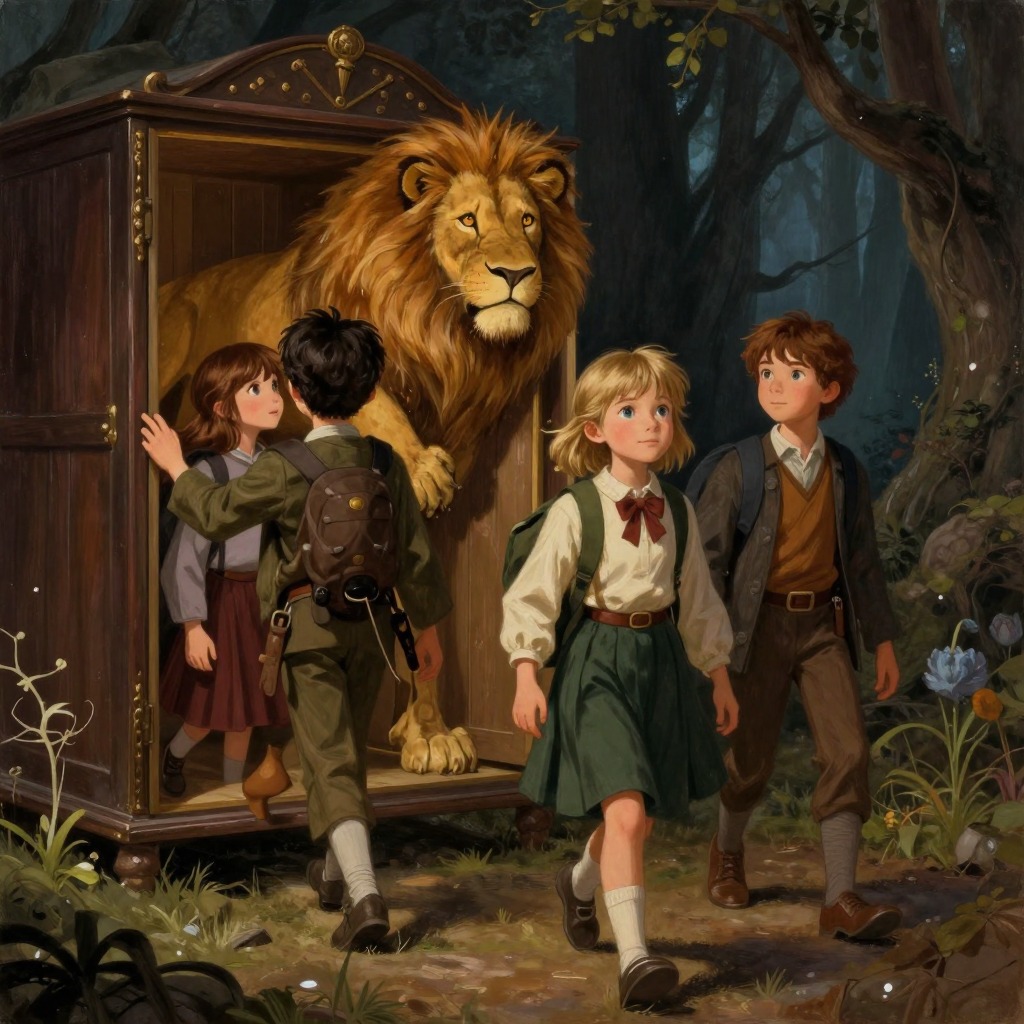
Susan is introduced as one of four children sent from London to the country house of an old Professor during the war. On the first evening, she calls the Professor "an old dear," showing her warm and diplomatic nature. When the others speculate about exploring the house, she is the one who suggests practical activities like listening to the wireless or reading books. Her first reaction to Lucy's story about Narnia is disbelief: she calls Lucy "batty" and insists the wardrobe is "just an ordinary wardrobe." Even after Edmund confirms the magic, Susan remains the most reluctant to accept the reality of another world, asking the Professor, "But how could it be true, Sir?" and pointing out the time discrepancy. Her skepticism is not malice but a reflection of her logical, protective mind.
Arc Through the Plot
Once the four children enter Narnia together, Susan's caution becomes a valuable counterweight to Peter's boldness and Lucy's faith. When they find Mr. Tumnus's cave ransacked and the notice of arrest, she is the first to suggest turning back: "I don't know that I'm going to like this place after all." Yet when Lucy insists they must rescue the Faun, Susan agrees, saying, "I've a horrid feeling that Lu is right. I don't want to go a step further and I wish we'd never come. But I think we must try to do something." This reluctant commitment marks the beginning of her transformation. During the flight from the Beavers' house, she helps carry supplies and endures the long, cold march without complaint, though she develops a blister on one heel. When Father Christmas arrives, he gives her a bow and a quiver of arrows and a little ivory horn, telling her, "You must use the bow only in great need, for I do not mean you to fight in the battle. It does not easily miss. And when you put this horn to your lips and blow it, then, wherever you are, I think help of some kind will come to you." This gift acknowledges her role as a defender, not a frontline warrior, and foreshadows her crucial act of summoning help.
Relationships and Conflict
Susan's relationship with Edmund is strained by his betrayal. She is the one who, after Edmund sneers at Lucy, tries to keep the peace: "Do stop it; it won't make things any better having a row between you two." When Mr. Beaver reveals Edmund has gone to the White Witch, Susan protests, "Oh surely—oh really! He can't have done that," but then feels "suddenly quite certain inside that this was exactly what Edmund had done." Her loyalty to her brother wars with her growing understanding of his treachery. With Lucy, Susan shares a deep bond, especially during the night of Aslan's sacrifice, when the two girls follow the Lion, witness his humiliation and death, and stay with his body through the darkest hours. They cry together, kiss his cold face, and stroke his fur, and it is Susan who first notices the mice nibbling at the cords. Their shared grief and vigil forge an unbreakable sisterly connection.
Change and Ending
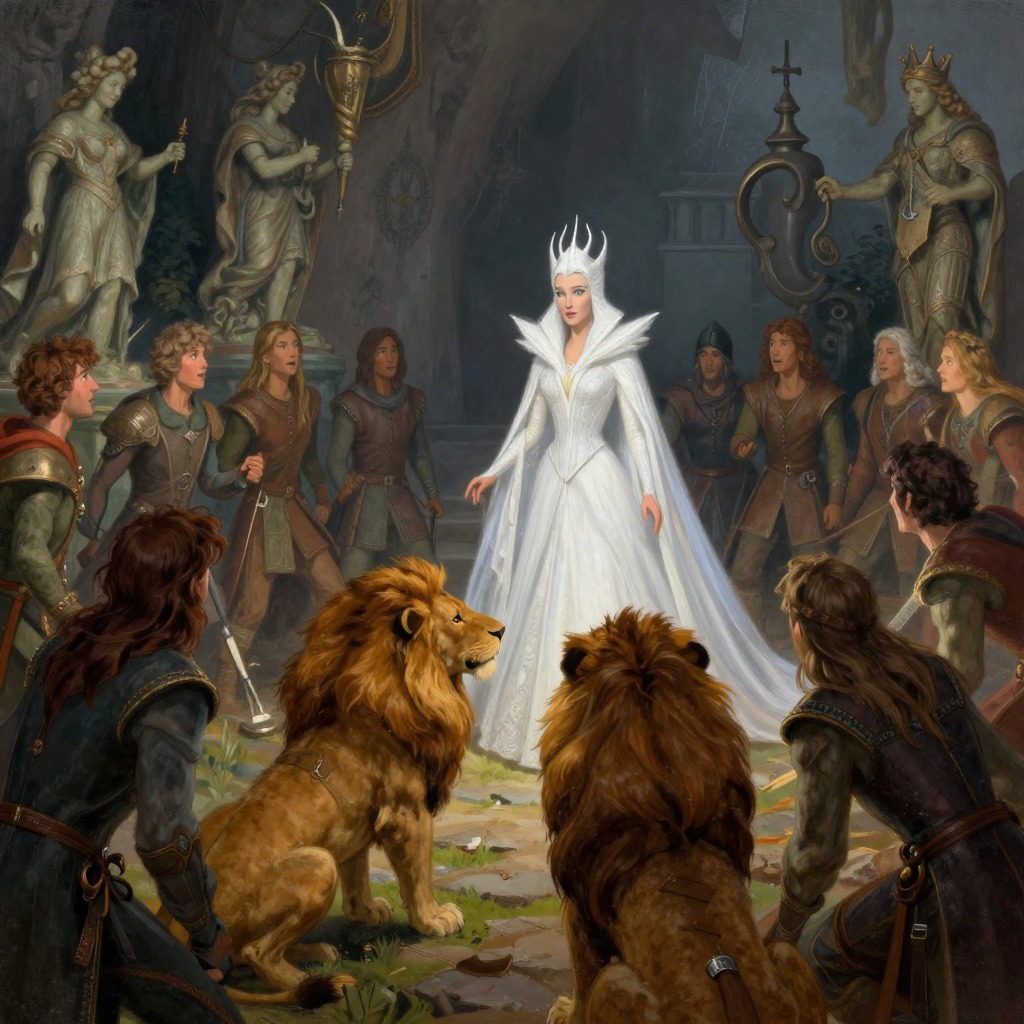
Susan's most profound change occurs during the night of Aslan's death and resurrection. She and Lucy follow Aslan to the Stone Table, watch him be shaved, muzzled, and killed by the White Witch, and then spend the night in despair. When Aslan returns, Susan is the one who asks, "You're not—not a—?" unable to say the word "ghost." Aslan licks her forehead, and she feels the warmth of his breath and a rich smell, confirming his reality. This experience transforms her fear into faith. In the final battle, she blows her horn, summoning help at a critical moment. After the victory, Aslan crowns her Queen Susan the Gentle at Cair Paravel, and she rules wisely, becoming a tall and gracious woman with black hair that fell almost to her feet. Kings from beyond the sea send ambassadors asking for her hand in marriage. When the four eventually return through the wardrobe, they are no longer Kings and Queens but just Peter, Susan, Edmund, and Lucy in their old clothes, yet the Professor assures them that "once a King in Narnia, always a King in Narnia."
Thematic Significance
Susan embodies the tension between skepticism and faith, caution and courage. Her initial refusal to believe in Narnia represents the rational, worldly perspective that must be overcome for the adventure to begin. Yet her caution is not a flaw to be discarded but a strength to be refined: it prevents recklessness and ensures the group's survival. Her gifts from Father Christmas—the bow and horn—symbolize her role as a protector who fights from a distance and calls for aid when needed. Her title, "the Gentle," reflects her nurturing, diplomatic nature, which balances Peter's martial prowess, Edmund's strategic mind, and Lucy's valiant spirit. Susan's journey shows that true gentleness is not weakness but a form of strength that holds the group together and makes their victory possible.