African desert
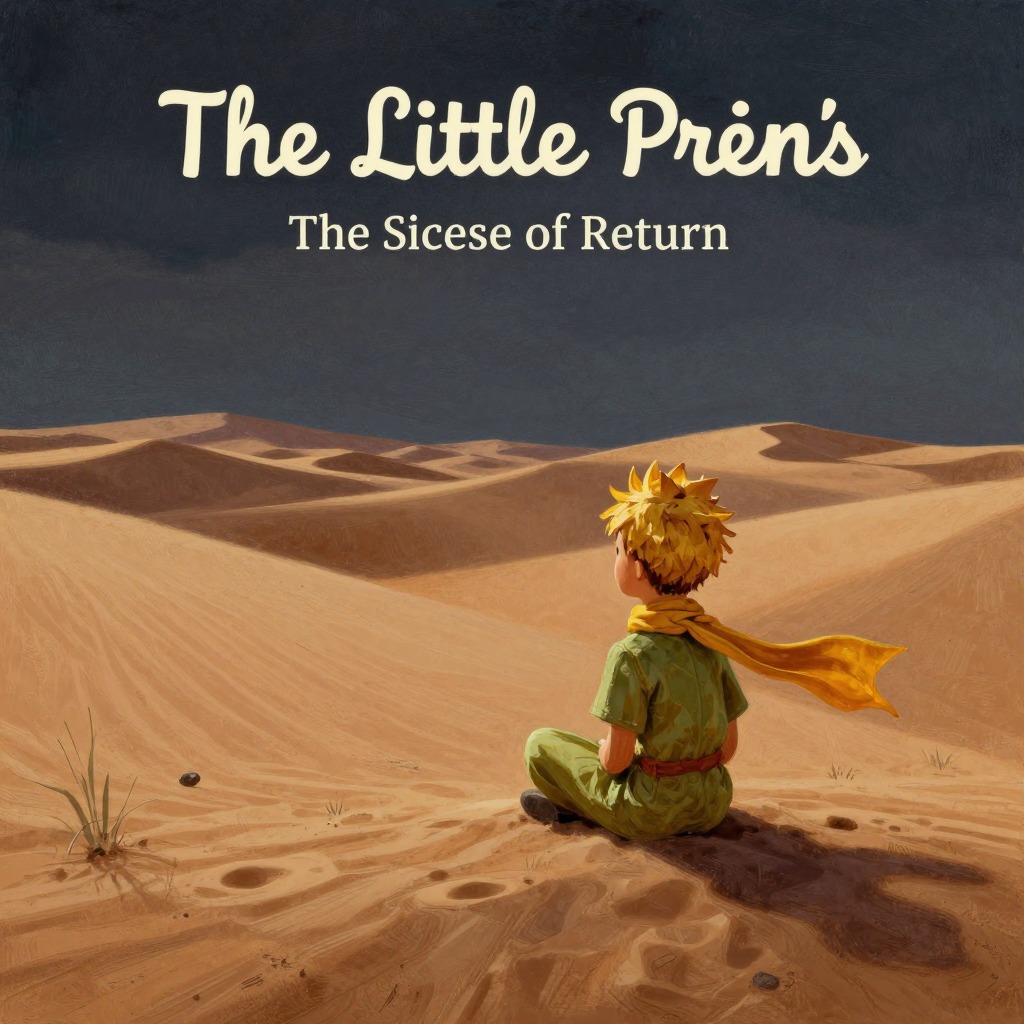
The Little PrinceThe African desert is the pivotal landscape of the narrative, the exact spot where the Little Prince appeared on Earth and where he disappeared. The Narrator identifies it as "the loveliest and saddest landscape in the world," a place he redraws specifically to impress it upon the reader's memory. It is not merely a geographical setting but the emotional and symbolic heart of the story, where the encounter with the Little Prince begins and ends, and where the Narrator's ongoing vigil for his return is anchored.
The Setting of Appearance and Disappearance
The African desert is defined by its dual role as the stage for both the Little Prince's arrival and his departure. The Narrator states plainly that "It is here that the little prince appeared on Earth, and disappeared." This single location thus contains the entire arc of the Little Prince's earthly sojourn, from his mysterious materialization to his equally mysterious exit. The desert's vast emptiness contrasts with the profound significance of these events, making it a place where the ordinary rules of time and space seem suspended. The Narrator's decision to redraw the landscape, noting it is "the same as that on the preceding page," underscores his need to fix this place in the reader's mind, as if the very ground itself holds the secret of the Little Prince's fate.
A Landscape of Memory and Grief
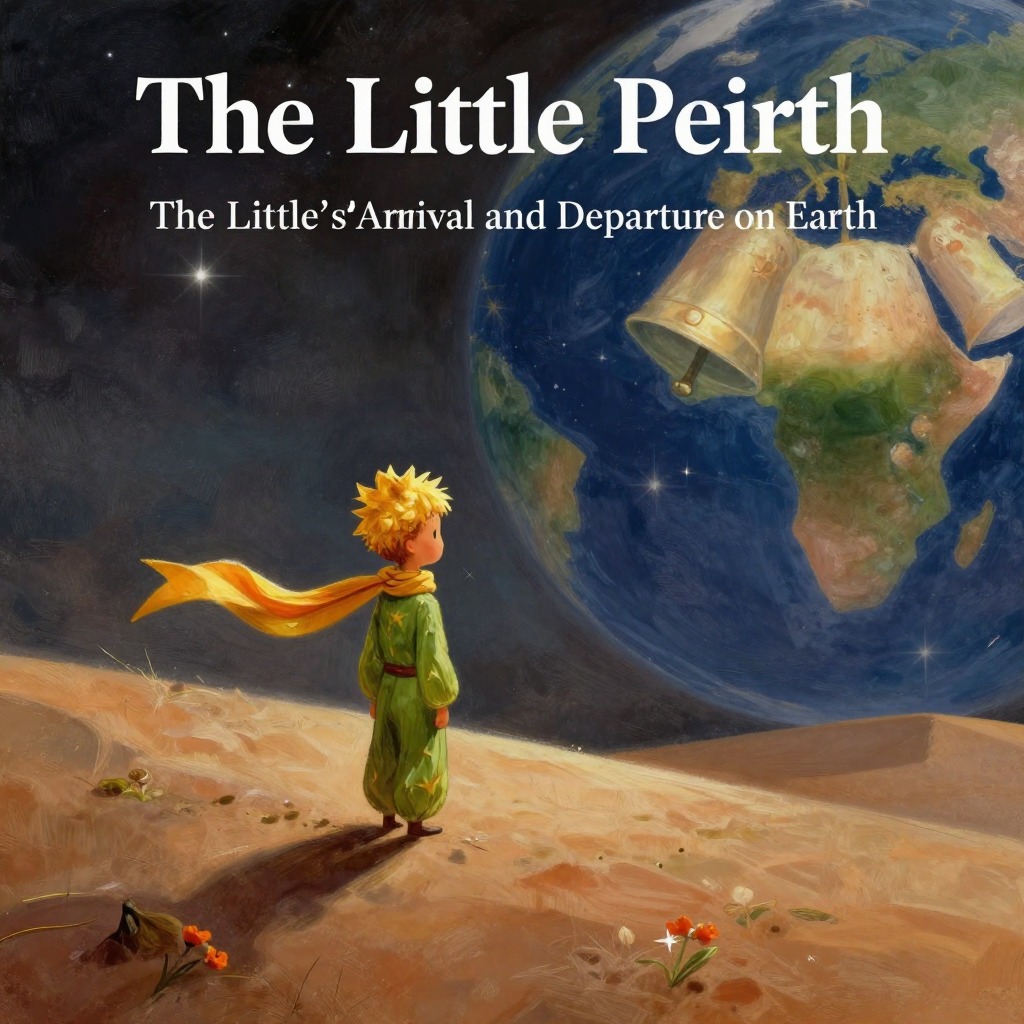
The desert is inseparable from the Narrator's grief and his attempts to process the Little Prince's departure. Six years after the events, the Narrator admits he has "never yet told this story," and his sorrow is only "comforted a little." The desert is where he returns in memory, and it is the place he associates with the unresolved question of the sheep and the rose. He wonders aloud, "what is happening on his planet? Perhaps the sheep has eaten the flower . . ." This uncertainty transforms the desert from a mere location into a landscape of anxiety, where the Narrator's alternating hopes and fears play out. When he imagines the Little Prince carefully shutting his flower under her glass globe and watching over his sheep, he is "happy," and the stars laugh sweetly; but when he imagines a moment of absent-mindedness, the bells of the stars "are changed to tears." The desert, as the site of the Little Prince's disappearance, becomes the focal point for this emotional oscillation.
The Mystery of the Sheep and the Rose
The African desert is also the stage for the story's central philosophical mystery: whether the sheep has eaten the rose. The Narrator frames this as "a great mystery" that affects "nothing in the universe" if the sheep, unseen and unknown, has or has not consumed the flower. He urges the reader to "Look up at the sky" and ask, "is it yes or no? Has the sheep eaten the flower?" This question, rooted in the desert where the Little Prince vanished, is one that "no grown-up will ever understand" as a matter of "so much importance." The desert thus becomes the symbolic ground where the fate of the Little Prince's planet—and the meaning of love and responsibility—is decided, even though the answer remains unknowable.
A Place of Waiting and Recognition
The Narrator transforms the African desert into a place of pilgrimage and waiting. He instructs the reader to "Look at it carefully so that you will be sure to recognize it in case you travel some day to the African desert." If one comes upon the spot, the Narrator pleads, "please do not hurry on. Wait for a time, exactly under the star." The desert is thus not just a memory but a living invitation to encounter the Little Prince again. The description of the Little Prince—"a little man who appears who laughs, who has golden hair and who refuses to answer questions"—serves as a recognition guide, and the Narrator's final request, "Send me word that he has come back," turns the desert into a place of hope. The landscape, once the site of loss, becomes the site of potential reunion, where the Narrator's love for the Little Prince is kept alive through the act of waiting.
The Narrative and Thematic Significance
The African desert functions as the narrative frame for the entire story, both its beginning and its end. It is where the Narrator's encounter with the Little Prince occurred, and it is where he returns in memory six years later. The desert's dual nature—lovely and sad—mirrors the story's blend of wonder and melancholy. It is a place where the ordinary world of grown-ups, who fail to grasp the importance of the sheep and the rose, gives way to a childlike perspective that sees the universe as changed by a single unseen act. The desert, with its stars and bells, becomes a cosmic threshold, linking the Earth to the Little Prince's distant planet. In this way, the African desert is not merely a setting but a character in its own right, embodying the story's deepest themes of love, loss, and the enduring hope that what is lost may yet return.