Cover the flower with glass globe every night
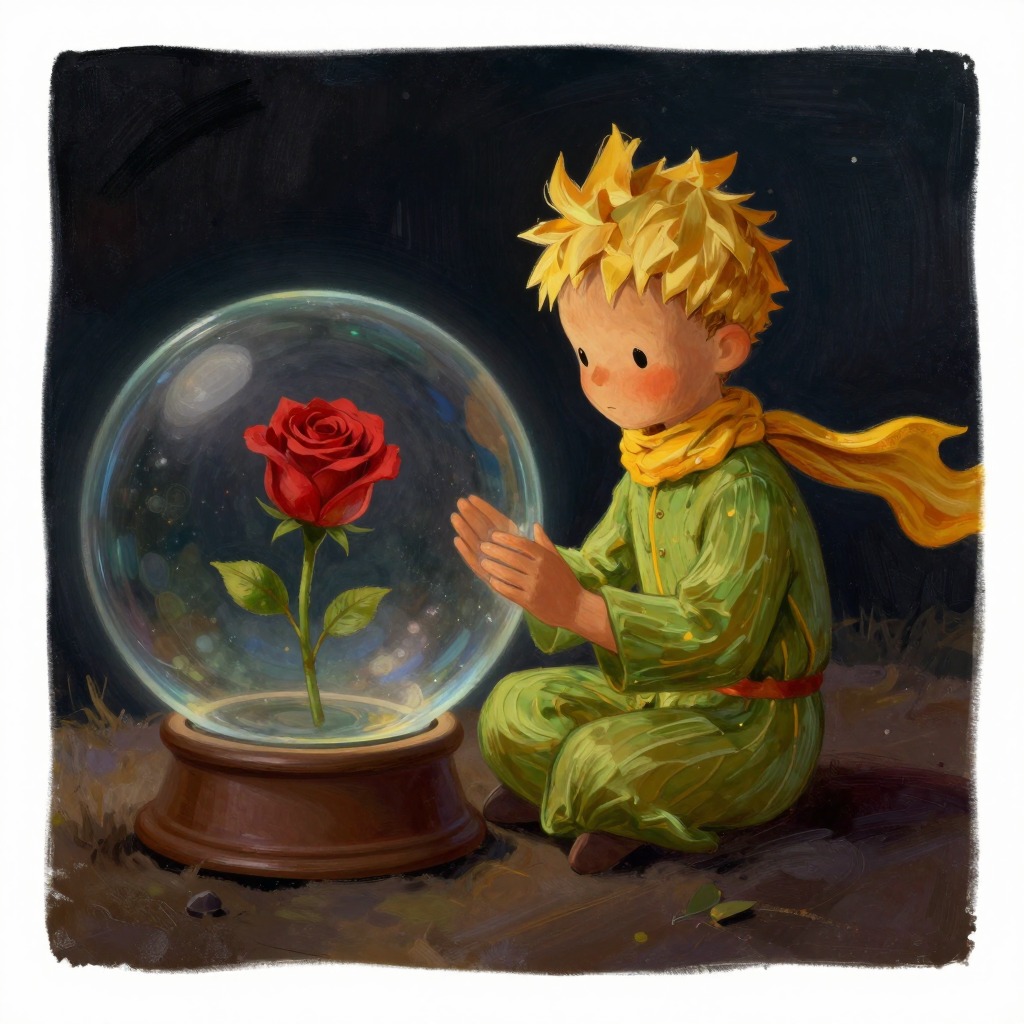
The Little PrinceCover the flower with glass globe every night is the Little Prince's nightly ritual of shielding his beloved rose from harm, a practice that becomes the hinge of the narrator's grief and the story's deepest mystery. After the prince's departure, the narrator recalls this habit as the one safeguard that might keep the flower alive, yet its very fragility—the chance of a forgotten globe or a wandering sheep—turns the entire universe into a question of whether the rose has been eaten. This rule, simple as it seems, carries the weight of love, responsibility, and the unbearable possibility of loss, and it is the lens through which the narrator, and the reader, must learn to see the stars.
The Ritual and Its Purpose
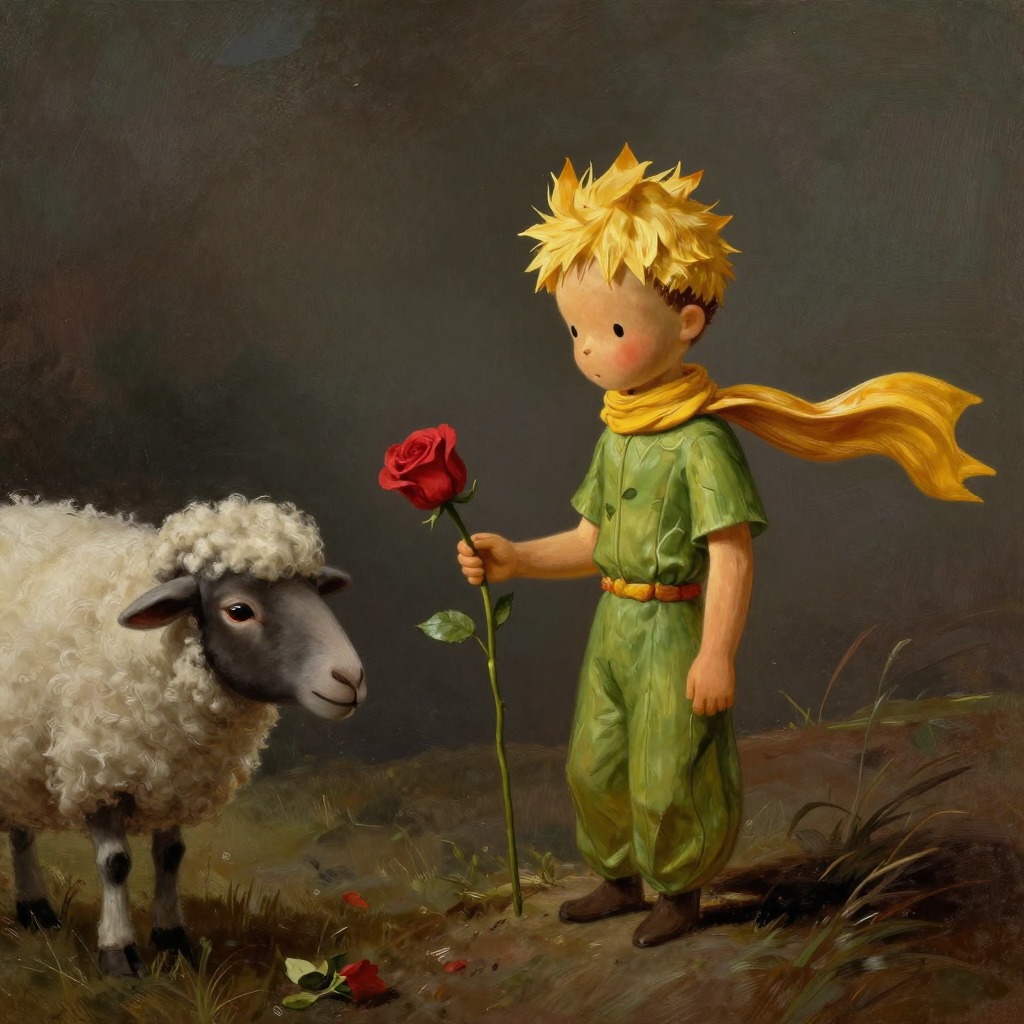
The Little Prince's nightly act of covering his flower with the glass globe is described as a careful, devoted routine. The narrator imagines the prince shutting the flower under her glass globe every night and watching over his sheep very carefully, a picture of tender guardianship that brings him happiness. The globe is not merely a physical object but a symbol of the prince's commitment to his rose, a barrier against the cold and the dangers of the night. The sheep, too, is part of this protective system, and the prince's vigilance over both suggests a world where every creature and every bloom depends on his attention. This ritual is the prince's answer to the question of how to love something fragile: by enclosing it, by watching it, by never letting it out of sight.
The Forgotten Strap and the Unraveling of Certainty
The narrator's own act of drawing the muzzle for the little prince introduces a fatal flaw into this perfect system. He forgets to add the leather strap to the muzzle, so the prince will never be able to fasten it on his sheep. This small omission, a mere detail in a drawing, becomes the crack through which doubt floods. Without the strap, the sheep cannot be controlled, and the narrator begins to wonder: what is happening on the prince's planet? Perhaps the sheep has eaten the flower. The forgotten strap is the narrator's own failure, a guilt that mirrors the prince's potential failure to remember the globe. It binds the two characters in a shared vulnerability, showing that even the most careful guardianship can be undone by a moment of absent-mindedness.
The Two Voices of Hope and Fear
The narrator's mind oscillates between two opposing certainties, each voiced in his internal dialogue. At one time he tells himself, "Surely not! The little prince shuts his flower under her glass globe every night, and he watches over his sheep very carefully," and this thought fills him with happiness, making the laughter of all the stars sweet. But at another time he reminds himself that "at some moment or other one is absent-minded, and that is enough," and he imagines an evening when the prince forgot the glass globe, or the sheep got out without making any noise in the night. Then the little bells are changed to tears. This oscillation is not mere anxiety; it is the structure of the narrator's grief, a pendulum swinging between the comfort of faith and the agony of doubt. The rule of the glass globe, once a source of security, now becomes the very thing that makes the uncertainty unbearable, because it acknowledges that the flower's survival depends on a fallible human (or princely) memory.
The Cosmic Question and Its Significance
The narrator elevates this private worry into a great mystery that touches everyone who loves the little prince. He declares that "nothing in the universe can be the same if somewhere, we do not know where, a sheep that we never saw has—yes or no?—eaten a rose." The question—has the sheep eaten the flower?—becomes a test of perception and faith. He urges the reader to look up at the sky and ask, "Is it yes or no?" and promises that the answer will change everything. Yet no grown-up will ever understand that this is a matter of so much importance. Here the rule of the glass globe transcends its literal function and becomes a philosophical touchstone: it asks whether love can protect what it cherishes, whether care can outlast absence, and whether the universe is ordered by vigilance or by accident. The narrator's inability to know the answer leaves the story suspended between hope and despair, and it is this suspension that gives the tale its enduring power.
The Landscape of Loss and the Promise of Return
The narrator identifies the place where the little prince appeared on Earth and disappeared as "the loveliest and saddest landscape in the world," and he draws it again to impress it on the reader's memory. This landscape, set in the African desert, is the stage for the prince's arrival and departure, and it is here that the narrator's vigil begins. He asks the reader to wait under the star, and if a little man appears who laughs, has golden hair, and refuses to answer questions, they will know who he is. The refusal to answer questions is a final echo of the prince's nature—he is a being who cannot be pinned down by interrogation, just as the fate of his flower cannot be resolved by logic. The narrator's plea to be comforted with word that the prince has come back is the story's last gesture, a hope that the rule of the glass globe, and the love it represents, might still hold true across the distance of the stars.