Disappearing from Earth
The Little PrinceThe disappearance of the Little Prince from Earth is the event around which the entire narrative pivots, transforming a tale of interplanetary friendship into a meditation on loss, uncertainty, and the invisible bonds that connect the living to the absent. It is the moment when the story's central question—has the sheep eaten the rose?—becomes permanently unanswerable, and when the African desert, the site of both his appearance and his vanishing, is consecrated as the loveliest and saddest landscape in the world.
The Vanishing and Its Immediate Aftermath
The Little Prince disappeared from Earth at daybreak, leaving no body behind. The Narrator, who had drawn a muzzle for the sheep but forgotten to add the leather strap, realized that the prince would never have been able to fasten it on his animal. This small oversight—a forgotten strap—opened a door to permanent uncertainty. Six years had already passed since the event, and the Narrator had never told the story until now. When his companions met him on his return, they were content to see him alive; he was sad, but he told them only, "I am tired." The grief was real but unspoken, buried under the appearance of ordinary exhaustion.
The Unanswerable Question: Has the Sheep Eaten the Rose?
The disappearance created a mystery that the Narrator cannot resolve. At one moment he reassures himself: the Little Prince shuts his flower under her glass globe every night, and he watches over his sheep very carefully. In those moments, the Narrator is happy, and there is sweetness in the laughter of all the stars. But at another moment he imagines the opposite: at some moment or other one is absent-minded, and that is enough. On some evening the prince forgot the glass globe, or the sheep got out without making any noise in the night. Then the little bells are changed to tears. The oscillation between hope and dread is the emotional rhythm of the entire aftermath. The Narrator declares this a great mystery: for those who love the Little Prince, nothing in the universe can be the same if somewhere, a sheep that was never seen has—yes or no?—eaten a rose. No grown-up will ever understand that this is a matter of so much importance.
The Landscape as Memorial
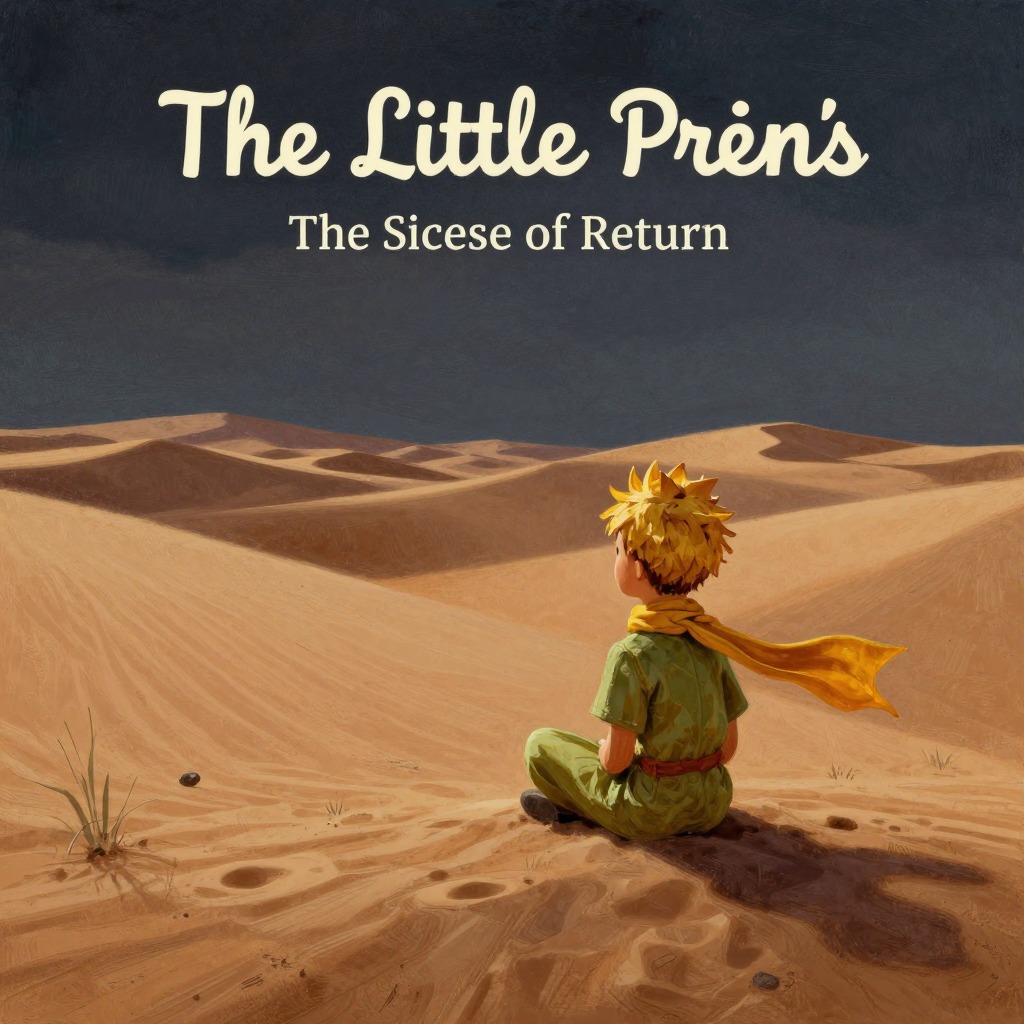
The place where the Little Prince appeared on Earth and disappeared is, to the Narrator, the loveliest and saddest landscape in the world. He drew it again to impress it on the reader's memory, and he urges anyone who might travel some day to the African desert to look at it carefully so they will be sure to recognize it. If they come upon this spot, they are not to hurry on but to wait for a time, exactly under the star. Then, if a little man appears who laughs, who has golden hair and who refuses to answer questions, they will know who he is. The instruction is a plea: if this should happen, please comfort the Narrator, send him word that the Little Prince has come back. The desert is no longer just a geographical location; it has become a threshold between worlds, a place where the absent might still return.
The Transformation of the Cosmos
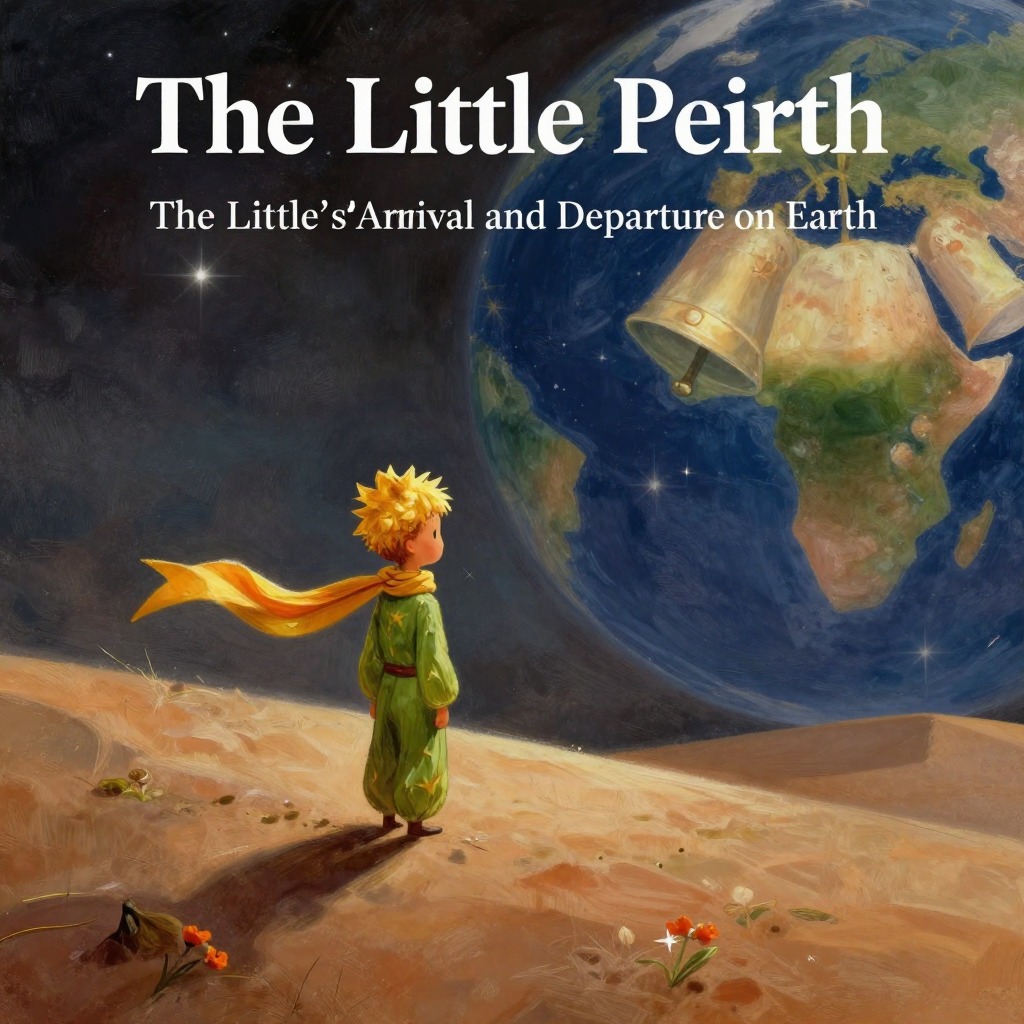
The disappearance changed the meaning of the entire universe for the Narrator. Now his sorrow is comforted a little—not entirely—but he knows that the Little Prince did go back to his planet, because no body was found. At night he loves to listen to the stars; it is like five hundred million little bells. The stars have become audible, each one a potential signal from the lost friend. Yet the same stars can turn to tears when doubt creeps in. The cosmos itself is now split between two possibilities: the sheep has eaten the flower, or it has not. Everything changes depending on the answer. The disappearance did not end the story; it made the story permanent, unresolved, and alive in the mind of everyone who loves the Little Prince.