Forgetting the glass globe
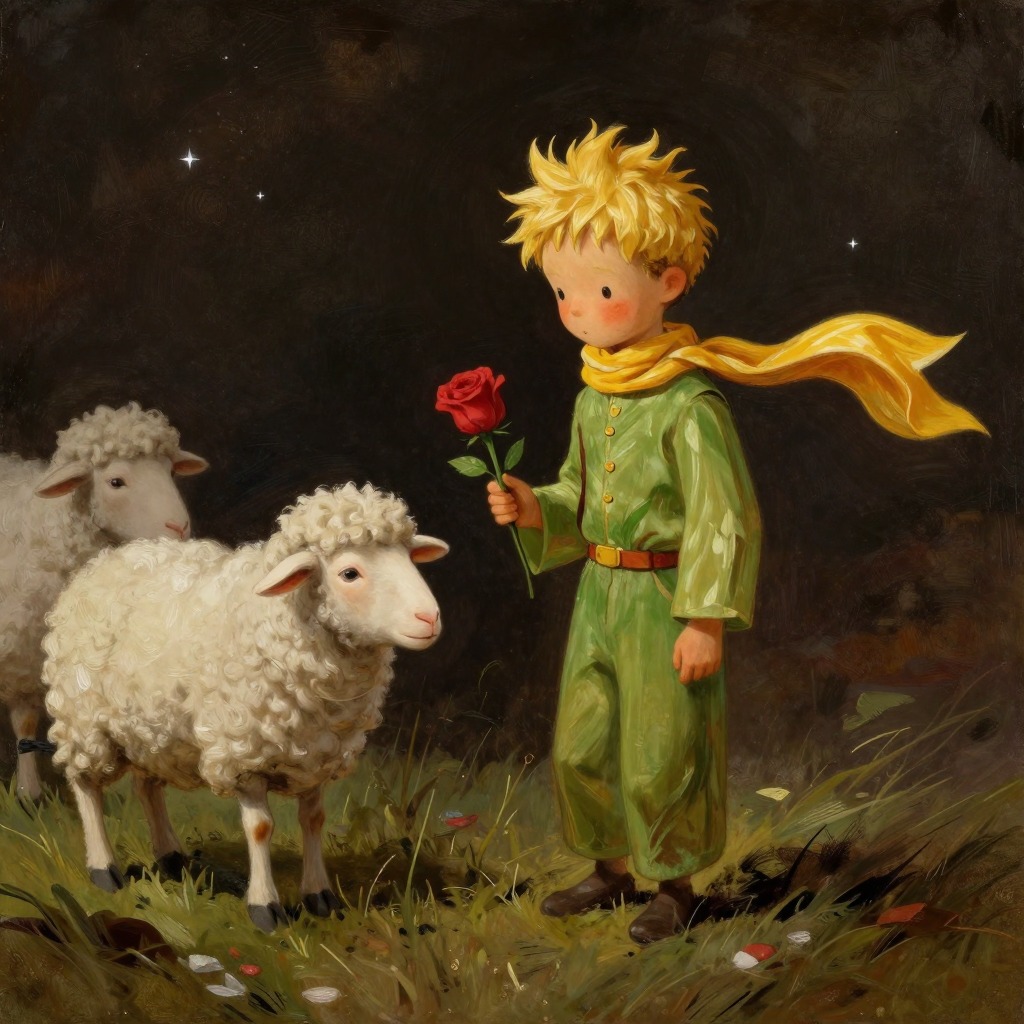
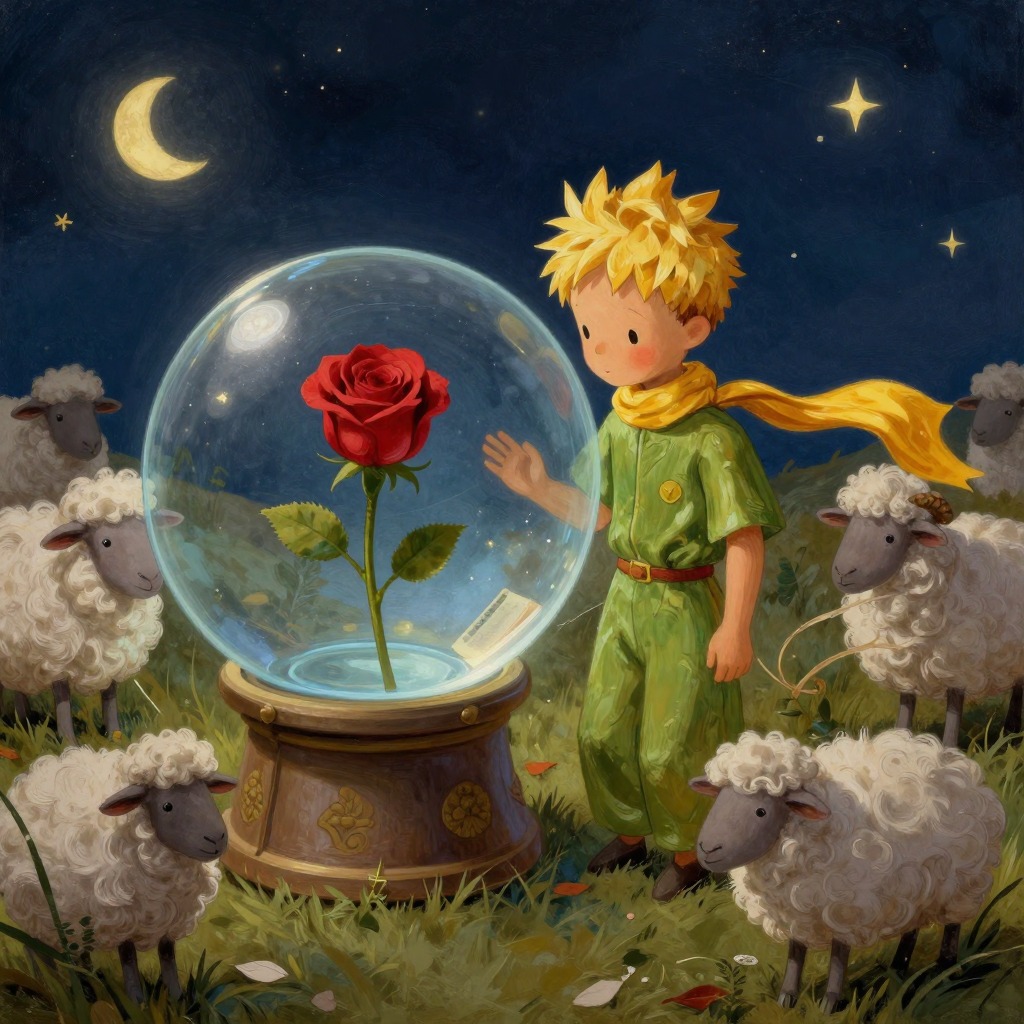
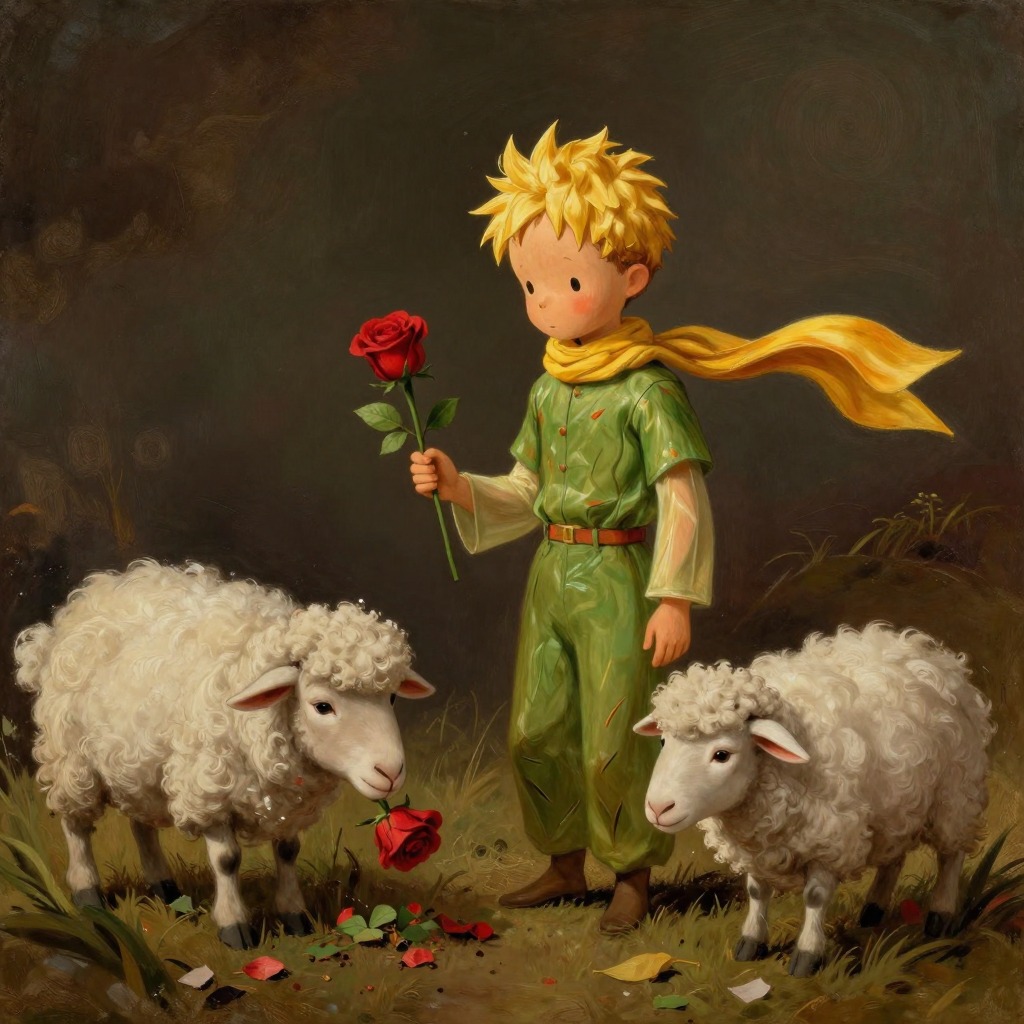
The Little PrinceThe possibility that the Little Prince might have forgotten to cover his rose with the glass globe is the most haunting contingency in the narrator's posthumous meditation on his friend. This imagined failure—a single lapse of attention on an ordinary evening—carries consequences that the narrator cannot verify and that no grown-up would understand, yet it determines whether the universe itself remains a place of sweetness or of grief. The forgotten globe is not a past event but a permanent, unresolved question: somewhere, on a planet no one can see, a sheep that was never properly secured may have eaten a flower that was left unprotected, and the answer will never be known.
The Hypothetical Scene
The narrator's speculation is precise and concrete. On some evening, the Little Prince was absent-minded—"that is enough!"—and he forgot the glass globe, or the sheep got out without making any noise in the night. The two possibilities are paired as equally plausible: the prince's vigilance could fail, or the sheep's escape could go undetected. Either way, the protective system that the narrator had carefully described—the globe shut every night, the sheep watched over very carefully—breaks down at a single point. The narrator himself contributed to this vulnerability: when he drew the muzzle for the Little Prince, he forgot to add the leather strap, so the sheep could never have been fastened securely. The forgotten strap and the forgotten globe mirror each other, two omissions that together make the catastrophe possible.
The Value at Stake
What is at stake is not merely a flower but the meaning of the entire universe. The narrator explains that "for you who also love the little prince, and for me, nothing in the universe can be the same if somewhere, we do not know where, a sheep that we never saw has—yes or no?—eaten a rose." The question is framed as a binary—yes or no—but it can never be answered. The sheep is unseen, the planet is unreachable, and the event, if it happened, left no trace. The narrator's own search at daybreak found no body, confirming only that the Little Prince had returned to his planet, not what he found there. The uncertainty is permanent, and it transforms the cosmos into a mystery that no grown-up will ever understand.
The Emotional Reversal
The narrator's mood oscillates between two opposing states, each tied to a different answer to the question. When he tells himself that the Little Prince shuts his flower under the glass globe every night and watches over his sheep very carefully, he is happy, and "there is sweetness in the laughter of all the stars." But when he remembers that absent-mindedness is always possible, the little bells are changed to tears. The same stars that produce five hundred million little bells can produce five hundred million tears, depending on whether the narrator believes in the prince's vigilance or in his own forgotten strap. The reversal is not a single event but a recurring mental movement, a pendulum that swings between hope and grief without ever settling.
The Landscape of Loss
The narrator identifies the place where the Little Prince appeared on Earth and disappeared as "the loveliest and saddest landscape in the world." He draws it again to impress it on memory, and he asks the reader to look at it carefully, to wait under the star, and to send word if the little man with golden hair who refuses to answer questions ever comes back. The forgotten globe is the invisible counterpart to this visible landscape: the place of disappearance is known and can be drawn, but the condition of the rose on the distant planet can never be depicted. The landscape is lovely because it marks where the prince was, and sad because it marks where he left, and the sadness deepens because the narrator does not know whether the prince returned to a living flower or to an empty stem.
The Unresolved Question
The narrator's final instruction to the reader is to look up at the sky and ask: "Has the sheep eaten the flower? And you will see how everything changes." The question is not meant to be answered but to be held, and the act of holding it changes the asker's perception of everything. The forgotten globe is thus not a plot point but a philosophical device: it transforms the universe from a fixed reality into a question, and it makes the reader, like the narrator, a permanent participant in the uncertainty. The narrator himself never resolves the doubt; he only comforts himself a little, knowing that the Little Prince did go back to his planet, but not knowing what he found there.