Little Prince appears on Earth and returns to his planet
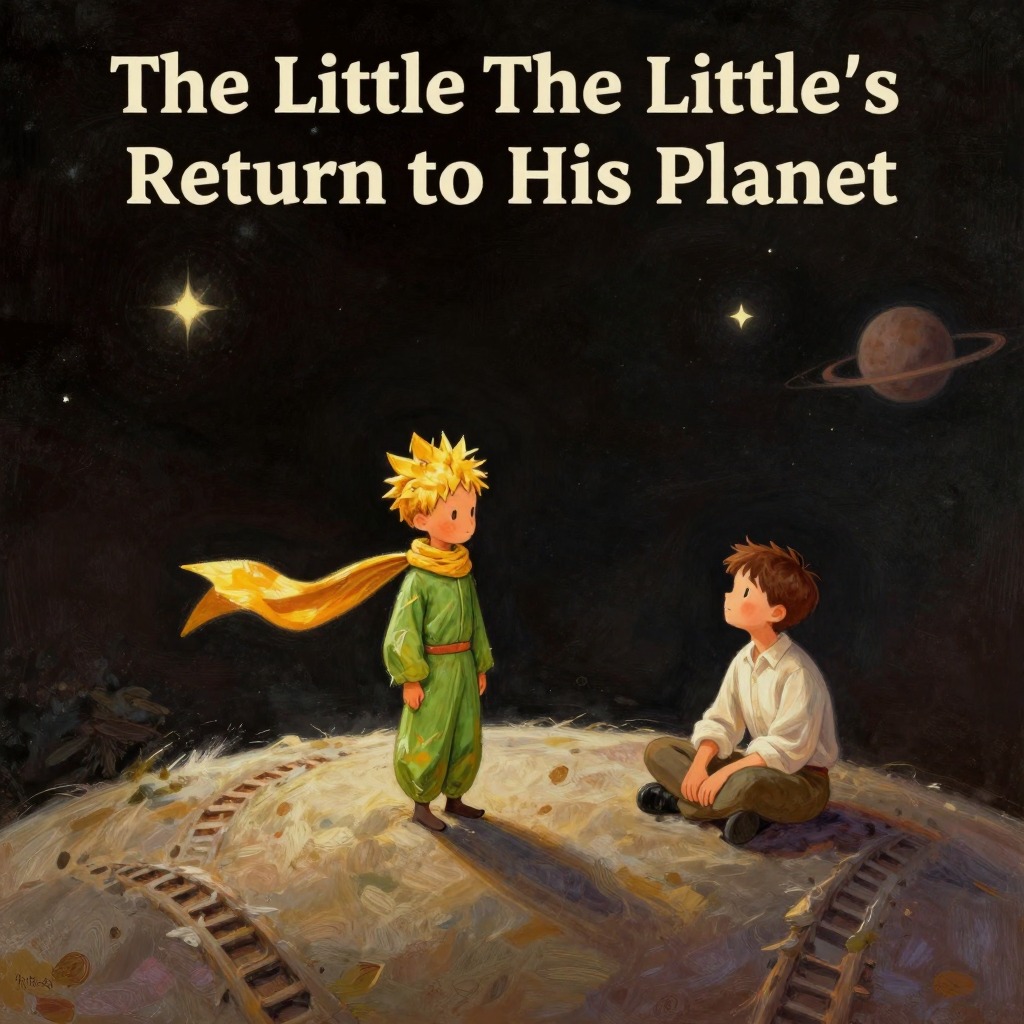
The Little PrinceThe Little Prince appears on Earth and returns to his planet, an event that frames the entire narrative as a mystery of love, loss, and cosmic consequence. The narrator, six years after the prince's disappearance, still lives with the unresolved question of whether the sheep has eaten the rose, a doubt that transforms the stars from bells to tears and makes this landscape the loveliest and saddest in the world.
The Appearance and Disappearance
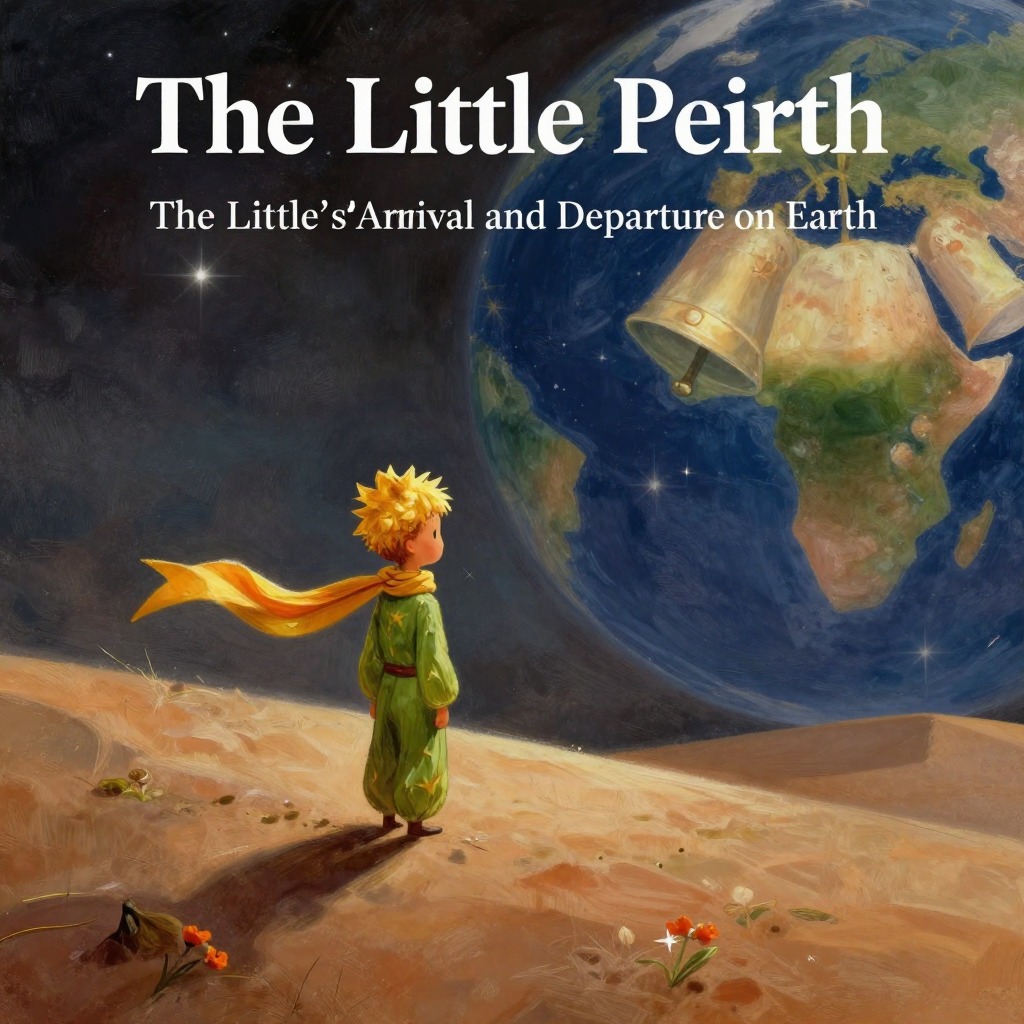
The Little Prince appeared on Earth in the African desert, and it was there that he disappeared. The narrator has drawn the landscape twice, calling it "the loveliest and saddest landscape in the world," and urges the reader to look at it carefully so that they will recognize it if they ever travel to the African desert. The spot is marked by a star, and the narrator asks that anyone who comes upon it should wait there, exactly under the star. If a little man appears who laughs, who has golden hair, and who refuses to answer questions, the reader will know who he is. The narrator pleads: "please comfort me. Send me word that he has come back." This request reveals that the prince's return is not a certainty but a hope, and the landscape itself becomes a sacred site of waiting.
The Unresolved Mystery of the Sheep and the Rose
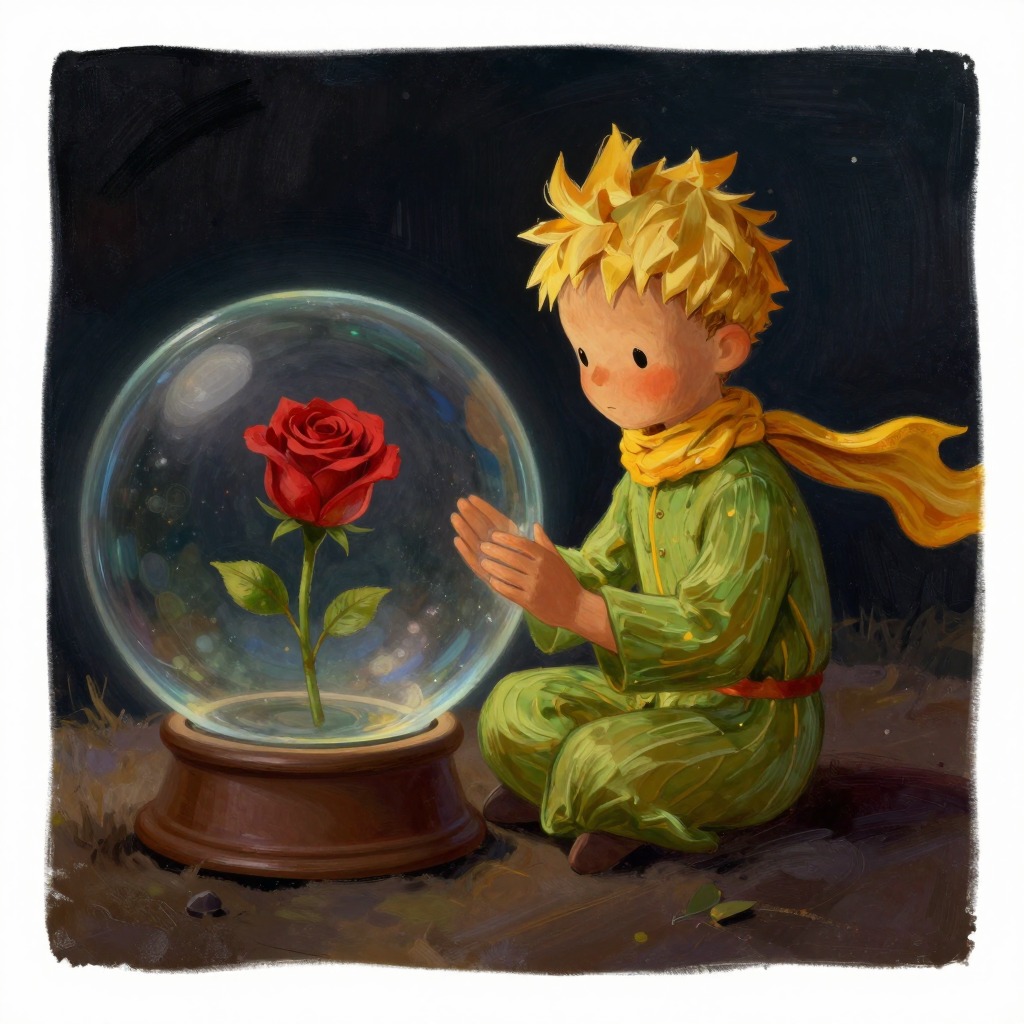
The narrator's sorrow is comforted a little, but not entirely, because he knows that the Little Prince did go back to his planet—the narrator did not find his body at daybreak. Yet a single forgotten detail haunts the narrator: when he drew the muzzle for the Little Prince, he forgot to add the leather strap to it. The prince will never have been able to fasten it on his sheep. This oversight opens a permanent uncertainty: what is happening on the little prince's planet? Perhaps the sheep has eaten the flower. The narrator oscillates between two possibilities. At one time he tells himself that the Little Prince shuts his flower under her glass globe every night and watches over his sheep very carefully, and then he is happy, and there is sweetness in the laughter of all the stars. But at another time he tells himself that at some moment or other one is absent-minded, and that is enough—on some evening the prince forgot the glass globe, or the sheep got out without making any noise in the night—and then the little bells are changed to tears. This is a great mystery: for the narrator and for the reader who also loves the Little Prince, nothing in the universe can be the same if somewhere, a sheep that was never seen has—yes or no?—eaten a rose. The narrator insists that no grown-up will ever understand that this is a matter of so much importance.
The Transformation of the Cosmos
The uncertainty about the sheep and the rose does not merely affect the narrator's mood; it changes the entire universe. When the narrator believes the flower is safe, the stars laugh like five hundred million little bells. When doubt creeps in, those same bells become tears. The narrator's love for the Little Prince has made the cosmos a living, responsive system, where a single forgotten strap on a muzzle can determine whether the night sky rings with joy or grief. The narrator now loves to listen to the stars, but the sound they make depends on a question that can never be answered. The reader is invited to look up at the sky and ask: "Has the sheep eaten the flower?" and to see how everything changes. This is not a metaphor but a literal transformation of reality for those who love the Little Prince.
The Narrative Frame and the Reader's Role
The narrator breaks the fourth wall directly, addressing "you who also love the little prince" and asking the reader to participate in the mystery. The reader is told to look at the landscape carefully, to wait under the star, and to send word if the prince returns. The narrator has never told this story before—six years have gone by, and the companions who met him on his return were well content to see him alive. He was sad, but he told them only: "I am tired." Now, by telling the story, the narrator invites the reader into the same state of loving uncertainty that he himself inhabits. The event of the Little Prince's appearance and return is not a closed episode but an ongoing condition, one that the reader is asked to enter and to help sustain.