Shutting the flower under glass globe
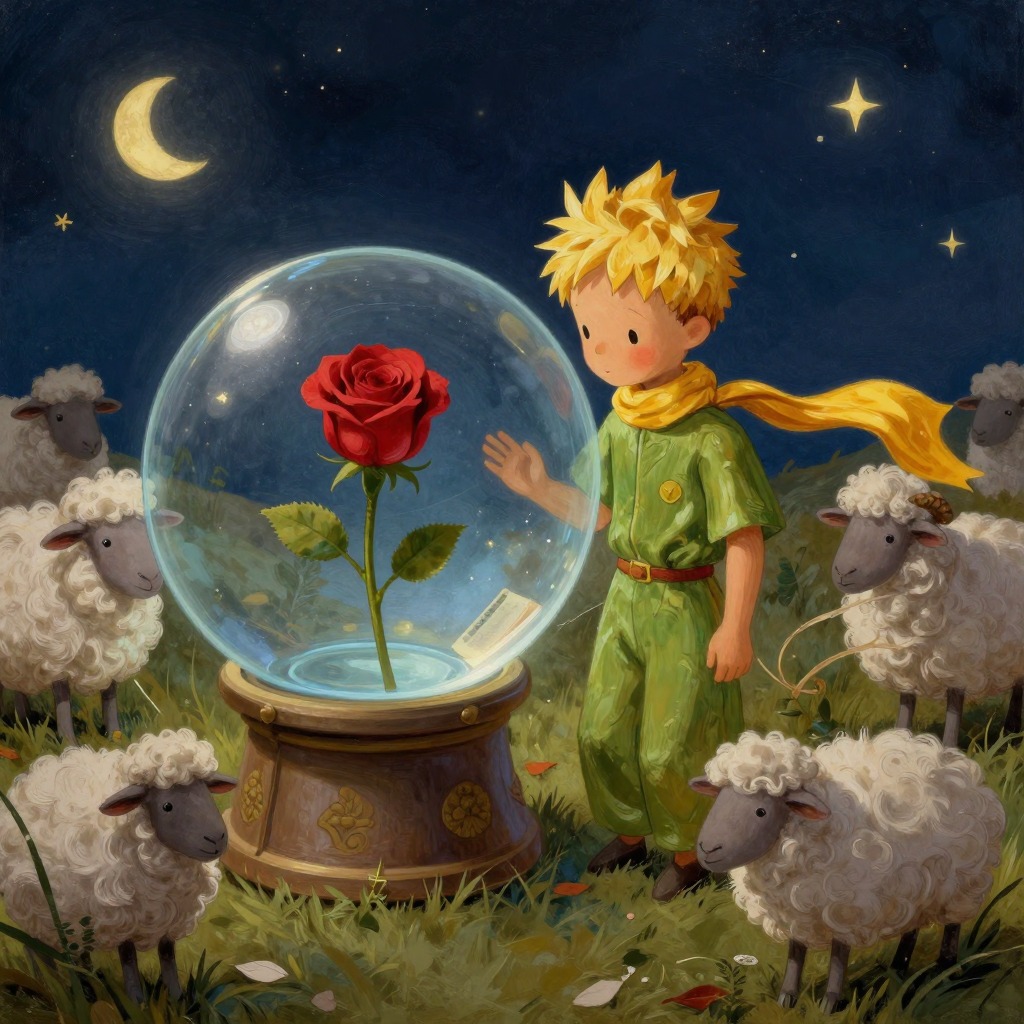
The Little PrinceThe nightly ritual of shutting the flower under a glass globe is the Little Prince's most tender and consequential act of guardianship on his tiny planet. Every evening, before darkness falls, he places a transparent glass globe over his beloved rose, shielding her from the cold and the wind of space. This careful, repeated gesture defines the Prince's devotion and his understanding of responsibility: the flower is fragile, unique, and utterly dependent on his vigilance. The Narrator, recalling this habit, imagines the Prince performing it without fail, and the image brings him comfort. "The little prince shuts his flower under her glass globe every night," he tells himself, "and he watches over his sheep very carefully." In those moments, the stars themselves seem to laugh with sweetness, and the universe feels orderly and safe.
The Unfinished Muzzle and the Unraveling of Certainty
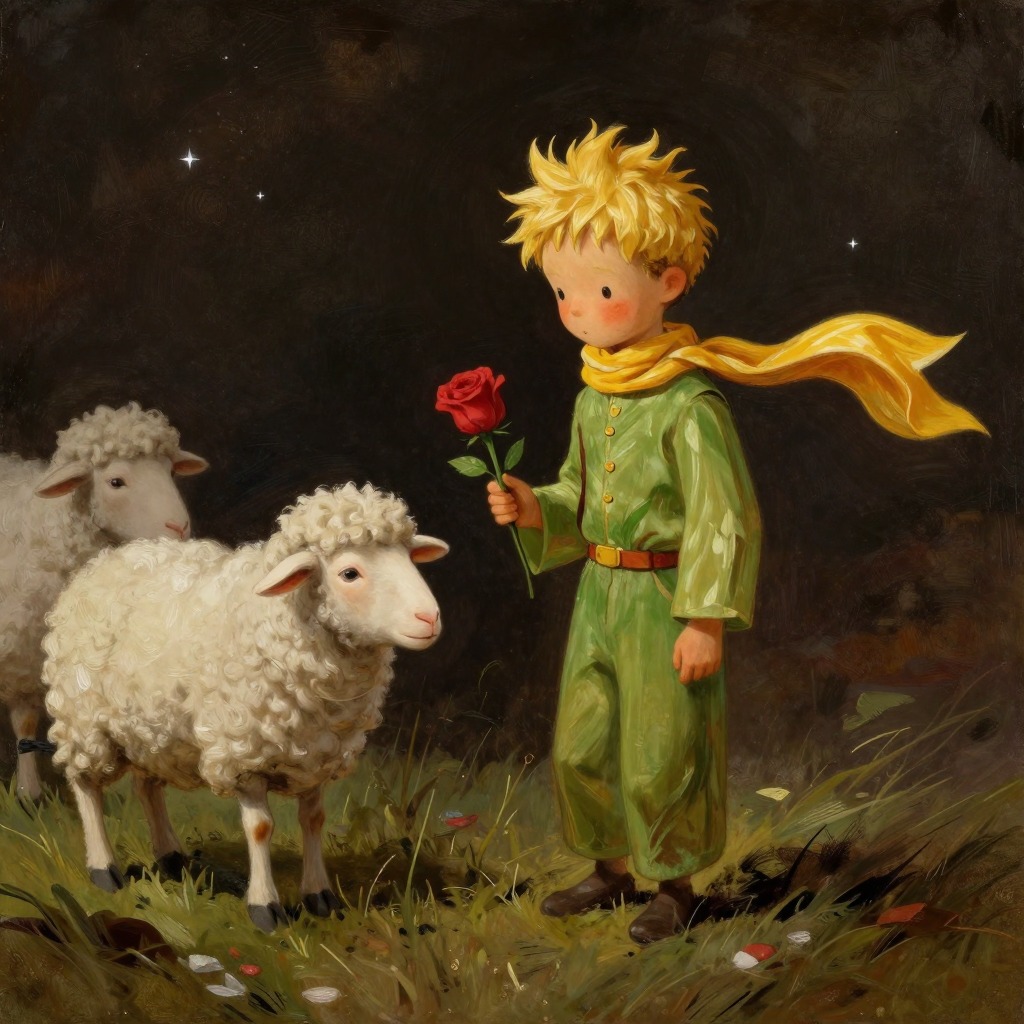
Yet the same act of protection becomes the hinge on which the Narrator's peace of mind swings into anguish. When the Narrator drew the muzzle for the Little Prince's sheep, he forgot to add the leather strap. The Prince, therefore, will never have been able to fasten the muzzle on his sheep. This single omission—a small, absent-minded mistake—transforms the Prince's careful nightly routine into a fragile, possibly failed defense. The Narrator's mind now oscillates between two irreconcilable visions. In one, the Prince shuts the flower under her globe every evening without fail, and the sheep is watched over so carefully that it can never harm her. In the other, the Prince is absent-minded at some moment, forgets the glass globe, or the sheep slips out silently in the night. The same stars that once laughed are now changed to tears.
The Great Mystery: Has the Sheep Eaten the Rose?
The uncertainty about whether the flower is still alive becomes the central mystery of the Narrator's grief. "Nothing in the universe can be the same," he writes, "if somewhere, we do not know where, a sheep that we never saw has—yes or no?—eaten a rose." The question is unanswerable, and its weight is immense. The Narrator addresses the reader directly: look up at the sky, ask yourselves whether the sheep has eaten the flower, and see how everything changes. No grown-up will ever understand that this is a matter of so much importance. The ritual of shutting the flower under glass, which should have been a guarantee of safety, has become the very emblem of vulnerability, because the protection was incomplete.
The Landscape of Loss and the Promise of Return
The place where the Little Prince appeared on Earth and disappeared is, to the Narrator, "the loveliest and saddest landscape in the world." He draws it again to impress it on memory, and he asks any future traveler who comes upon that spot in the African desert to wait under the star. If a little man appears who laughs, who has golden hair, and who refuses to answer questions, they will know who he is. The Narrator's final plea—"please comfort me. Send me word that he has come back"—is a prayer that the Prince has indeed returned to his planet and resumed his nightly ritual. The act of shutting the flower under glass, which the Narrator can no longer witness, becomes the only proof that the Prince's world remains intact. The uncertainty is never resolved; it is only held, like the globe itself, in a fragile balance between hope and sorrow.