The Sheep and the Rose
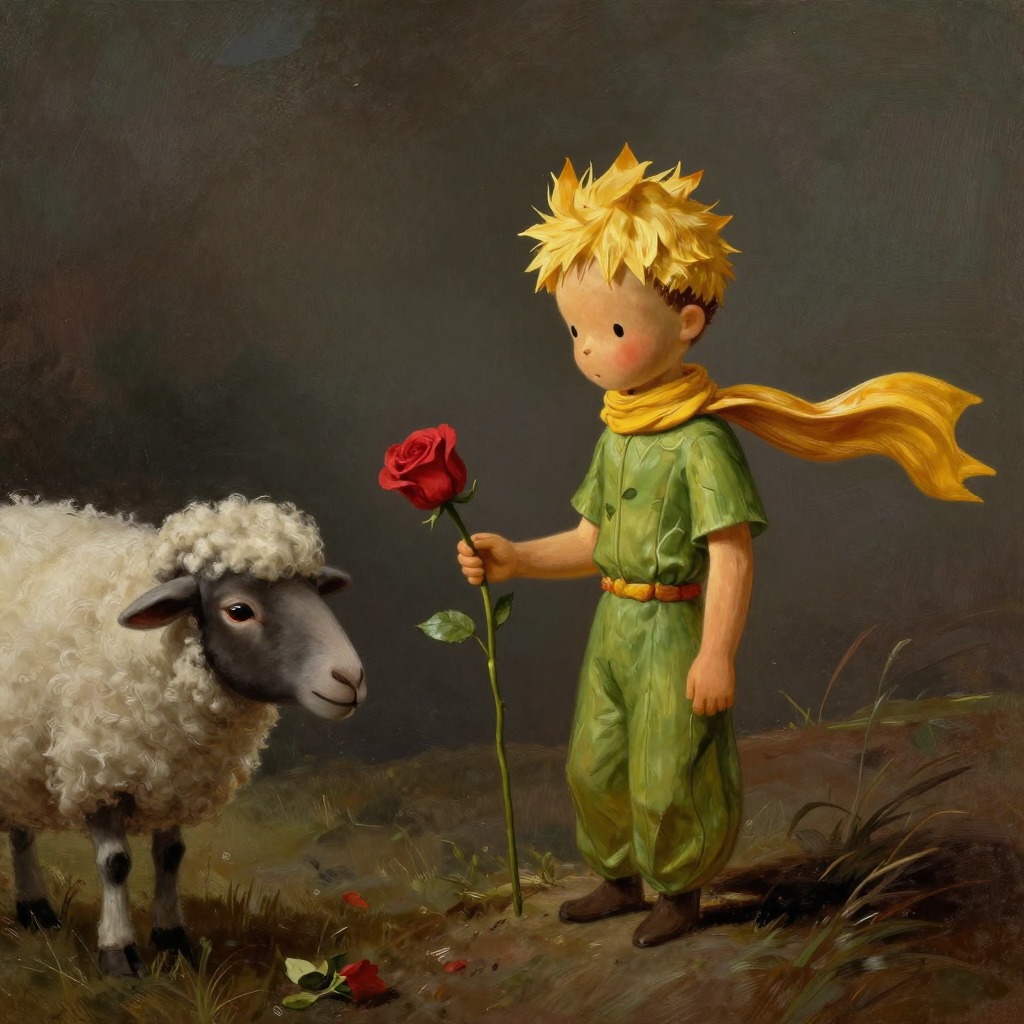
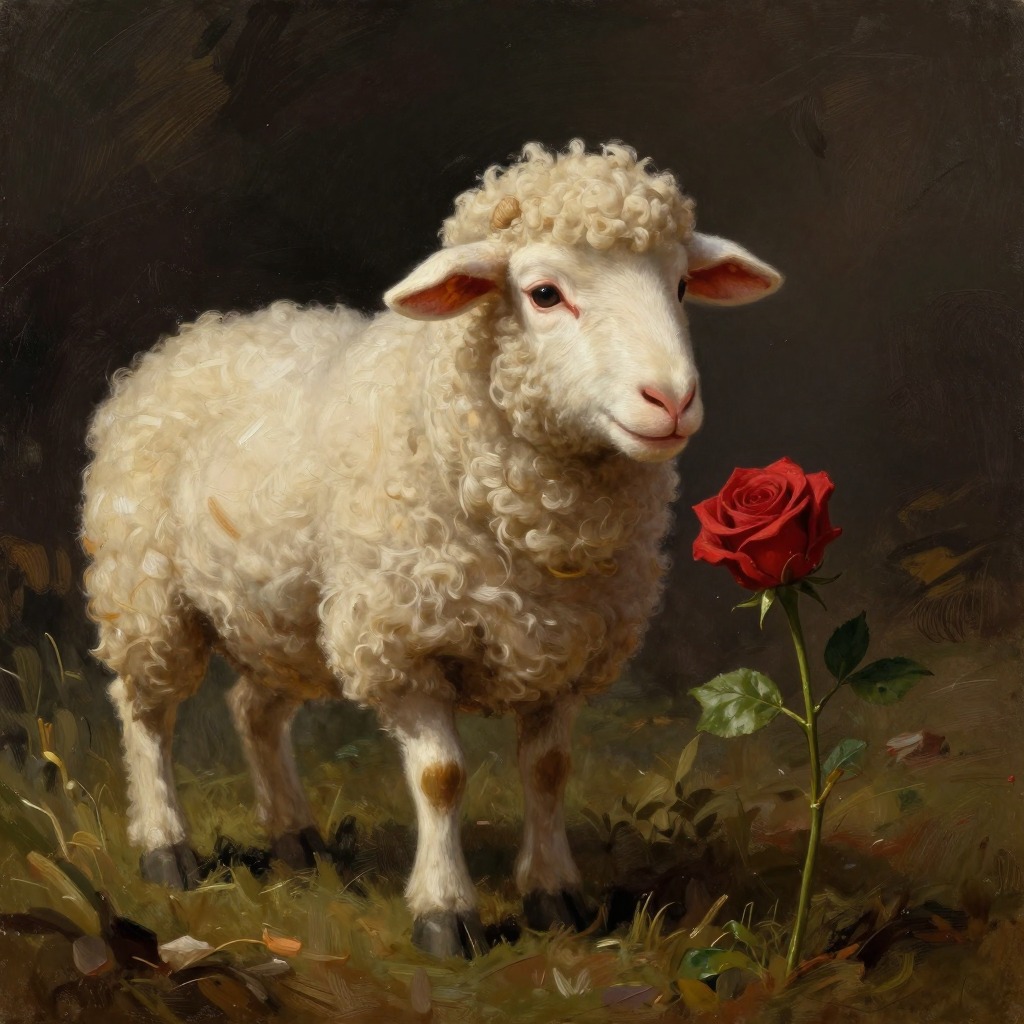
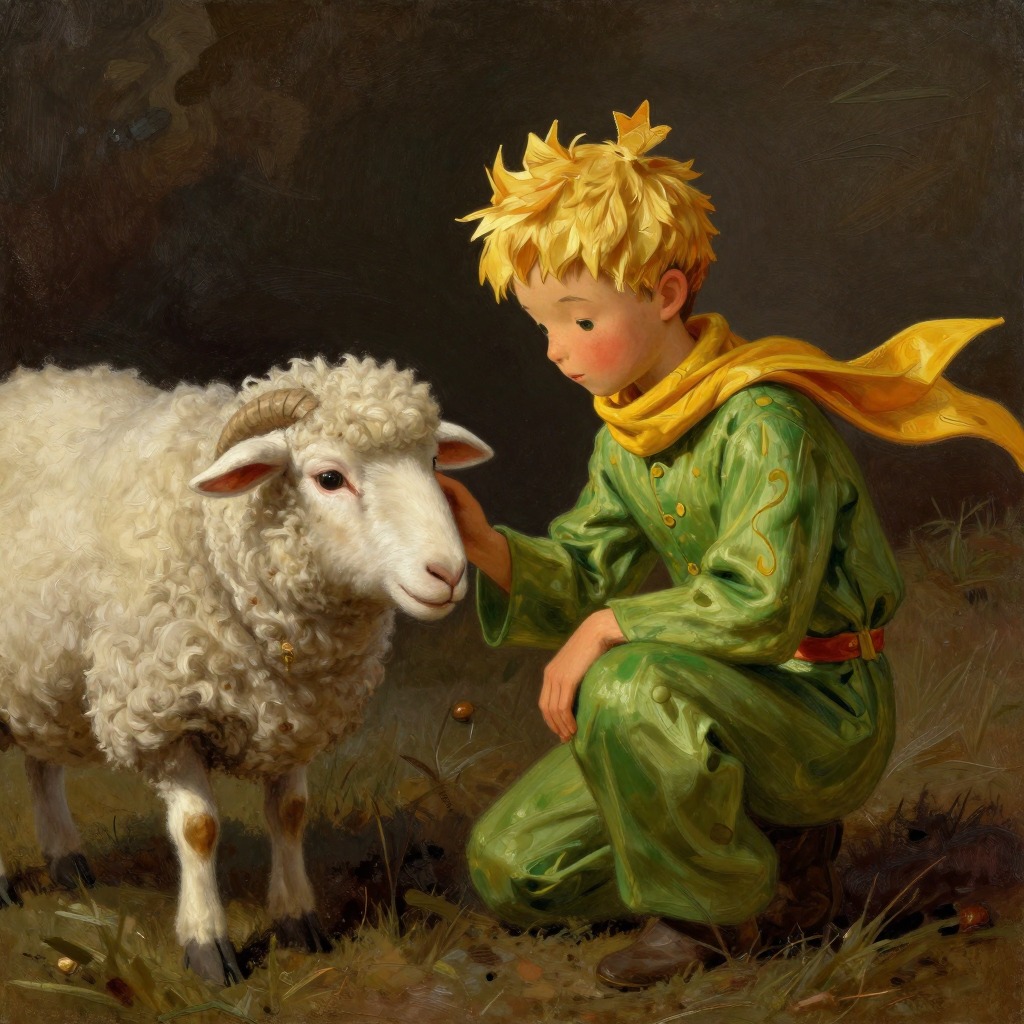
The Little PrinceThe Sheep and the Rose is the story's most intimate and unresolved relationship, a bond that never directly occurs on the page yet determines the emotional temperature of the entire book. The sheep was given to the Little Prince as a practical gift—to eat the baobab shoots that threatened his tiny planet—but its presence immediately created a second, far more dangerous possibility: that it might also eat the Rose, the single flower the Little Prince had loved, protected under a glass globe every night, and left behind when he traveled to Earth. The Narrator, who drew the muzzle for the sheep, forgot to add the leather strap that would have fastened it shut. That forgotten strap is the hinge on which the story's final hope and grief turn.
The Unfastened Muzzle and the Unanswered Question
The Narrator's omission is not a minor oversight but the structural cause of the story's central uncertainty. Because the muzzle has no strap, the Little Prince will never have been able to fasten it on his sheep. The Narrator, six years after the Little Prince's disappearance, still turns this fact over in his mind: "So now I keep wondering: what is happening on his planet? Perhaps the sheep has eaten the flower . . ." The question is not rhetorical; it is genuinely unanswerable. The Narrator has no way to know what has happened on the little prince's planet, and the reader is left in the same position. The sheep and the Rose are locked in a possibility that can never be confirmed or denied, and that uncertainty becomes the story's permanent emotional condition.
The Oscillation Between Hope and Grief
The Narrator's mind does not rest on one answer. He swings between two opposing visions, each grounded in what he knows of the Little Prince's habits. At one time he tells himself: "Surely not! The little prince shuts his flower under her glass globe every night, and he watches over his sheep very carefully . . ." In this version, the Little Prince's nightly ritual—covering the flower with the glass globe, watching over the sheep—holds. The sheep does not eat the Rose, and the Narrator is happy. "And there is sweetness in the laughter of all the stars," he says, because the stars now carry the sound of the Little Prince's laughter, not his grief. But at another time the opposite thought takes hold: "At some moment or other one is absent-minded, and that is enough! On some one evening he forgot the glass globe, or the sheep got out, without making any noise, in the night . . ." In this version, a single lapse—a forgotten globe, a silent escape—is all it takes. The sheep eats the Rose, and the little bells of the stars are changed to tears. The Narrator lives inside this oscillation, and the reader is drawn into it as well.
The Mystery That Changes Everything
The Sheep and the Rose is not merely a plot detail; it is the story's great mystery, the question that redefines the meaning of the universe. The Narrator states this explicitly: "For you who also love the little prince, and for me, nothing in the universe can be the same if somewhere, we do not know where, a sheep that we never saw has—yes or no?—eaten a rose . . ." The question is posed directly to the reader: look up at the sky, ask yourselves whether the sheep has eaten the flower, and see how everything changes. The answer determines whether the universe is a place where love is preserved or where it is destroyed by a small, careless accident. No grown-up will ever understand that this is a matter of so much importance, the Narrator adds, marking the question as one that belongs entirely to the child's way of seeing—the way that knows a single rose matters more than any adult calculation.
The Landscape of Loss and Return
The Sheep and the Rose is also tied to the story's most sacred geography. The Narrator identifies the African desert as "the loveliest and saddest landscape in the world," the place where the Little Prince appeared on Earth and disappeared. He draws it twice to impress it on the reader's memory. The landscape is lovely because it is where the Little Prince was; it is sad because he is gone. And the sheep's potential act—eating the Rose—is what makes the sadness permanent or reversible. The Narrator asks the reader to wait at that spot, under the star, and if a little man appears who laughs, has golden hair, and refuses to answer questions, to send word that he has come back. That return would settle the question: if the Little Prince is alive and laughing, the Rose is safe. But the Narrator never receives that word, and the story ends with the question still open.
The Sheep as an Instrument of Fate
The sheep itself is never characterized; it has no name, no personality, no voice. It is a pure instrument, and its power comes from its neutrality. It does not intend to eat the Rose or to spare it; it simply acts according to its nature. The Little Prince's care—the glass globe, the nightly watch, the muzzle—is the only barrier between the sheep and the Rose. The forgotten strap means that barrier is incomplete. The sheep thus becomes a figure of fate: indifferent, silent, and capable of destroying what is most precious through no malice, only the ordinary working of appetite. The Rose, by contrast, is the story's symbol of vulnerability and beauty, the thing that must be protected but cannot be protected absolutely. Their relationship is the story's deepest test of whether love can survive the accidents of the world.
The Enduring Uncertainty
The Sheep and the Rose never resolves. The Narrator's final words on the subject are not an answer but a plea: if the Little Prince has returned, send word. The story offers no such word. The sheep may have eaten the Rose, or the Little Prince may have kept his flower safe every night. Both possibilities remain alive, and the reader must live with both. That unresolved tension is the story's final gift: a question that cannot be settled by evidence, only by faith, and that makes the universe either a place of sweetness or a place of tears, depending on which answer one chooses to believe.