Watch over the sheep carefully
The Little PrinceThe rule of watching over the sheep carefully is the hinge on which the entire emotional resolution of the Little Prince's story turns, yet it is a rule that the Narrator, through a single absent-minded omission, has made impossible to enforce. The forgotten leather strap on the muzzle—a detail the Narrator realizes only after the Little Prince has vanished—means that the sheep, which the Little Prince had asked for to eat the baobab shoots, may now have free access to the one thing that mattered most: the rose. This unresolved uncertainty transforms the universe itself, turning the stars from a source of comfort into a source of grief, and makes the rule of careful watching the most consequential and heartbreaking detail in the book's closing pages.
The Rule and Its Conditions
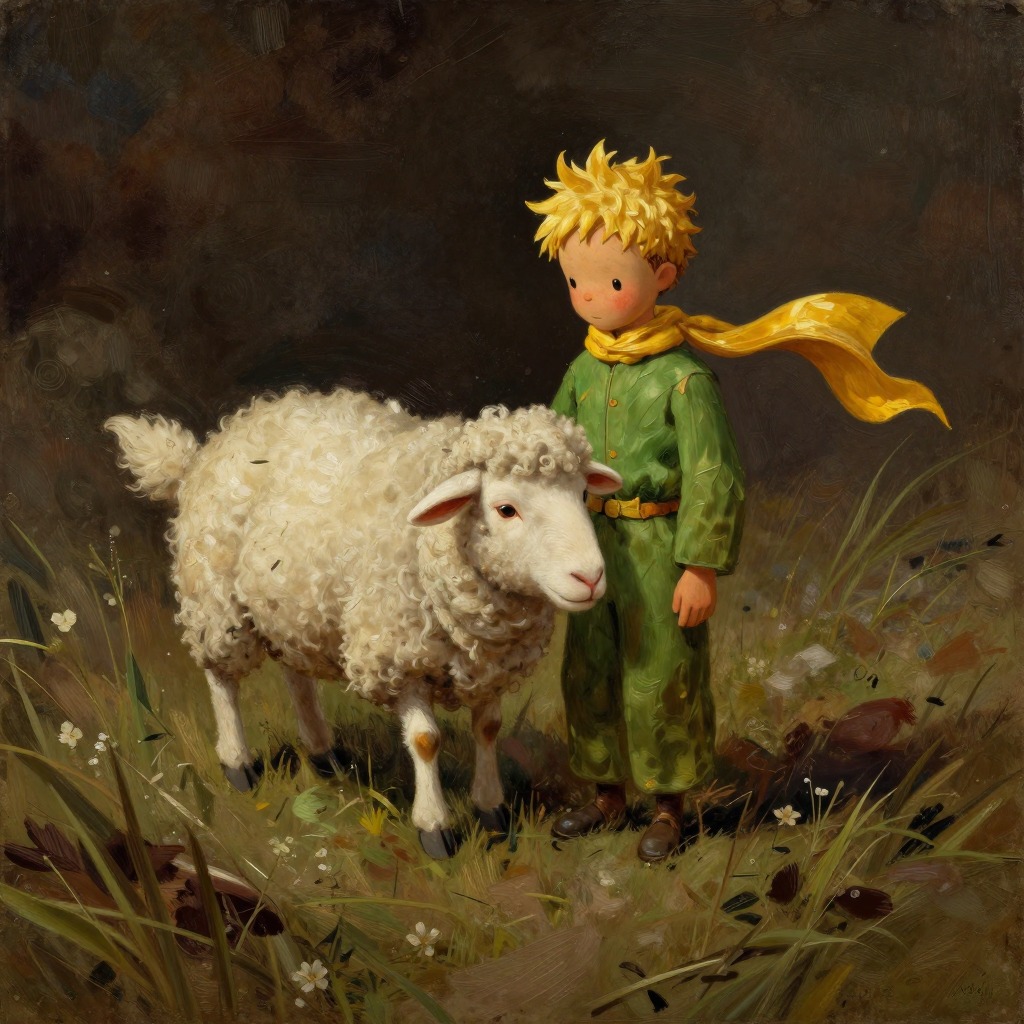
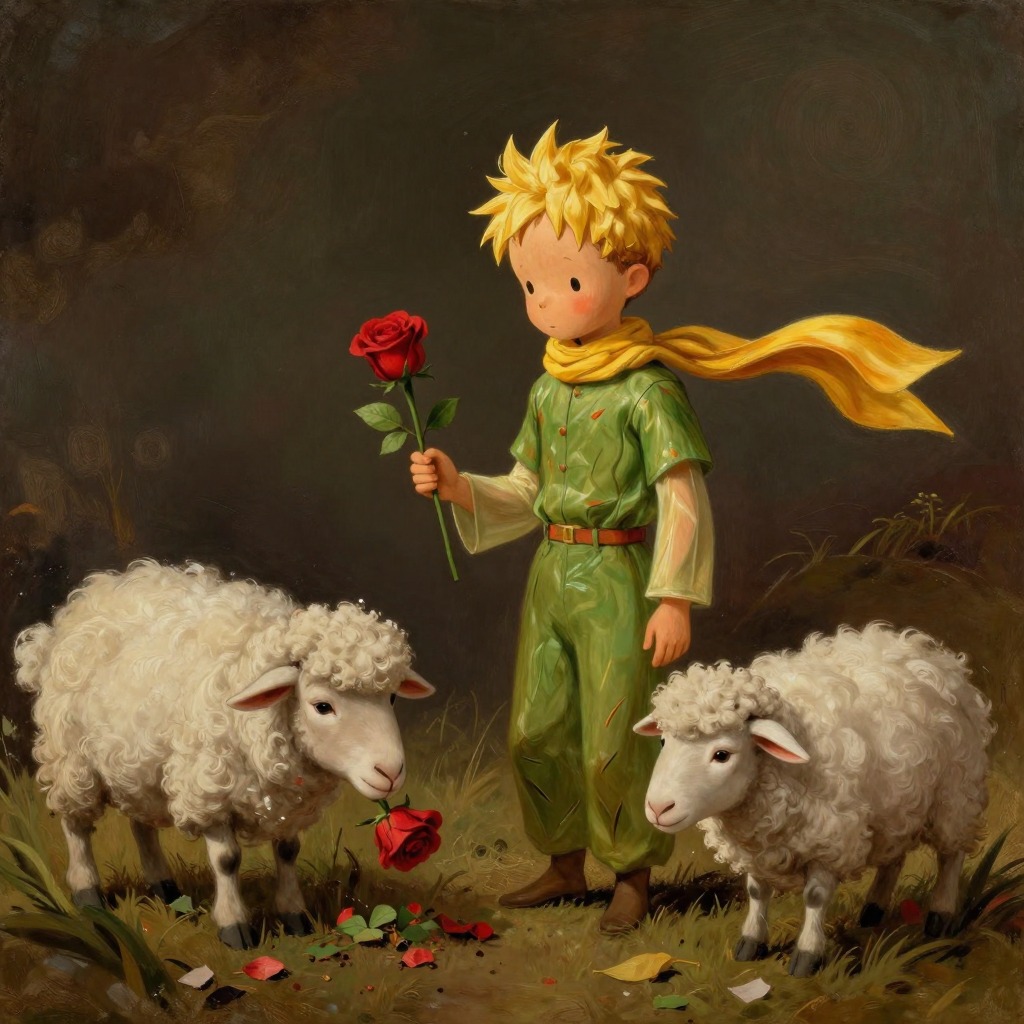
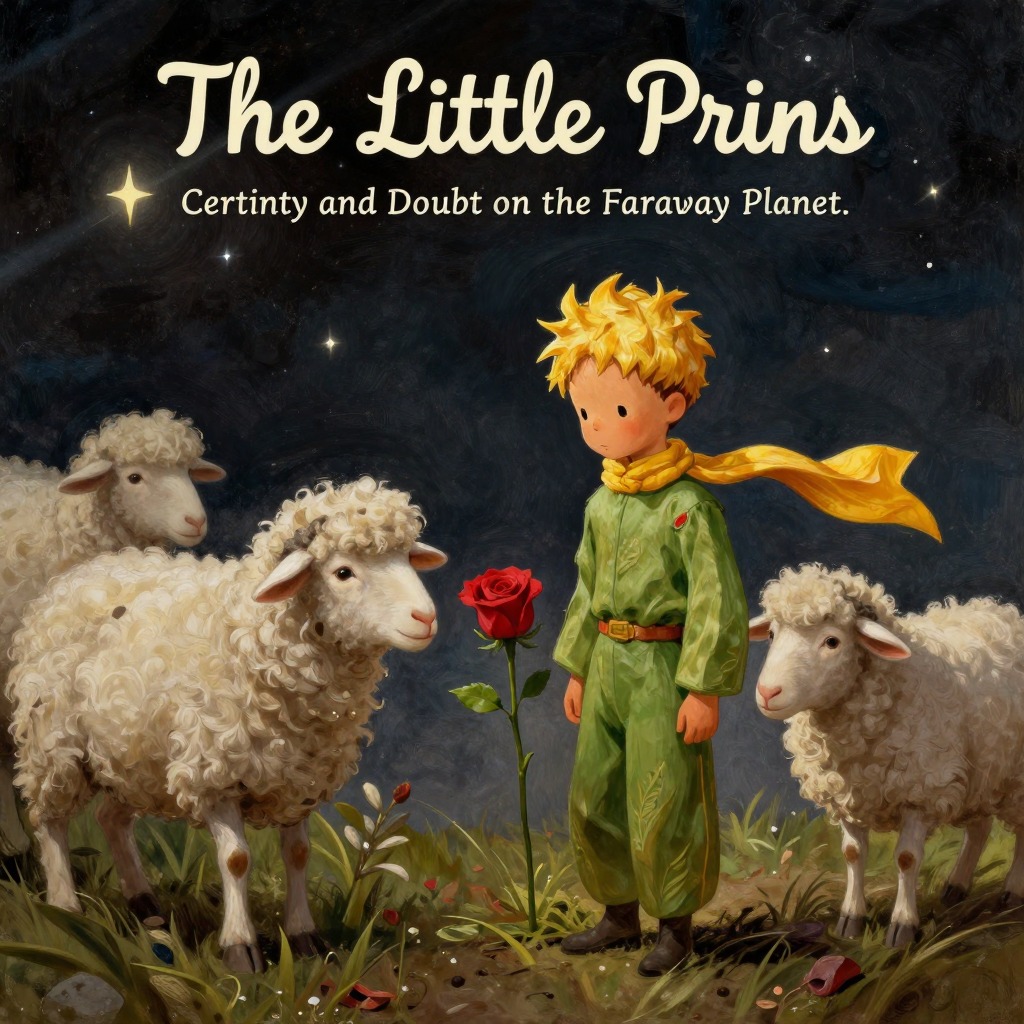
The rule is simple: the Little Prince must watch over his sheep very carefully. The Narrator, in his grief, imagines the Little Prince faithfully performing this duty every night, shutting his flower under her glass globe and keeping a vigilant eye on the sheep. In these moments of hope, the Narrator is happy, and the laughter of all the stars sounds sweet. The rule is the foundation of the rose's safety, and the Narrator's faith in the Little Prince's diligence is what allows him to find any comfort at all after the boy's disappearance.
The Forgotten Strap and the Broken Rule
The entire structure of this rule collapses because of a single, trivial oversight. When the Narrator drew the muzzle for the Little Prince, he forgot to add the leather strap to it. Without the strap, the muzzle cannot be fastened, and the sheep cannot be prevented from eating. The Narrator is tormented by this realization: "At some moment or other one is absent-minded, and that is enough!" A moment of distraction—forgetting the glass globe one evening, or the sheep slipping out silently in the night—is all it would take for the catastrophe to occur. The rule, which should have been absolute, is now contingent on a fallible memory and a missing piece of leather.
The Unknowable Consequence
The consequence of the broken rule is not a known event but a permanent, unanswerable question. The Narrator asks himself, and the reader, a question that changes everything: "a sheep that we never saw has—yes or no?—eaten a rose . . ." The answer is unknowable. The Narrator never found the Little Prince's body at daybreak, which proves that he did go back to his planet, but it does not prove that the rose is safe. The sheep may have eaten the flower, or it may not have. This uncertainty is the great mystery at the heart of the book's ending. For the Narrator, and for anyone who loves the Little Prince, nothing in the universe can be the same if this question remains unanswered.
The Transformation of the Stars
The rule's failure directly transforms the emotional landscape of the cosmos. When the Narrator believes the Little Prince is watching over the sheep, the stars sound like five hundred million little bells. But when doubt creeps in—when he imagines the sheep escaping or the glass globe forgotten—the little bells are changed to tears. The same stars that once brought sweetness now bring sorrow. The rule of careful watching is thus not merely a practical instruction; it is the condition that determines whether the universe is filled with joy or with grief. The Narrator's final plea to the reader—to look at the loveliest and saddest landscape in the world, to wait under the star, and to send him word if the Little Prince has come back—is a plea for an answer that can never be given, because the rule was never fully enforced.
The Narrative Significance of the Unenforced Rule
The rule of watching over the sheep carefully is the narrative device that transforms the Little Prince's departure from a clean, tragic ending into an open wound of uncertainty. It is a rule that exists only in its breach, because the one piece of equipment that would have guaranteed its enforcement—the leather strap—was never drawn. The rule is therefore not a description of what happens but a measure of what is at stake. It elevates a simple domestic duty—watching over a sheep—into a cosmic question of life and death, love and loss. No grown-up will ever understand that this is a matter of so much importance, but for the Narrator, and for the reader who has come to love the Little Prince, the rule of watching over the sheep carefully is the most important rule in the universe, precisely because it was never followed.