five hundred million little bells
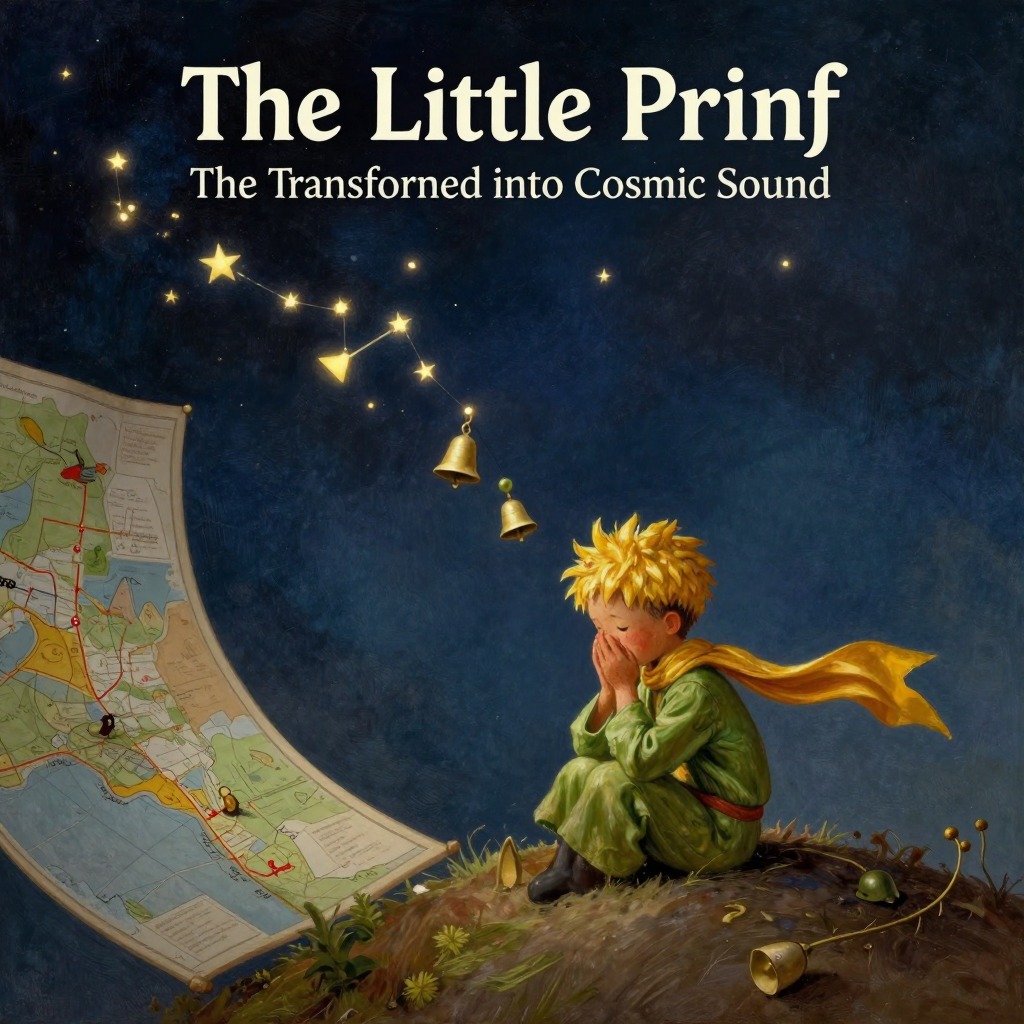
The Little PrinceIn the final chapter of Antoine de Saint-Exupéry's The Little Prince, the narrator, six years after the Little Prince's disappearance, finds comfort in listening to the stars. He describes the experience as "like five hundred million little bells" — a phrase that turns the silent, immense desert sky into a symphony of tiny, intimate sounds. This image is not merely decorative; it becomes the emotional and symbolic core of the book's ending, condensing the narrator's love, loss, and lingering uncertainty into a single, repeatable auditory figure.
The Image and Its First Appearance
The phrase first appears as the narrator reflects on his return from the desert. He tells his companions that he is tired, but privately he has begun to listen to the stars at night. The comparison to "five hundred million little bells" suggests both multiplicity and delicacy — each star is a bell, each bell a potential voice. The number is hyperbolic yet precise, evoking the vastness of the universe while keeping the scale human and gentle. The bells are not loud or triumphant; they are little, and they ring with the lightness of memory. This initial appearance establishes the stars as a living, audible presence, directly tied to the narrator's ongoing relationship with the Little Prince.
The Oscillation Between Sweetness and Tears
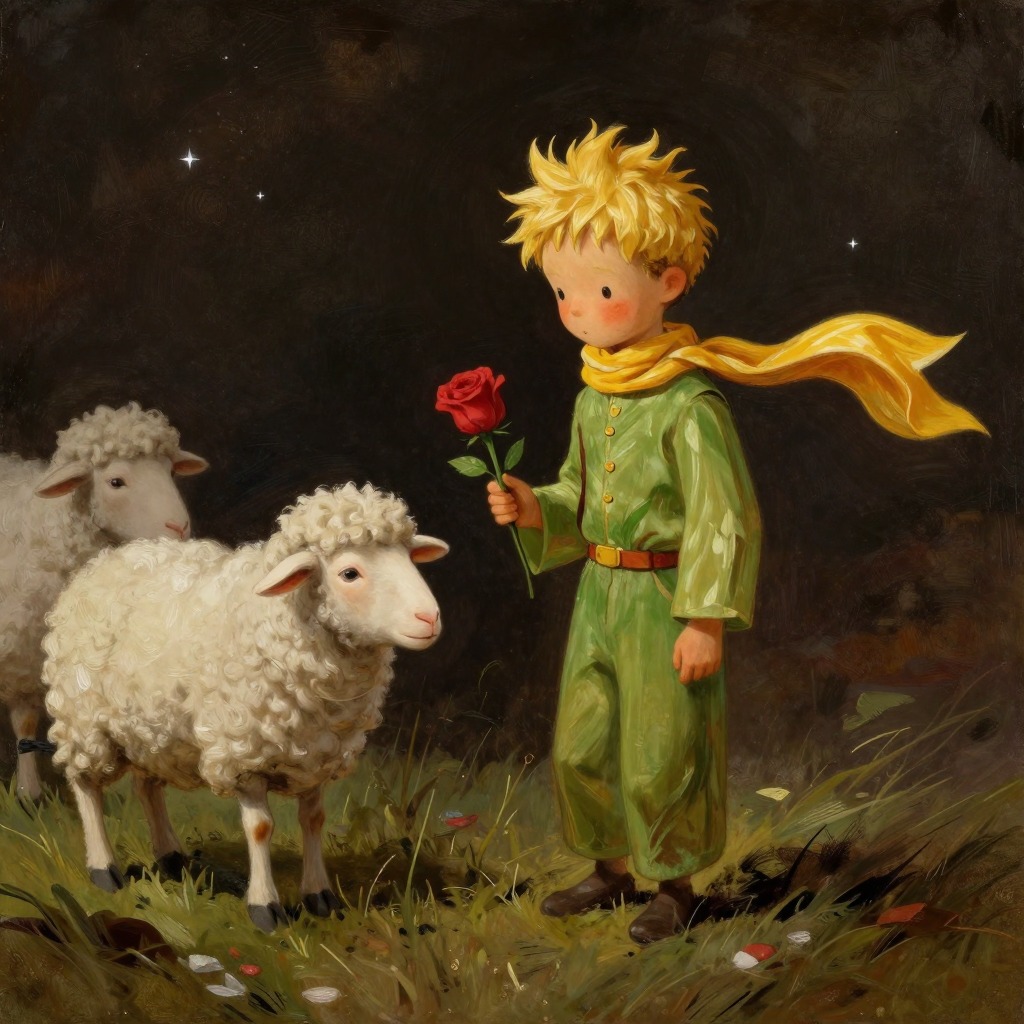
The bells do not remain a fixed symbol. The narrator's mood swings between two interpretations of what might be happening on the Little Prince's planet. When he believes the Little Prince is carefully shutting his flower under her glass globe every night and watching over his sheep, the narrator feels happy, and "there is sweetness in the laughter of all the stars." Here the bells become laughter — joyful, musical, reassuring. But when he imagines a moment of absent-mindedness, when the glass globe is forgotten or the sheep slips out silently in the night, "the little bells are changed to tears." The same auditory image transforms from laughter to weeping, from sweetness to sorrow, depending entirely on the narrator's inner state. This oscillation is the engine of the book's final emotional tension: the bells are not a stable comfort but a mirror of the narrator's hope and fear.
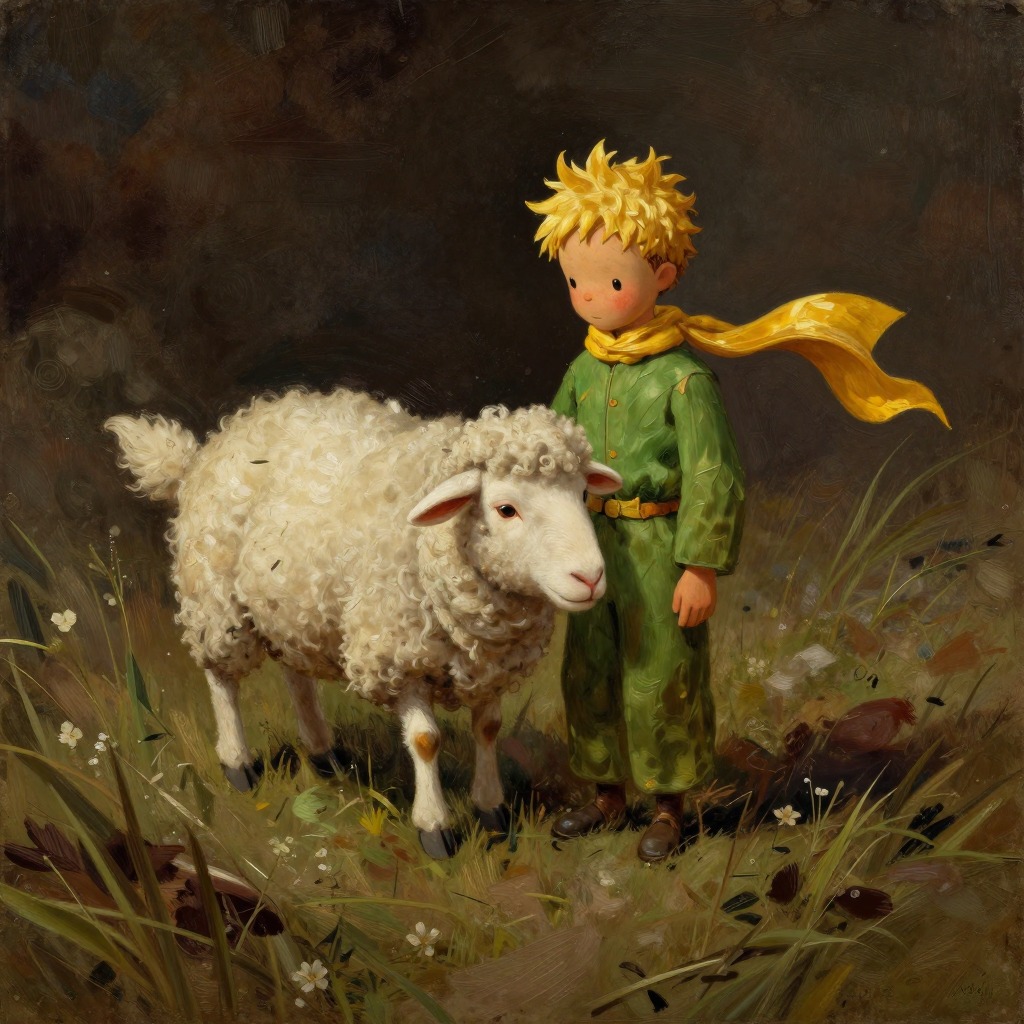
The shift is triggered by a concrete detail: the narrator forgot to add the leather strap to the muzzle he drew for the sheep. This small omission means the Little Prince "will never have been able to fasten it on his sheep," leaving the sheep free to potentially eat the flower. The narrator's forgetfulness thus becomes the hinge on which the entire cosmic question turns. The bells ring sweetly when he trusts in the Little Prince's care, and they turn to tears when he doubts it. The image thus carries the weight of the book's central uncertainty: has the sheep eaten the rose or not?
The Bells as a Question to the Reader
The narrator directly addresses the reader, asking them to look up at the sky and ask themselves: "Has the sheep eaten the flower?" He insists that "nothing in the universe can be the same if somewhere, we do not know where, a sheep that we never saw has—yes or no?—eaten a rose." The bells are the audible form of this question. They are not a statement but an invitation to participate in the uncertainty. The narrator notes that "no grown-up will ever understand that this is a matter of so much importance," positioning the bells as a childlike mode of perception that adults have lost. The image thus becomes a test of the reader's own capacity for wonder and concern — whether they can hear the bells as laughter or as tears.
The question is deliberately left unresolved. The narrator never learns the answer, and the reader is left to choose. The bells, therefore, are not a resolution but a perpetual oscillation, a sound that keeps the mystery alive. They are the auditory equivalent of the narrator's repeated self-questioning, and they ensure that the story's ending remains open, suspended between joy and grief.
The Bells and the Landscape of Memory
The image is also tied to the physical landscape of the African desert, where the Little Prince appeared and disappeared. The narrator describes this spot as "the loveliest and saddest landscape in the world," and he draws it again to impress it on the reader's memory. The bells are the sound of that landscape — the sound of the stars over the empty sand. They transform a place of loss into a place of potential return. The narrator asks that if the reader ever comes upon this spot, they should wait "exactly under the star," and if a little man appears who laughs, has golden hair, and refuses to answer questions, they should send word that he has come back. The bells are thus the prelude to this hoped-for reunion; they are the sound of the universe waiting for the Little Prince to reappear.
The landscape and the bells are inseparable. The desert is silent, but the stars ring. The narrator's grief is located in a specific place, but the bells make that place resonate with the possibility of joy. The image of "five hundred million little bells" is, in the end, the sound of memory itself — fragile, multiple, and endlessly repeated, carrying both the sweetness of what was and the sorrow of what may never be known.