glass globe
The Little PrinceThe glass globe is a small, transparent cover that the Little Prince places over his rose every night, a daily ritual of care and protection. Its significance extends far beyond its physical function, becoming a symbol of the delicate balance between love, responsibility, and the ever-present threat of loss. The Narrator's obsessive speculation about whether the globe was forgotten on a particular evening reveals the object's power to hold the emotional weight of an entire universe, transforming the stars into either bells of joy or tears of sorrow.
Identity and Function
The glass globe is introduced as a protective device, used by the Little Prince to shield his flower from the cold and dangers of his planet. The Narrator recalls that the Little Prince "shuts his flower under her glass globe every night," a routine that suggests both discipline and devotion. The globe is not merely a practical object; it is an instrument of the Little Prince's love, a physical barrier that keeps the rose safe and contained. Its nightly application is a ritual that defines the Little Prince's relationship with his flower, a gesture of constant vigilance.
The Threat of Neglect
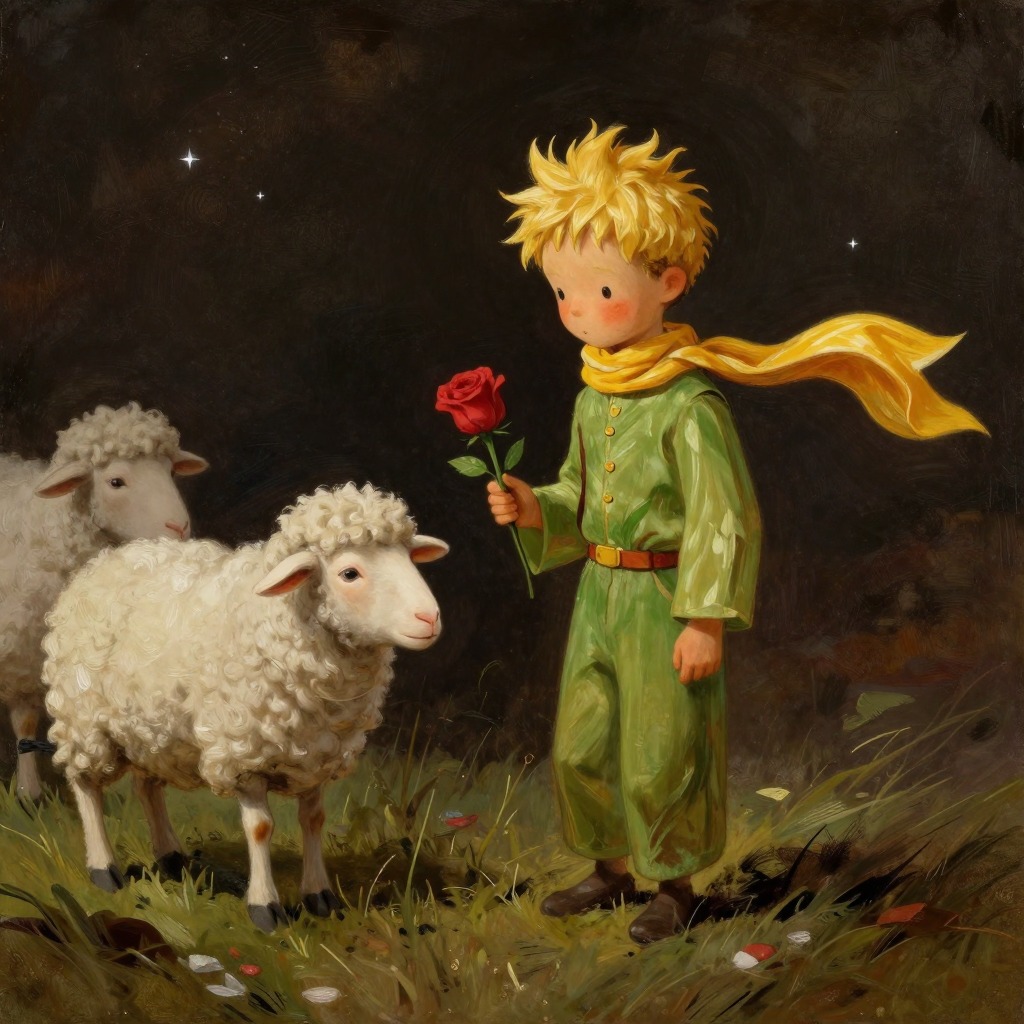
The glass globe's true narrative weight emerges not from its use but from the possibility of its neglect. The Narrator, reflecting on the Little Prince's departure, is tormented by the thought that "on some one evening he forgot the glass globe." This single moment of absent-mindedness, the Narrator fears, could have catastrophic consequences. The globe's absence would leave the rose vulnerable to the sheep, which the Narrator had drawn without a leather strap, making it impossible for the Little Prince to secure the animal. The object thus becomes a fulcrum of anxiety: its presence ensures safety, its absence invites disaster. The Narrator oscillates between hope and despair, imagining the Little Prince's careful routine one moment and a fatal lapse the next.
Symbolic and Emotional Resonance
The glass globe transcends its materiality to become a symbol of the fragility of love and the impossibility of perfect protection. The Narrator's internal debate—"Has the sheep eaten the flower?"—hinges entirely on whether the globe was used. This uncertainty transforms the entire universe: "nothing in the universe can be the same if somewhere, we do not know where, a sheep that we never saw has—yes or no?—eaten a rose." The globe's potential failure represents the limits of care, the gap between intention and outcome. The Narrator's grief is comforted only by the belief that the Little Prince returned to his planet, but the unresolved question of the globe's use leaves a permanent ache. The stars, which the Narrator hears as "five hundred million little bells," can turn into tears if the globe was forgotten.
Narrative and Thematic Significance
The glass globe is central to the book's meditation on love, loss, and the unseen consequences of small actions. The Narrator's fixation on the object reveals how a single, mundane item can carry the weight of an entire relationship. The globe's nightly use is a testament to the Little Prince's devotion, but its potential neglect underscores the vulnerability inherent in all acts of care. The object also connects to the book's broader themes of perception and responsibility: only those who love the Little Prince understand the importance of the globe, while "no grown-up will ever understand that this is a matter of so much importance." The glass globe, in its smallness and transparency, becomes a lens through which the reader sees the profound stakes of love and the ever-present possibility of loss.