Brickyard Hill
The Long WalkBrickyard Hill is a long, steep, banked ascent beside the Androscoggin River near Porterville, and in the Long Walk it becomes the last major hill before Freeport. The place concentrates the contest’s physical ordeal and public theater: the Walkers must climb while their legs fail, spectators cling to the surrounding landscape and chant Ray Garraty’s name, and a brief personal memory of an old girlfriend makes the road carry the weight of an ordinary life that the event has displaced.
Setting and Physical Character
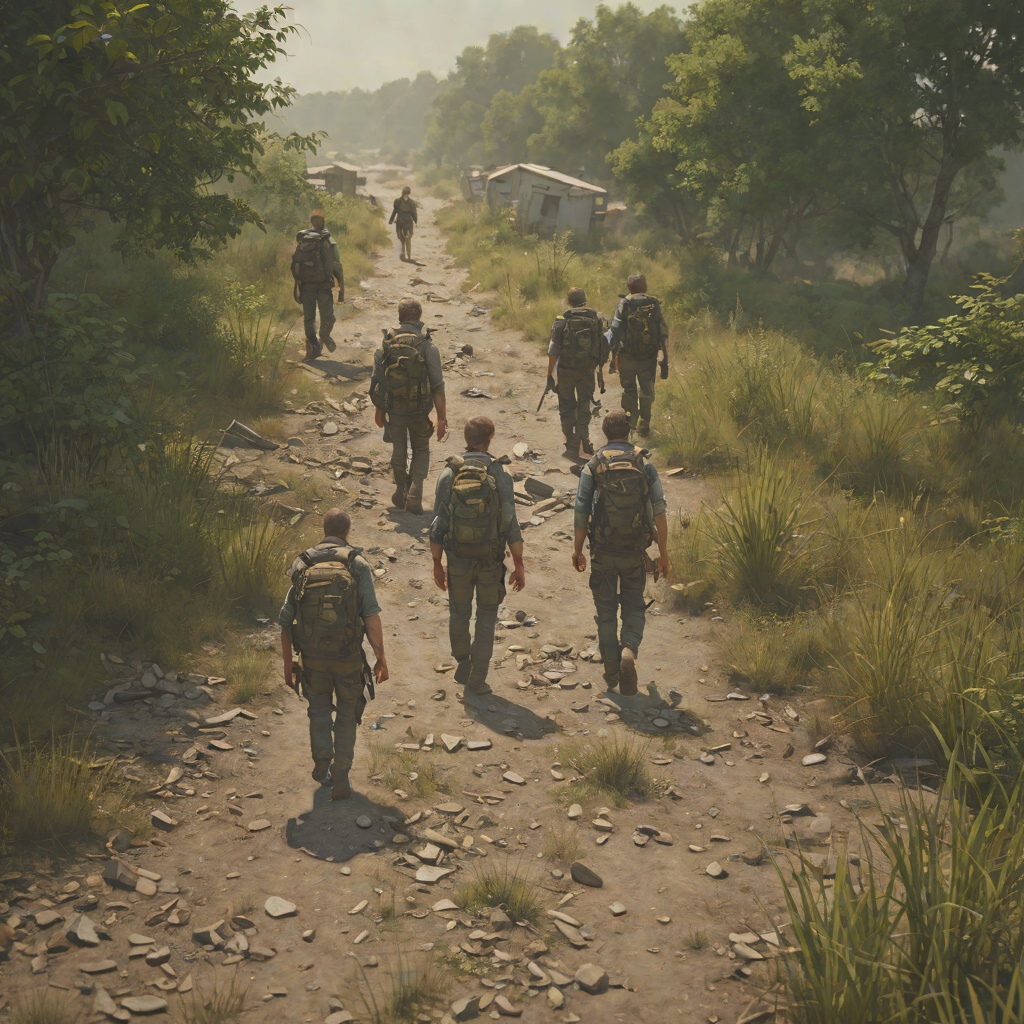
Brickyard Hill begins after the Walkers cross the bridge over the Androscoggin River and turn left. The river drops away below them on the left, while an almost perpendicular upslope rises on the right, making the road feel constricted between falling ground and an unyielding wall. The hill is not merely described as difficult; its length, steepness, and banking organize the Walkers’ bodies, forcing every participant to spend precious energy on a clearly bounded obstacle.
The surrounding landscape is also occupied by the crowd. Spectators cling to trees, bushes, and one another along the slope, turning the hill into a packed viewing gallery rather than an empty rural road. Their physical presence narrows the sense of escape and makes the ascent a public performance. The Walkers are exposed from below and above, watched at the exact point where fatigue is most difficult to conceal.
The Climb as a Trial
Garraty reaches Brickyard Hill already near the limits of his endurance. His legs quiver and threaten to become useless, while Collie Parker’s breathless exclamation from ahead is barely audible above the crowd. The climb therefore converts exhaustion into immediate danger: the hill is the final large ascent before Freeport, but reaching its crest still requires an effort that may leave a Walker unable to continue.
The hill’s importance lies partly in Garraty’s expectation that it is the last decisive obstacle in this portion of the route. He tells himself that after it, the outcome will no longer matter in the same way; if the Walk leads him to hell, he will go there. That thought gives the ascent a grim threshold quality. The hill promises relief by marking an ending to the immediate sequence of climbs, yet the promise is inseparable from the possibility that the body will fail before the crest.
The guns fire as the Walkers negotiate the area, and Charlie Field bows out of the Walk. The gunfire makes the hill’s physical pressure inseparable from the event’s death-dealing rules. A place remembered as a local incline becomes a sorting mechanism: those who cannot maintain the required pace are removed, and the surviving Walkers carry the knowledge that the landscape itself has just witnessed another elimination.
Personal Memory Within the Route
Brickyard Hill also opens a private, sharply ordinary register in Garraty’s consciousness. He remembers dating a girl named Carolyn who lived on the hill. She is now married and has a child, and his recollection briefly shifts the setting from an obstacle in a national spectacle to a location in the vanished geography of adolescence.
The memory is not sentimentalized. Garraty recalls that Carolyn might have allowed a greater intimacy, but he had been young and foolish. The thought arrives while his legs are trembling and while strangers chant his name, producing a severe contrast between private possibility and public coercion. Brickyard Hill thus holds two incompatible kinds of time at once: the past of dating, marriage, and children, and the present of forced forward motion in which the body is measured against a fatal rule.
Crowd, Route, and Narrative Significance
The hill demonstrates how the Long Walk transforms ordinary infrastructure into an arena. The bridge, the river, the slope, and the spectators’ improvised positions all channel movement and attention. Garraty cannot encounter Brickyard Hill as a neutral resident might; the route has been socially produced as a stage, with the crowd’s chant and the soldiers’ enforcement giving the terrain a political and ceremonial function.
Its position before Freeport also links the hill to the broader rhythm of the route. The Walkers have passed towns, industrial areas, bridges, turnpike approaches, and huge cheering crowds; each location promises arrival or recognition while extending the ordeal. Brickyard Hill compresses that pattern into one ascent. The road appears to offer a final test before the next town, but the gunfire at its crest exposes the darker truth: progress through the landscape does not release the Walkers from the system. It only carries the survivors to the next exposed space.