Caribou
The Long WalkCaribou is the first major urban threshold in the Long Walk, transforming the Walkers’ difficult progress through open country into a brightly staged public spectacle. The town gives the event a measurable milestone—eighteen miles have become forty-four—but its crowds, cameras, industrial landscape, and strict prohibition against aid also reveal how thoroughly the Walkers’ suffering has been organized for public consumption.
Approach to the Town
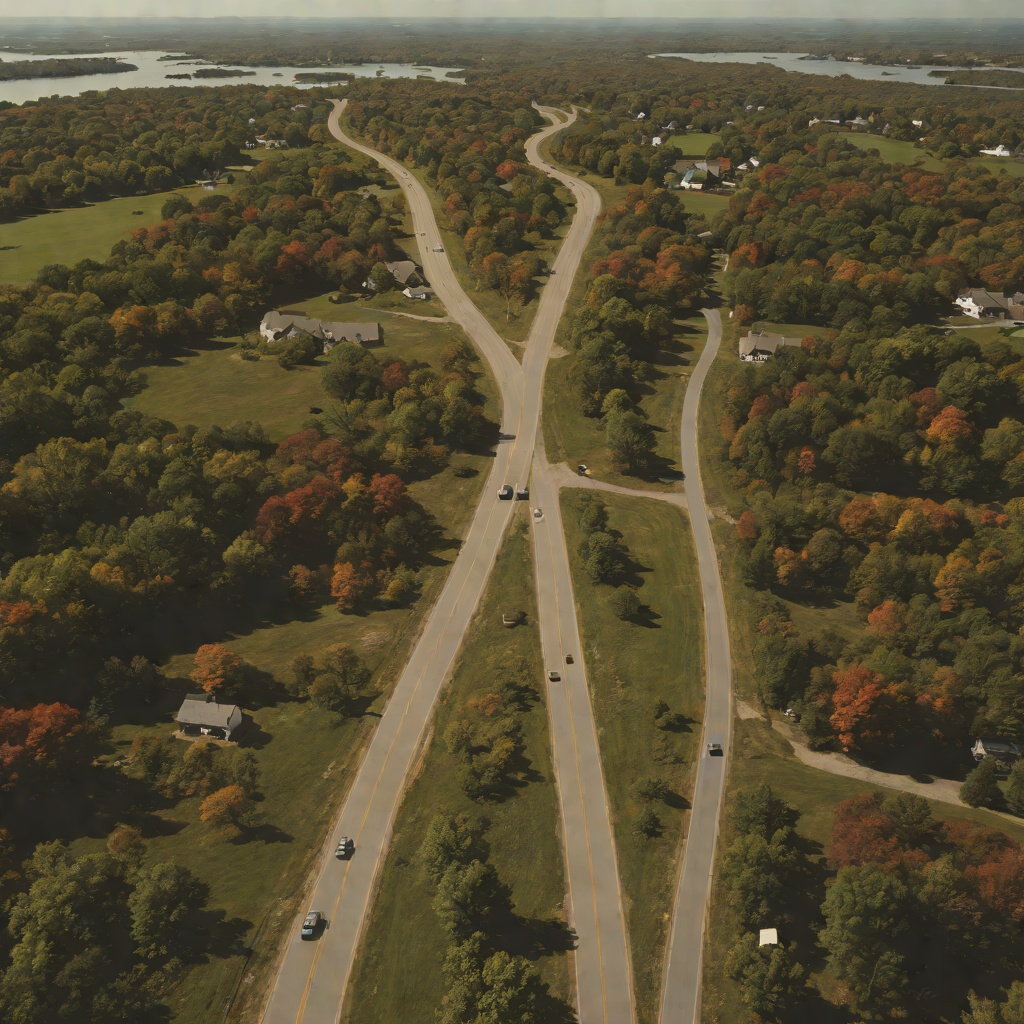
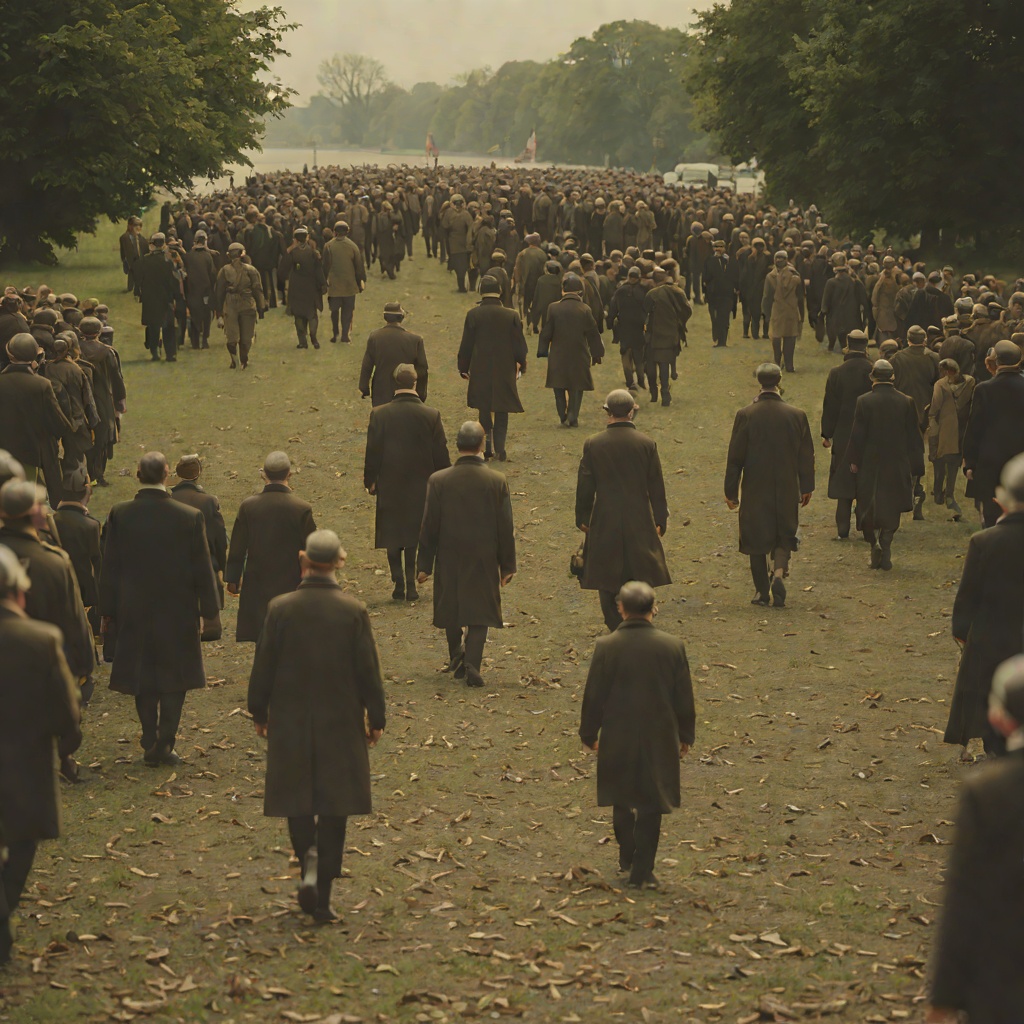
Before reaching Caribou, the country becomes hillier, and Ray Garraty begins to sweat heavily as his shirt sticks to his back. Thunderheads gather in the distance, while a circulating breeze offers only limited relief. When Peter McVries asks for the next large town, Garraty identifies Caribou and reflects on the distance still ahead. At one-thirty, the Long Walk has covered eighteen miles with only one Walker eliminated, a figure Garraty regards with uneasy pride. The number briefly gives the ordeal the form of an achievement, even as his thoughts remain fixed on how much farther the group must go.
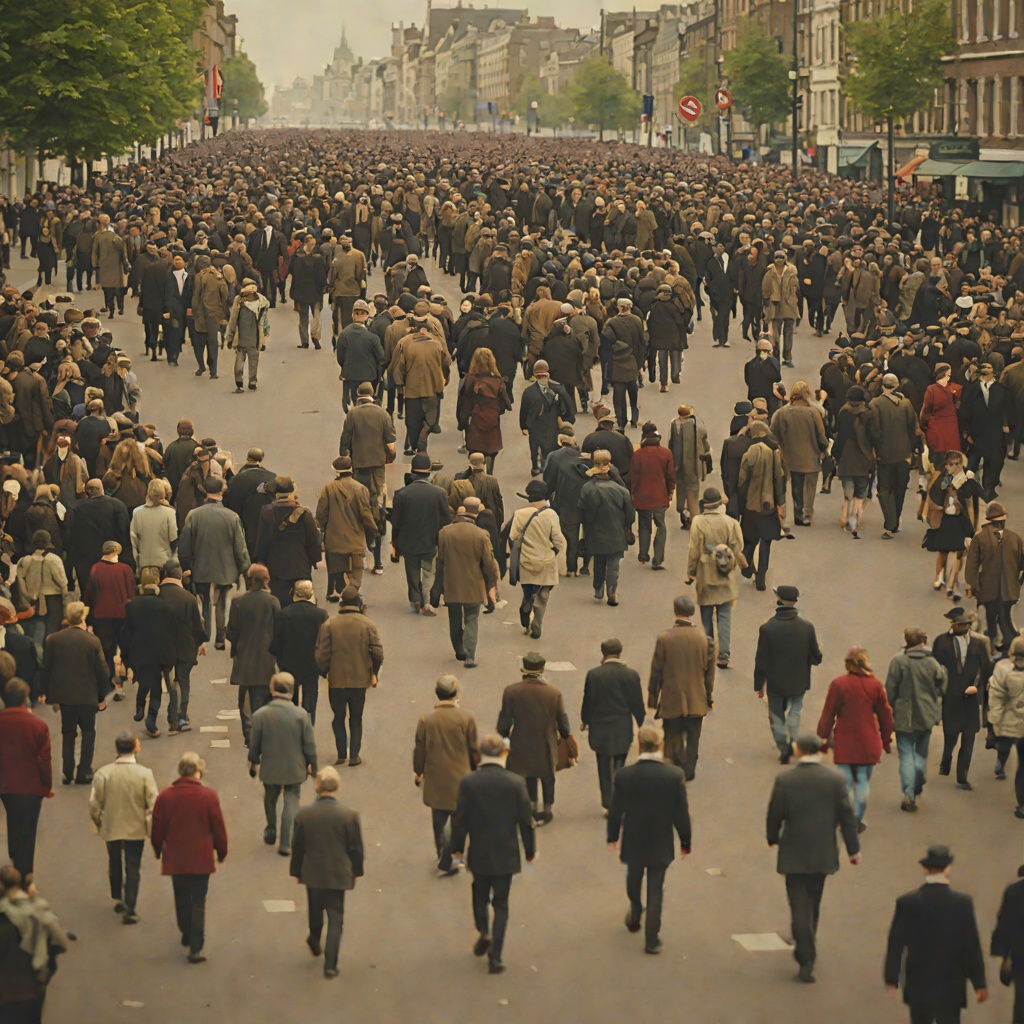
The Walkers pass the Caribou city limits into a large crowd and the sudden glare of a television news setup. A battery of lights washes the road in warm white, creating the impression that the boys have entered a temporary lagoon of sunlight before emerging again into the ordinary road. The sensation is both welcoming and artificial: the town supplies warmth through illumination rather than through any relief from the physical conditions of the Walk.
Media Spectacle and Public Attention
Caribou makes the Long Walk visibly into a media event. A fat newspaperman in a three-piece suit trots alongside the Walkers, extending a long-reach microphone toward different participants while two technicians unreel a drum of electrical cable behind him. The questions are simple inquiries about how the boys feel, but the arrangement turns bodily endurance into broadcast material. The Walkers’ immediate condition becomes something to be recorded, selected, and transmitted to an audience outside the scene.
The television crew soon runs out of microphone cable. The reporter winds back toward the mobile unit, carefully avoiding the tangles of cord, while the crowd—drawn as much by the broadcast apparatus as by the Walkers themselves—cheers enthusiastically. Posters of the Major rise and fall on sticks still fresh enough to bleed sap. When the cameras pan across the spectators, their enthusiasm intensifies as they wave toward Aunt Betty and Uncle Fred. Caribou therefore contains two audiences at once: the people physically lining the road and the larger imagined public watching through the camera’s selective gaze.
The public display grows more elaborate later in the Walk. After the Walkers have reached the hundred-mile marker, the roadside crowd becomes overwhelming. State police hold people behind bright orange nylon restraining ropes, flashbulbs burst in the darkness, and a policeman struggles with a screaming child carrying a toy glider and an autograph book. Arthur Baker reacts with astonishment at the sheer number of spectators, while Collie Parker waves and smiles before addressing the crowd with sarcastic abuse. His performance captures the unstable relation between celebrity and contempt: the Walker is displayed for public affection even as he answers that affection with mockery.
Commerce, Rules, and Industrial Caribou
The town also exposes the boundary between hospitality and official control. A small shop owner in stained white clothing places a soft-drink cooler beside the road under a sign offering refreshments to the Long Walkers. A police cruiser is parked nearby, however, and officers patiently explain that spectators may not provide any aid or assistance, including soft drinks. The restriction is mundane in its enforcement but severe in its meaning. Even an apparently harmless act of kindness would interfere with the event’s controlled conditions, making the prohibition a visible sign that the Walkers’ lives are subordinate to the rules of the competition.
Afterward the group passes Caribou Paper Mills, Inc., a huge soot-blackened building beside a dirty river. Workers stand along cyclone fences, cheering good-naturedly and waving. A whistle sounds as the last Walker, Stebbins, passes, and the workers then return inside. The scene links the Long Walk to an industrial labor landscape: bodies are observed at the fence, acknowledged by a signal, and then sent back to their assigned routines. The Walkers remain in motion under threat of death, while the mill workers briefly pause to watch before resuming work.
Caribou as a Threshold in the Route
Caribou is not merely a place-name on the route. Its downtown passage establishes a recurring structure of the Long Walk: a difficult approach, a sudden concentration of spectators and media, a brief enlargement of the Walkers into public symbols, and a return to the road. The town’s forty-four-mile position makes progress numerically legible, but the public celebration cannot reduce the distance still remaining. Garraty later hears that Oldtown lies approximately one hundred and twenty miles away, a reminder that every urban arrival is only an intermediate marker.
The later movement through Oldtown and onto the interstate intensifies patterns first made visible at Caribou. In Oldtown, arc-sodium lamps, confetti, newspaper scraps, telephone-book pages, and toilet paper turn the night into a distorted parade, while television lights at Caribou had already shown how illumination could manufacture a temporary public world. At the entrance to Interstate 95, soldiers silently line the ramp with rifles held in ceremonial salute, contrasting official pageantry with the Walkers’ exhausted bodies. Caribou thus functions as an early model of the Walk’s public geography: roads become stages, crowds become participants, and state rules determine how close compassion may come to the contestants.
Narrative Significance
Caribou crystallizes the event’s central contradiction between celebration and deprivation. The Walkers are interviewed, illuminated, photographed, applauded, and presented as objects of communal excitement, yet they cannot accept a soft drink from a shopkeeper. Their identities are temporarily enlarged by media attention even as their physical needs are treated as violations of procedure. The town’s industrial whistle, television cables, police ropes, posters, and floodlights make this contradiction concrete. Caribou is where the Long Walk most clearly becomes both a journey through a real Maine town and a manufactured spectacle whose audience is permitted to watch, cheer, and consume the contestants’ endurance without being allowed to relieve it.