George Fielder
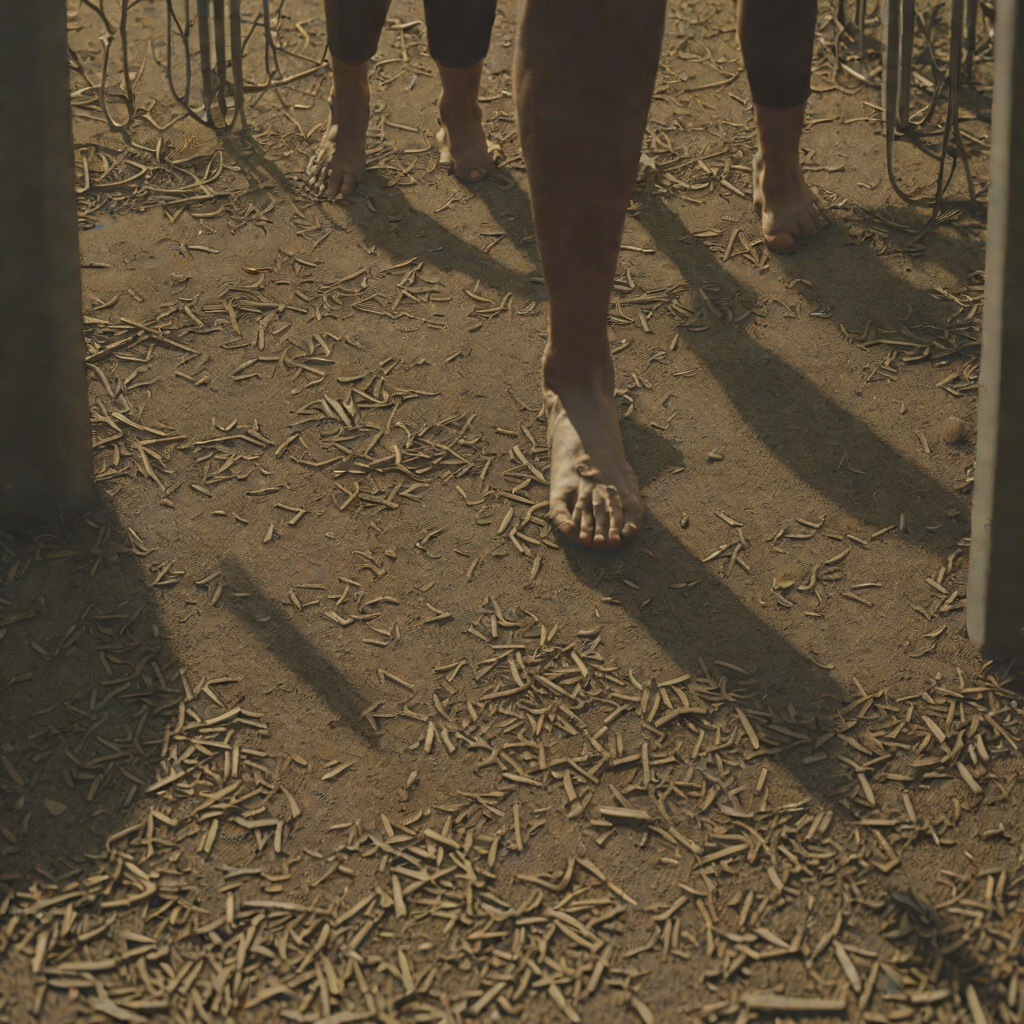
The Long WalkGeorge Fielder is a late-stage survivor of the Long Walk and one of the seven walkers who enter Massachusetts. Described as a struggling, hollow-eyed skeleton, he remains physically present but already seems nearly erased by exhaustion. His defining scene comes when the road passes between hills crowded with spectators: the human mass overwhelms him, and he imagines that it will close over the walkers and eat them. His panic, followed by his shooting, makes him a concentrated image of the contest’s psychological and political violence.
Identity and Introduction
George Fielder is named among the seven walkers crossing into Massachusetts: Ray Garraty, Arthur Baker, Peter McVries, George Fielder, Bill Hough, Milligan, and Stebbins. By that point, the list itself carries a grim significance. The walkers are no longer introduced as a large field of competitors but as a dwindling remnant, and Fielder is identified through physical depletion: he is struggling and hollow-eyed, described as a skeleton rather than as a robust athlete or a distinct public personality.
This presentation gives Fielder a deliberately limited social profile. The evidence does not establish a personal history, family connection, or individual ambition for him. Instead, his identity is formed by his position within the surviving group and by the visible condition of his body. He is a person still walking, but the language surrounding him registers how the Long Walk has stripped the participants toward bare endurance.
The Massachusetts Crossing
Fielder’s final scene follows the crossing into Massachusetts, where the formal spectacle of the border passage gradually recedes behind the walkers. Rain continues without relief, and spring wind tears caps from the crowd and sends them spinning across the pale sky. The crossing is therefore both a geographic milestone and a narrowing of the contest: seven men remain, but the surrounding ceremonial noise cannot conceal their physical collapse.
The road then bends around a large, banked curve and descends between two sloping hills. The hills are black with people, and the crowd seems to rise around the walkers like living walls. This setting transforms spectatorship into an enclosing environment. Fielder does not encounter the crowd as a collection of separate faces; he experiences it as one immense organism surrounding the road.
Panic and Death
Fielder abruptly comes to life in the middle of this overwhelming scene. He turns his skull-like head slowly from side to side and says that the crowd is going to eat the walkers. Stebbins answers briefly, attempting to deny or rationalize the fear, but Fielder’s terror intensifies rather than subsides. He repeats the warning until the words collapse into a frantic, nearly continuous sound.
His panic is not presented as an abstract fear detached from the event’s conditions. It emerges from the convergence of exhaustion, the hostile weather, the physical enclosure of the road, and the sheer volume of the spectators’ noise. The sound from the hills beats down on the walkers like hammers, and Garraty can barely hear Fielder even when Fielder is screaming at the top of his voice. Fielder’s inability to be heard is crucial: the crowd is loud enough to absorb the walker’s last attempt to communicate.
The soldiers shoot Fielder while the crowd’s noise largely masks the gunfire. His body performs a gangling, strangely graceful movement in the middle of the road, with feet kicking and shoulders jerking, before he sits down with his legs spread and dies upright. The final posture resembles that of a tired child caught at play, an image that sharply contrasts with the public machinery surrounding him. His death is both spectacular and strangely private: hundreds or thousands of people witness the scene, yet the immediate human fact of his terror is almost swallowed by the collective roar.
Relations Within the Survivor Group
Fielder’s closest documented relation is to the other remaining walkers, especially Stebbins, who responds to his fear with short, controlled skepticism. The exchange reveals a contrast between two survival styles. Stebbins attempts to preserve intellectual distance and verbal control, while Fielder’s exhausted body and mind break through that discipline. Fielder’s terror also affects Garraty, who hears the scream only imperfectly and witnesses the death as another unbearable stage in the group’s shrinking passage through Massachusetts.
Fielder’s presence is also defined by the group’s numerical condition. Earlier deaths have repeatedly been converted into changes in the odds and the official count: after two walkers disappear, the remaining contestants are described as statistically favored, while the Long Walk’s progress is measured through figures such as eighty miles completed, twenty-seven walkers gone, or ninety-nine miles covered with thirty-six dead. Against that statistical language, Fielder’s death briefly restores an individual shape to the process through his distinctive fear. Yet the event immediately threatens to absorb even that distinction into the same system of elimination.
Narrative Role and Significance
Fielder functions as a threshold figure between bodily survival and psychological dissolution. His description as a hollow-eyed skeleton shows the cumulative damage of the Walk, while his vision of the crowd as something that will consume the walkers gives literal form to the social spectacle’s predatory character. The spectators do not need to attack him physically for their presence to become destructive; their massed attention, noise, and appetite for the event help create the conditions of his breakdown.
His death also clarifies the structure of state violence. The soldiers remain the direct executors, but the surrounding crowd supplies the spectacle within which the execution occurs. Fielder is not granted a meaningful appeal or a recovery period once he falls apart. The rules of the Walk leave only continued movement or elimination, and his terror becomes another visible consequence of a system that treats exhausted bodies as legally disposable contestants.
Fielder’s end is especially stark because the other walkers continue forward after the crossing. His body remains behind while the surviving seven become six, and the road carries the event onward with the same rain, wind, and public attention. In that sense, George Fielder is not merely a casualty in the plot. He is the point at which the Long Walk’s crowd, machinery, and exhausted human subjects converge: a nearly erased man briefly cries out against the spectacle, is barely heard, and is then turned into one more absence along the road.