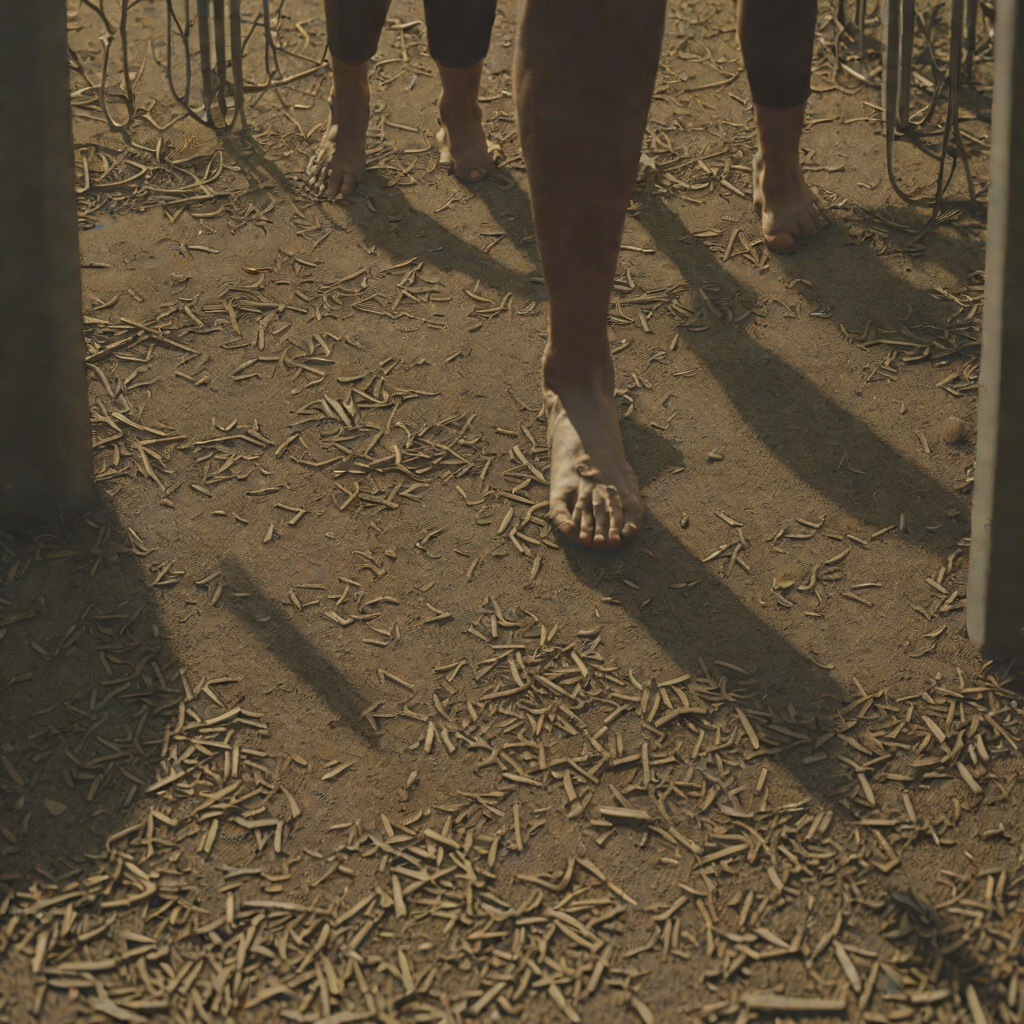
Hint Thirteen: “Conserve energy whenever possible”
The Long WalkHint Thirteen, “Conserve energy whenever possible,” is both a race instruction and a sentence on how the Long Walk is designed to be endured. Spoken by the Major before the boys begin, it teaches restraint as the condition of survival; repeated in Ray Garraty’s thoughts, it becomes an internal command that governs pace, emotion, and even contact with the crowd. Its plain language conceals the event’s violence: the walkers are told to preserve energy because the state has arranged for every unnecessary movement to become potentially fatal.
Definition and First Use
The Major introduces Hint Thirteen while the boys are still gathered at the starting point. He tells them to sit down and keep the hint in mind, identifying it specifically as “Conserve energy whenever possible.” The immediate situation gives the sentence a practical force. The walkers have not yet begun, and the Major’s instruction turns waiting itself into part of the competition: sitting rather than standing is already a way to protect the bodily resource on which the race depends.
The advice also establishes the Major’s characteristic authority. He does not need to explain why energy matters. His brief instruction is embedded in a system in which warnings, soldiers, and the possibility of being shot make the rule self-enforcing. The boys obey and sit down, so the hint functions less like friendly counsel than like a compact regulation issued by the official who controls the event.
Pace, Discipline, and Garraty’s Self-Control
Once the walking begins, Hint Thirteen becomes a standard by which Ray Garraty interprets his own conduct. When he sees several boys pulling away from the main group at roughly six miles an hour, he recognizes the temptation to accelerate but refuses to be hurried. The instruction supplies a reason to resist the spectacle of speed: early exertion may look strong, yet it spends the energy required later.
The same principle shapes Garraty’s relation to the spectators. As the walkers enter town, people wave and cheer from lawns, chairs, picnic tables, swings, and porch gliders. Garraty initially feels jealous anger toward those who can sit while he must continue walking. He considers refusing to acknowledge them, then decides to wave only to people displaying Garraty signs and to pretty girls. Even this small courtesy becomes an expenditure to be assessed. Hint Thirteen has made waving neither an automatic social gesture nor a harmless pleasure, but a bodily and emotional choice within a contest where energy must be conserved.
The instruction therefore produces a peculiar inwardness. Garraty does not merely follow the road; he monitors himself against the road’s demands. His attention moves between hunger, fatigue, pace, and the danger of being hurried, while the repeated sentence gives those perceptions a single organizing rule. The hint is memorable precisely because it is so ordinary: its domestic sound makes the extraordinary cruelty of the Long Walk appear momentarily manageable.
The Contradiction of the Survival Rule
Hint Thirteen promises control in a setting where control is radically limited. A walker may sit when the Major permits it, choose not to accelerate, or decline to wave, but the larger machinery remains outside his command. A blue plastic identity card is taken from Ray Garraty’s mother at the guarded gate and fed into a computer terminal, which displays his registered identity and address. That ritual shows the state converting a person into an authorized participant before the race even starts.
The same structure becomes unmistakable when Ewing falls below speed for the final time. The soldiers push the other boys aside, drag Ewing to the shoulder, and shoot him when resistance fails. Conservation can delay exhaustion, but it cannot abolish the rule that makes slowing down a death sentence. The hint thus carries an implicit paradox: it teaches the walkers to manage their bodies while denying them any meaningful right to stop.
Its apparent rationality also helps conceal coercion. Participation may be presented through cards, registration, and official ceremony, yet the machinery surrounding the walkers binds them to a process from which withdrawal has fatal consequences. Hint Thirteen is the language of personal responsibility inside an impersonal system. If a boy collapses, the rule encourages the interpretation that he failed to conserve himself, even though soldiers and state regulations determine the consequences of that failure.
Repetition and Escalating Meaning
The phrase recurs at moments when ordinary behavior collides with the Long Walk’s lethal logic. At the beginning, it is official guidance; during the road scenes, it becomes Garraty’s private reminder; among the spectators, it regulates whether he will wave. Repetition gradually changes its emotional charge. What first sounds like sensible athletic advice becomes an instrument of self-surveillance, forcing the walker to treat every movement as evidence in a continuing trial.
Later violence exposes the limits of that discipline. Hank Olson climbs onto a halftrack despite the soldiers’ guns. The soldiers fire in coordinated fashion, and a bullet enters Olson’s belly and exits through his back, yet he continues upward and grabs at the weapon that shot him. The scene reverses the economy prescribed by Hint Thirteen: Olson spends the last of his physical strength not to preserve life but to defy the power threatening it. His action does not refute the hint’s practical wisdom; it reveals the point at which survival and dignity cease to be identical values.
At the end, the Major’s arrival gives the phrase its final context. After Stebbins has been shot and Garraty remains alone on the road, the Major stands in the jeep, saluting and ready to grant the winner’s wish, including the death wish represented by the Prize. The instruction to conserve energy has led not to ordinary victory but to a terminal encounter with the authority that defined the rules. The sentence survives as a refrain whose modest surface cannot contain the scale of the system behind it.
Narrative and Thematic Significance
Hint Thirteen compresses the Long Walk’s central contradiction into five ordinary words: the individual must exercise careful agency within a structure designed to consume him. It gives Garraty a mental rhythm for pacing himself, but it also shows how thoroughly the state’s logic can enter a participant’s thoughts. The Major issues the command; Garraty repeats it internally; the walkers’ bodies bear its consequences.
As an expression, the hint connects physical endurance with political obedience. It encourages economy, patience, and restraint, yet those virtues serve an event whose official order culminates in gunfire. The walkers are asked to preserve energy not so that they may return safely to ordinary life, but so that they may remain available to the contest for as long as possible. Hint Thirteen is therefore neither merely motivational nor merely ironic. It is the Long Walk’s most efficient formula for turning survival into disciplined participation in one’s own elimination.