Jim Garraty
The Long WalkJim Garraty is Ray Garraty’s father, a former government-truck driver whose forced disappearance becomes one of the most important pieces of Ray’s private history. He is absent from the Long Walk itself, but the memory of what happened to him gives the contest’s uniforms, computers, orders, and gunfire a personal meaning: for Ray, state violence is not an abstract political danger but an old wound inside his family.
Identity and Background
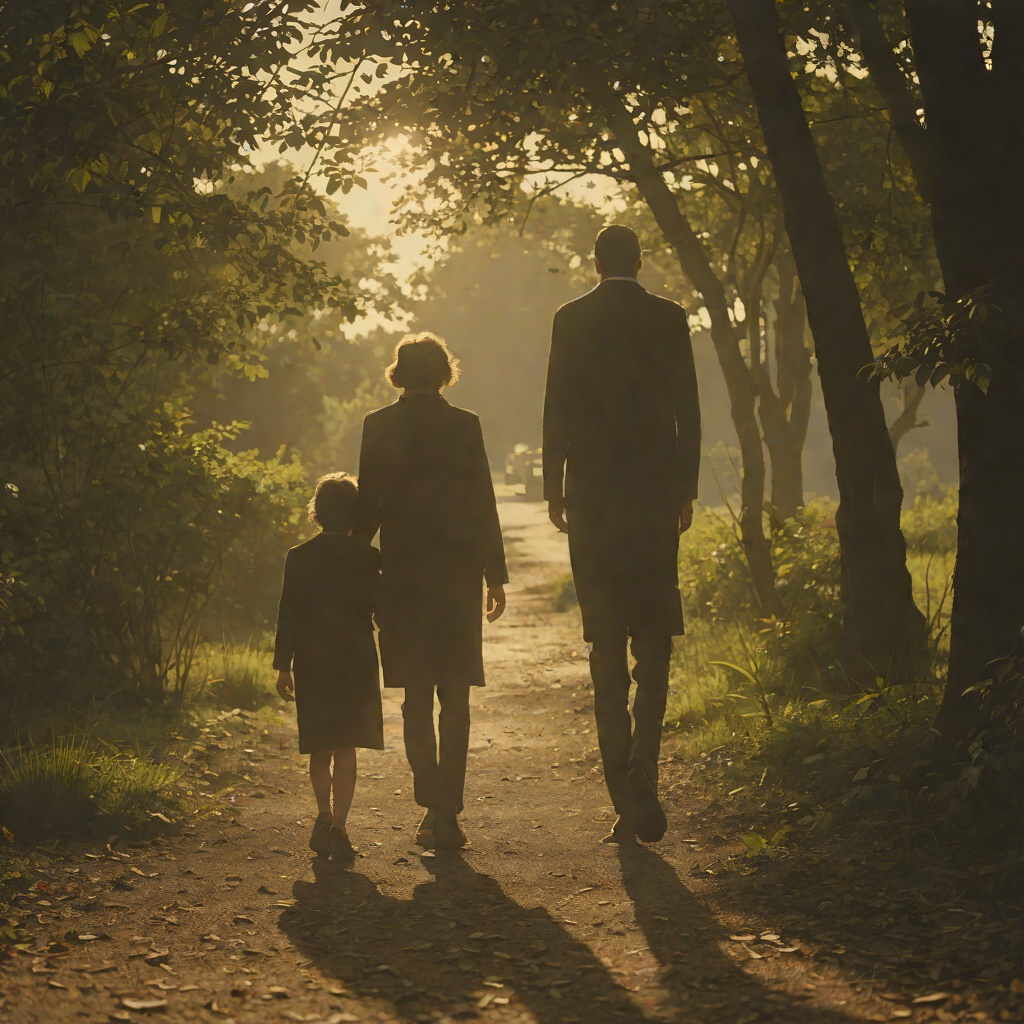
Jim Garraty was a sandy-haired giant with a booming voice and a laugh that, to his young son, sounded like mountains cracking open. Before the Squads took him away, he drove Government trucks out of Brunswick after losing his own rig. The work would have provided a good living, but his employment also placed him under unusually close scrutiny. Because he worked for the Government, the Government was especially aware of his existence and especially ready to intervene when his political opinions seemed troublesome.
His opposition was directed particularly at the Long Walk. Jim Garraty had not been a supporter of the event, and his refusal to accept its official legitimacy made his ordinary employment politically dangerous. The narrative presents no formal trial, public hearing, or transparent accusation. Instead, the machinery of authority acts through a telegram and the arrival of two soldiers, turning a domestic disagreement with state policy into an enforced disappearance.
Removal by the State
One day, a telegram arrived; the next day, two soldiers appeared at the Garraty household. Jim Garraty went with them while blustering in protest, but the scene was remembered chiefly through the stunned reaction of his wife and child. His wife closed the door with cheeks pale as milk, and when the young Ray asked where his father was going with the soldiers, she slapped him hard enough to make his mouth bleed and ordered him to be silent. The violence inside the house therefore echoes the larger violence outside it: the family’s fear is so intense that even a child’s question becomes intolerable.
The removal is described as a neat one—odorless, sanitized, pasteurized, and stripped of visible mess. That language exposes the contradiction at the center of Jim Garraty’s fate. The state can make a person vanish without presenting the disappearance as brutality; administrative efficiency becomes a way of concealing brutality. His case foreshadows the Long Walk’s own system, in which identity cards, computerized registration, warnings, and military execution make lethal power appear orderly and procedural.
Influence on Ray Garraty
Ray Garraty has not seen his father for eleven years. The duration matters because Jim’s absence is not a recent crisis that can be resolved by reunion or explanation; it has become part of Ray’s formation. When Ray arrives at the guarded parking lot, an old blue Ford, a khaki guard, and a computer terminal transform a rural morning into an official checkpoint. The terminal consumes his blue plastic identification card and displays his registered name and address, reducing the boy to a state-readable identity. Against that scene stands the memory of Jim Garraty, whose employment and political opinions made him visible enough for the state to remove him.
Ray’s mother believes she should have stopped her son from entering the Long Walk before the state’s machinery took hold. Ray answers that the decision is his and insists that this path is best, one way or the other. Yet the memory of his father makes that claim of free choice unstable. Jim Garraty was taken because he opposed the system; Ray enters a contest that presents participation as voluntary while surrounding participants with guards, computerized identification, warnings, and the threat of being shot. The father’s disappearance thus shadows the son’s supposed act of self-determination.
Contrast with the Long Walk’s Authority
Ray once heard Jim Garraty describe the Major as the rarest and most dangerous monster a nation could produce: a society-supported sociopath. Ray nevertheless finds himself admiring the Major when he sees him in person. The contrast is central to Jim Garraty’s function in the story. His political judgment recognizes the danger of authority backed by collective acceptance, while Ray’s immediate experience of ceremony, discipline, and masculine command makes the same authority impressive.
The Major’s power is staged through small rituals. He calls the boys forward, distributes numbers, offers an expressionless command, and finally raises a stiff salute from a jeep as the Prize becomes available. The procedure does not replace violence; it organizes violence into a spectacle that can be admired. Jim Garraty’s warning supplies the absent moral perspective against which Ray’s fascinated response can be measured.
Narrative Significance
Jim Garraty is a remembered character whose plot presence consists almost entirely in consequence. He establishes that the Long Walk is connected to a broader system capable of monitoring citizens, suppressing dissent, and making people disappear without explanation. The same state that validates Ray’s identity at the gate can erase his father from family life; the same military order that regulates walking can direct soldiers to shoot a failing participant or attack someone who challenges the halftrack.
His absence also intensifies the story’s treatment of family. Ray’s mother carries guilt over failing to protect him from the Long Walk, while Ray carries the unanswered loss of a father removed when he was a child. Jim Garraty therefore stands behind Ray’s movement from the first guarded checkpoint to the final approach toward the Major. Even when the crowd, numbered bodies, and official spectacle try to define Ray as a participant in an event, the memory of his father insists that every official procedure has a human cost and that apparent order may be the polished surface of coercion.