Prize
The Long WalkThe Prize is the promised reward of the Long Walk, the material and symbolic lure that makes an endurance contest ending in death appear desirable. Its decisive significance lies in the contradiction between its language of fulfillment and the process used to obtain it: the walkers are processed through identification, monitored by rules and warnings, and removed by soldiers when they can no longer maintain the required pace. At the end, the Prize is presented not as an escape from that machinery but as its final ceremony.
Definition and Promise
The Prize first appears as an enormous financial possibility rather than as a clearly described object. Arthur Baker distinguishes the Prize from the money itself, yet immediately returns to the attraction of “All that money.” His conversation with Ray Garraty places the reward beside religious imagery: Garraty invokes the warning that rich men do not enter the Kingdom of Heaven, while the walkers continue to watch their feet because continued movement is the condition of remaining alive. The Prize therefore operates on two levels at once. It offers wealth, but it also turns survival into a secular version of salvation, with the winner promised a future that can be purchased only through the progressive destruction of everyone else.
The Prize is also associated with the winner's wishes. At the conclusion, the Major stands in a jeep, salutes, and prepares to grant the winner's first wish, every wish, or a death wish. The phrase places unlimited fulfillment and death in the same sequence. The reward is not merely a sum of money detached from the contest; it is an authority to choose, administered by the same official figure who presides over the event. Its apparent generosity thus remains inseparable from the power that has made the walkers continue.
The Prize and the Machinery of the Walk
The reward is supported by an elaborate administrative order. Before the walking begins, an old blue Ford enters a guarded parking lot, and a blue plastic identification card is handed from Garraty's mother to a guard. A computer terminal consumes the card and displays Garraty's full registered identity and address. This ritual converts a boy into a state-readable record before he becomes a numbered participant. The Prize belongs to that same system: it is the attractive endpoint of a process that first establishes identity, then regulates movement, and finally determines who may remain alive.
The warning system makes the contest look measurable and fair. Hank Olson explains that a walker can deliberately take a warning while still fresh, learn the limit, and later shed an old warning by walking for an hour without receiving another. The fourth failure to maintain four miles per hour eliminates a walker, while accumulated warnings can disappear after sufficient compliance. Such rules encourage strategy, calculation, and the belief that survival depends on knowing how to operate the system. Yet the penalties are not symbolic. When Ewing falls below speed for the last time, soldiers separate him from the other boys, pin his arms behind him, and shoot him with a carbine. The Prize is consequently defined by a procedure in which bureaucratic precision and lethal violence are the same mechanism.
The state also controls the visible boundary between ordinary life and the contest. When the walkers approach the Interstate 95 entrance toward Augusta, Portland, and points south, soldiers in scarlet uniforms replace the crowd along the ramp and hold their rifles in a ceremonial high-port salute. The smooth new pavement, overhead lights, military display, and rising cheers give the movement the appearance of public celebration. The Prize is staged within that spectacle, where surveillance can be experienced as ceremony and coercion can be disguised as national entertainment.
Doubt, Competition, and Labor
The Prize's promise becomes harder to believe as death accumulates. Peter McVries says that somebody wins and that the winner might be one of them, but he then calls the entire arrangement a fake, proposing that there may be no winner and no Prize at all, only a final shooting carried out somewhere away from public view. His suspicion reverses the official meaning of the reward. What is advertised as the reason for enduring may instead be a story told to keep the last walker moving. Garraty rejects the idea angrily, but the intensity of that rejection reveals how much the possibility of a genuine reward is needed to sustain the walkers' conduct.
Collie Parker offers a harsher account of the same process. He compares the walkers to crackers shaken through a sieve: crumbs fall away quickly, smaller pieces break apart, while the largest crackers must lose themselves one fragment at a time. He insists that the remaining boys still want to live, including Garraty and McVries, whose conversation and joking merely pass the time around the basic fact of survival. The image strips the Prize of heroic glamour. The contest does not simply identify a superior champion; it mechanically reduces human beings until one remains.
McVries's account of his work at the Plymouth Sleepwear factory supplies a concrete parallel to the Prize economy. The factory pays by piecework: wages are low, but workers receive a percentage for output above a minimum. McVries produces about twenty-three bags a day against a usual norm of thirty, disrupting the earnings of workers elsewhere in the process. His co-workers make certain that the workplace becomes unpleasant. At the same time, his partner Pris earns more than he does, saves her money, and resists paying for shared outings. McVries's weekly check of $64.40 and Pris's approximately $90 a week turn romance into competition and bodily exhaustion into measurable productivity. Read beside the Long Walk, this history shows how the Prize extends a familiar labor logic: bodies are timed, performance is ranked, and value is assigned to whoever can continue producing after others fail.
Victory and the Final Contradiction
The Prize is formally declared only at the end. The Major proclaims the Long Walk finished and presents the surviving walker as the winner while the participants are still forty miles from Boston. The announcement gives the reward a public, official form, but its celebratory language arrives after nearly all human alternatives have been removed. The declaration does not cancel the deaths that produced it; it packages them as the necessary history of a victory.
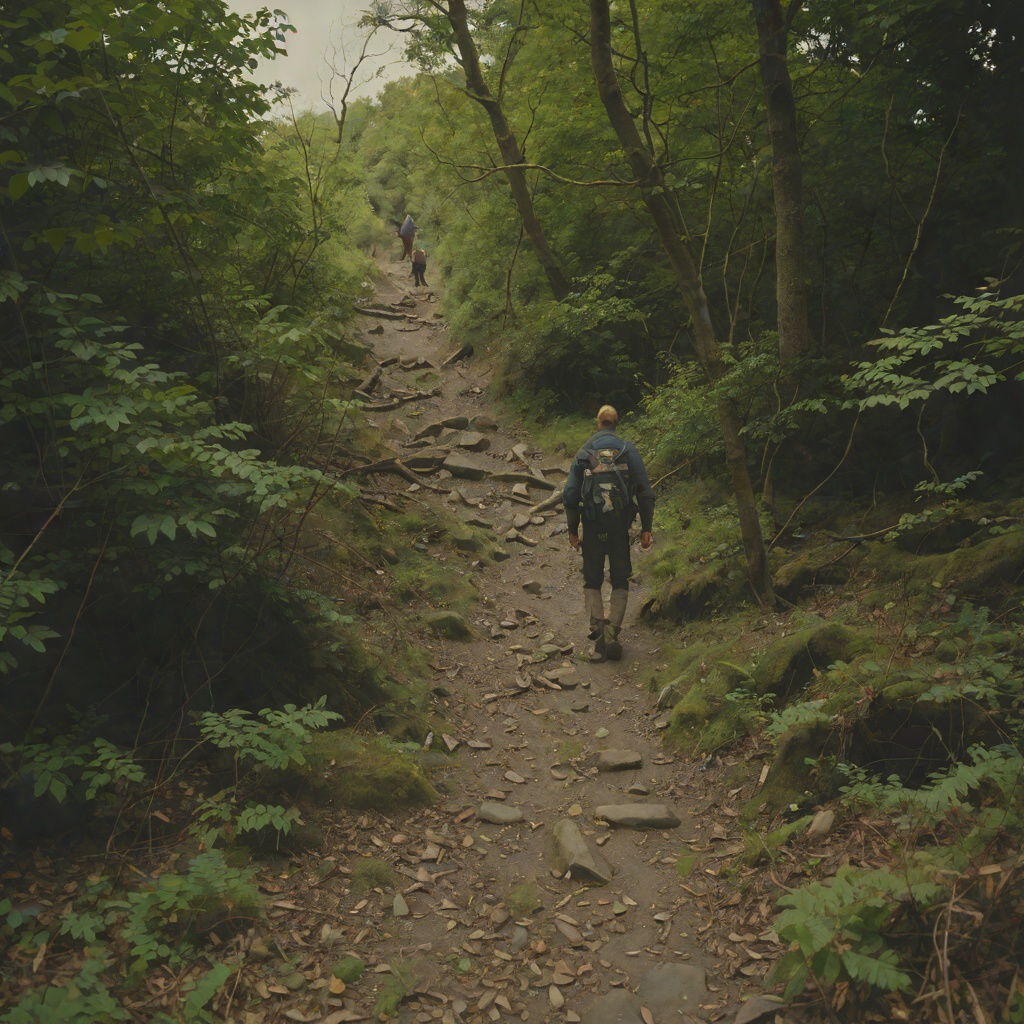
The final image makes the contradiction explicit. Garraty rises and walks as cheers fill the earth and fireworks fill the sky. The Major approaches in a jeep, holding a stiff salute and carrying the authority to grant the first wish, every wish, or a death wish. Behind him, soldiers finish shooting Stebbins, who is already dead, leaving Garraty alone on the road. The Prize is therefore encountered not in a private moment of triumph but amid fireworks, military presence, the completed execution of the last defeated rival, and a road that still demands movement. Its promised freedom is inseparable from the power that has produced the winner.
The concept finally remains unstable even when it is officially confirmed. The Major's ceremony asserts that there is a winner and that the Prize exists, answering McVries's suspicion at the level of public proclamation. But the ending does not make the reward morally or emotionally legible. Garraty sees a dark figure ahead, beckoning, and recognizes that figure without being able to identify it. The promised future is eclipsed by exhaustion, death, and an image that draws him onward. The Prize thus functions less as a fulfilled object than as the final mask worn by the Long Walk's governing principle: keep walking by converting survival into hope, and convert the destruction of everyone else into the spectacle of one person's reward.