Squads
The Long WalkSquads are the state security force through which the government turns political discipline and the Long Walk's killing machinery into a single, visible system. They appear as guards, soldiers, patrol units, computer operators, and armed escorts, but their function is consistent: identify bodies, monitor conduct, enforce the rules, and remove or kill those whom the state has marked as disposable. Their power is therefore both bureaucratic and openly violent, concealed behind identity cards, numbers, warnings, clocks, and the formal language of a regulated event.
Organization and Administrative Face
Squads first appear through procedure rather than spectacle. At the guarded entrance, an old blue Ford is stopped while a guard in a khaki uniform and Sam Browne belt requests Ray Garraty's blue plastic identification card. The guard passes it to a computer terminal, which consumes the card and displays Garraty's registered identity and address. This small ritual makes state power tactile: a person becomes an entry in a machine before he becomes a contestant in the Long Walk.
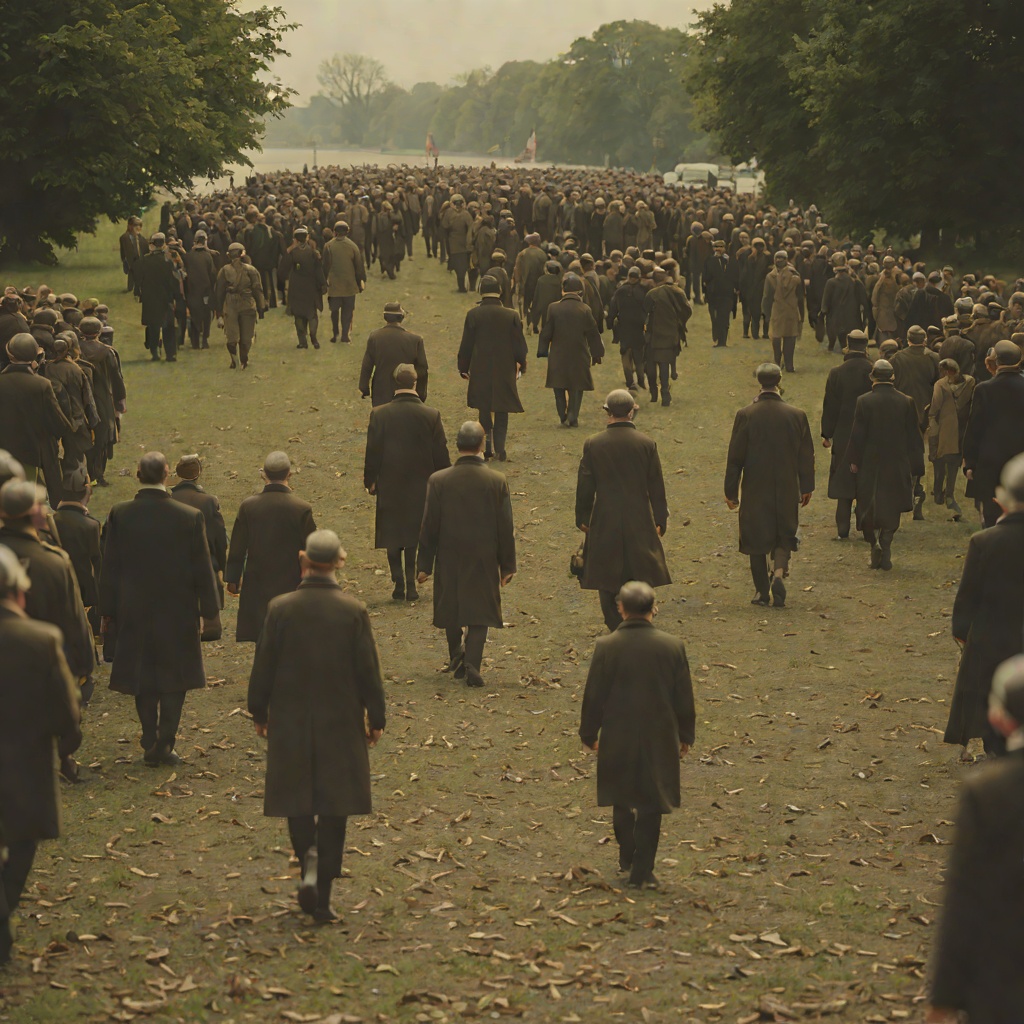
The same administrative atmosphere surrounds the Major's opening ceremony. Garraty's father had described the Major as a society-supported sociopath, but the Major's public manner is controlled and formal. He assigns numbers from a clipboard, instructs the boys to step forward smartly, and finally gives the signal with the words, "Luck to all," before the Walk begins. Squads thus present coercion as orderly service. Their personnel do not need to shout constantly; the clipboard, the uniform, the identification system, and the official timing apparatus establish that the state already possesses the participants.
Surveillance and Rule Enforcement
Once the Walk is underway, Squads maintain a mobile surveillance network. Halftracks travel along the road shoulder while radar dishes monitor each Walker's speed through an onboard computer. The cutoff is precisely four miles an hour, and the warning system translates fatigue into a measurable offense. Olson explains that a Walker can deliberately take an early warning to learn where the limit lies, then erase an old warning by walking for an hour without receiving a new one. The system offers the appearance of recoverable fairness while forcing each boy to calculate his body against an exact state threshold.
The machinery extends beyond what the Walkers can see. When Garraty wonders whether they could slip into the woods, Olson says that the authorities possess infrared sweepscopes, high-intensity microphones, and other monitoring equipment capable of seeing them as clearly as daylight and nearly detecting a heartbeat. The threat is not merely that a soldier might notice an escape. It is that no private space remains available. The boys regulate themselves because they assume that speech, movement, and attempted evasion are continuously observable.
Squads enforce the warning procedure with intimate, almost ceremonial precision. When Gary Barkovitch claims to have a stone in his shoe, a soldier stands opposite him with a chronometer while Barkovitch removes the shoe and shakes out a tiny pebble. The soldier does not debate the excuse; he announces the second warning while Barkovitch carefully smooths his sock and reties the shoe. The scene shows how the organization reduces pain and hesitation to timing data. A Walker may explain himself, but the device and the rule determine whether the explanation matters.
The same system remains active at the rear of the procession and at moments of apparent rescue. When Garraty nearly collapses, a soldier watches the solid-state computer at his waist, whose sonar device can calculate a Walker's speed to four decimal places. Garraty's desperate burst into a run is enough to make the soldier's finger loosen on the trigger, after which Garraty returns to a very fast walk. The soldier's weapon and instrument operate together: the computer determines whether the body has met the minimum, while the gun waits to enforce the result.
Political Removal and Lethal Authority
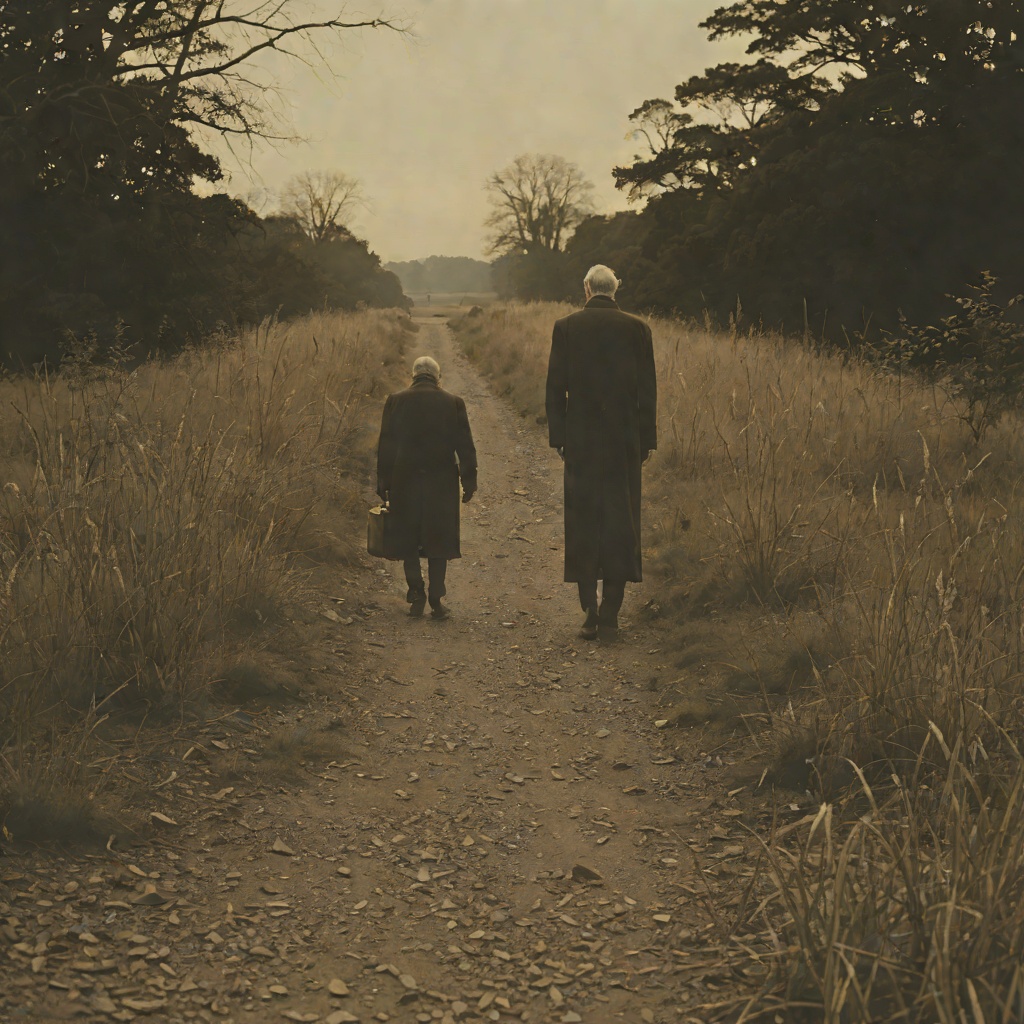
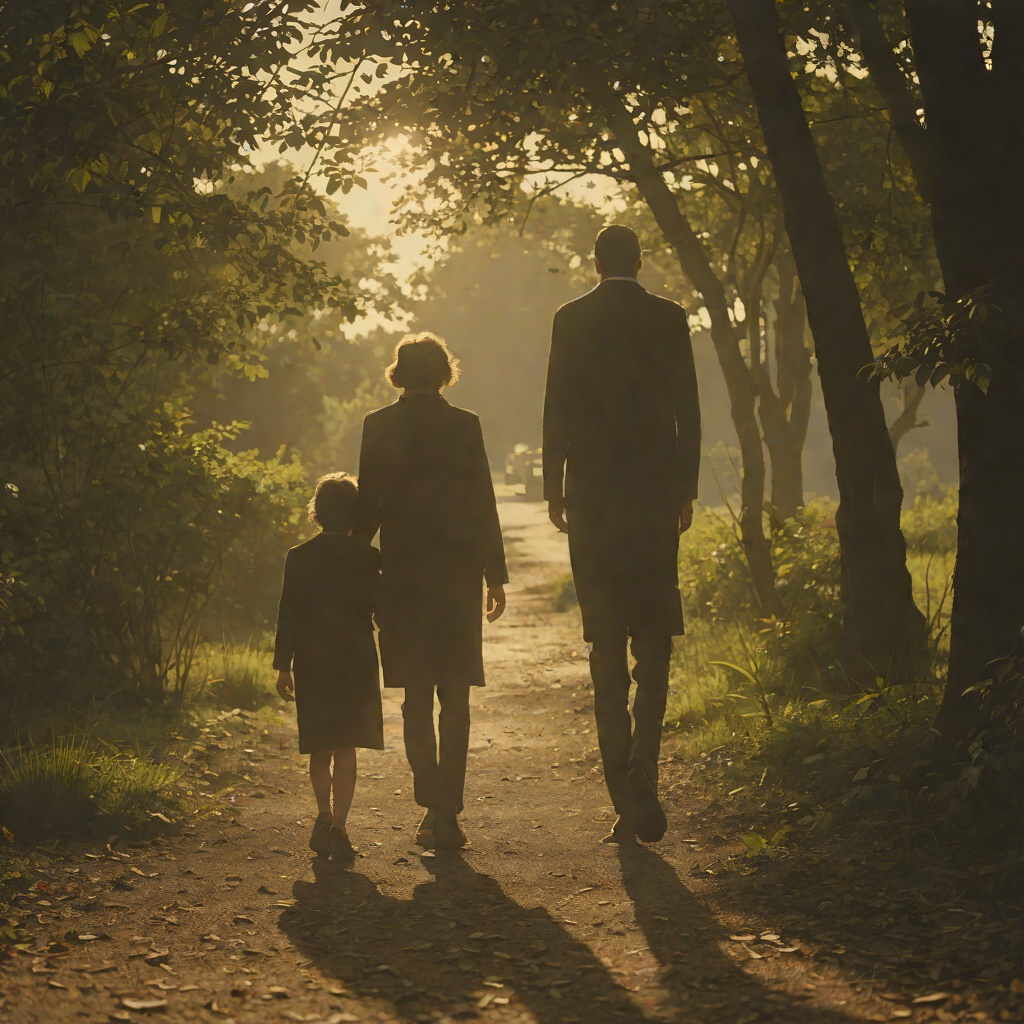
Squads are not limited to the Event. Garraty remembers that his father, Jim Garraty, drove Government trucks from Brunswick but opposed the Long Walk and spoke too freely about politics. The Government, already more aware of an employee's existence than an ordinary employer, sent a telegram; the next day two soldiers arrived at the Garraty home, and Jim Garraty left with them. The removal was abrupt, unexplained, and permanent. Garraty had not seen his father for eleven years, and the memory describes the disappearance as cleanly processed and stripped of visible residue. Squads make dissent vanish without requiring a public trial or a body that the family can mourn.
The organization also gives the state a vocabulary for punishment. Pearson treats being Squaded as preferable to dying, but Garraty rejects the confidence behind that judgment: no one knows what happens after the authorities take a person away. The uncertainty is itself an instrument of power. Because the fate of the removed person is hidden, the state can preserve the fiction that administrative detention is a safer alternative while avoiding accountability for what follows.
The lethal form of enforcement is shown when Ewing falls below the required speed for the last time. Soldiers separate him from the group, drag him to the road shoulder, pin his arms behind him, and shoot him in the head with a carbine when he tries to resist. One leg kicks convulsively after the shot. The soldiers perform the killing as assigned work, and McVries's observation that Ewing bleeds the same color as anyone else briefly restores the individual body beneath the procedure. Squads immediately convert that death into a numerical adjustment: two boys are gone, and the odds have shifted infinitesimally for those who remain.
Their authority is most visibly challenged when Hank Olson climbs onto a halftrack. Four soldiers bring their guns around in coordinated formation. Olson seizes the nearest barrel and pulls the gun from its holder as easily as an ice-cream stick, sending it clattering into the crowd. Another soldier shoots him in the belly, the bullet passing through his body, but Olson continues climbing and grabs the gun that has just fired. The scene exposes the organization as a disciplined collective rather than an invulnerable machine: its strength lies in coordinated weapons and procedure, yet a single Walker can momentarily disrupt that choreography.
The Event's Protective Fiction
Squads help sustain the Long Walk's contradiction: the authorities present it as a voluntary, rule-bound competition while surrounding it with the powers of a prison and an execution ground. Garraty's mother feels guilty that she did not stop his participation before the machinery of the state took over. Her anxiety is not only parental fear; it reflects the way official systems bind individuals to themselves once registration, identity verification, and selection have been completed.
The Walkers are permitted to move, but not to stop; they are displayed to the crowd, but denied privacy; they may receive warnings, but the fourth failure ends in death. Squads enforce this narrow freedom with halftracks, radar, microphones, chronometers, and rifles. The Event's rules therefore do not replace force. They organize force into a sequence that can be watched, counted, and described as fair.
At the end, the Major arrives in a jeep while Garraty walks alone toward him. The Major stands in the vehicle with a stiff salute and is associated with the Prize, which is described as capable of granting a first wish, every wish, or a death wish. Behind the Major, soldiers finish by shooting the already-dead Stebbins. The final image binds reward and execution together: Squads clear the road of bodies while the Major approaches the surviving Walker as the authorized giver of whatever the state calls victory.
Narrative and Political Significance
Squads are the institutional bridge between ordinary government and the Long Walk's exceptional violence. The computer terminal that reads Garraty's identity card, the halftrack that carries monitoring equipment, the soldier's chronometer, and the rifle raised after a final warning all belong to one continuous logic. Each device promises precision, but precision does not make the system humane. It makes coercion reproducible.
Their most important achievement is the de-personalization of death. A boy enters with a name, a mother, a home address, and a history; during the Walk he is assigned a number, measured by speed, marked by warnings, and finally treated as a problem for soldiers to solve. The crowd may witness the process, but the organization controls its meaning by presenting every death as the consequence of a rule. Squads thus preserve the state's authority not by hiding violence entirely, but by placing violence inside an administrative framework that makes killing look like enforcement and disappearance look like procedure.