Stebbins
The Long WalkStebbins is the Long Walk’s enigmatic “rabbit,” a seemingly detached boy whose quiet certainty, mechanical endurance, and final revelation that the Major is his father transform him from an odd peripheral figure into the race’s most unsettling embodiment of pursuit, manipulation, and concealed purpose.
Identity and Introduction
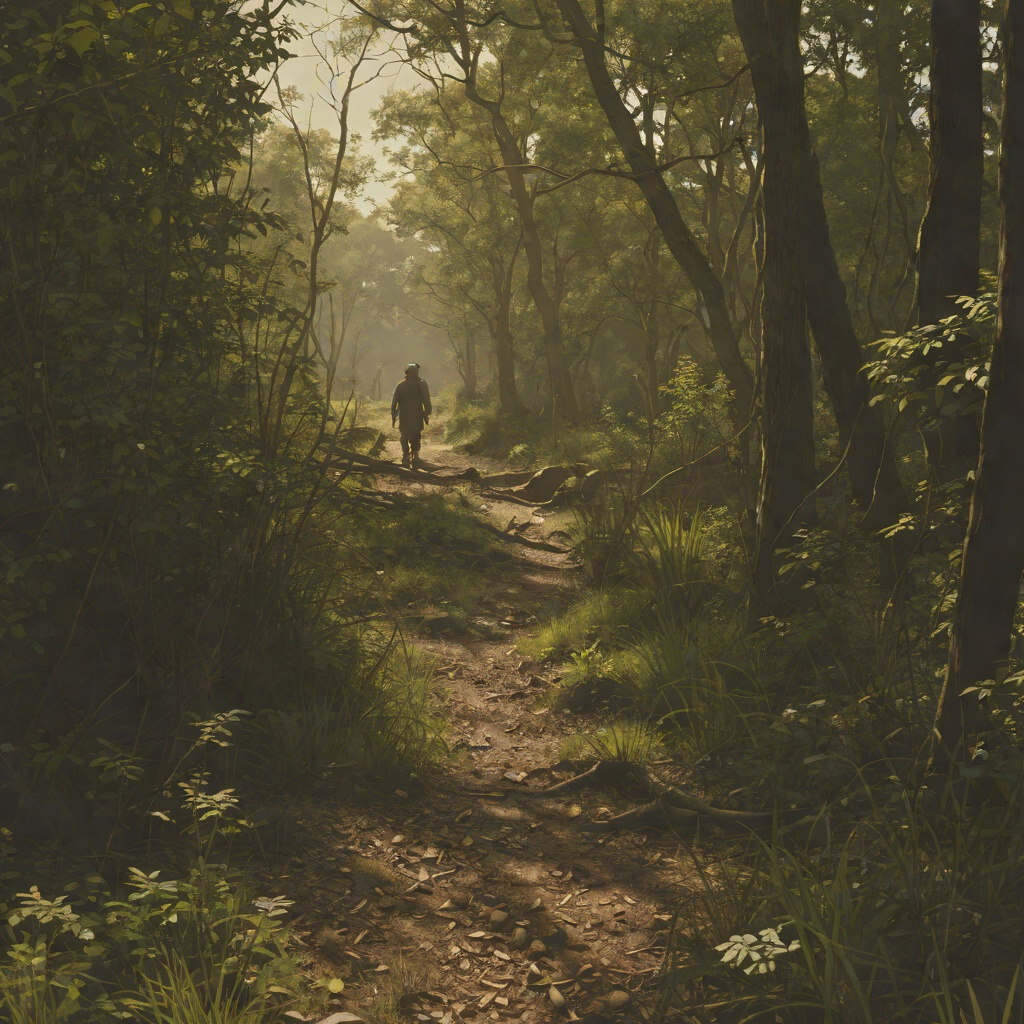
Stebbins first appears as a skinny boy sitting beneath a tree, distinguished less by sociability than by withdrawal. When he receives his number, he keeps his head down and does not speak to the Major at all before returning to the base of the tree. That silence immediately separates him from the other Walkers, who are being numbered, equipped, and prepared together. Ray Garraty is fascinated by him precisely because he seems present yet inaccessible: Stebbins does not announce a personality, but creates a mystery around the absence of one.
His physical presentation reinforces that impression. When he later draws almost even with Garraty and Peter McVries, his head remains bent forward and his blond hair flaps around his ears like a sickly halo. The image makes him seem both frail and uncanny, a figure moving through the race under a private sign. He is not introduced as a conventional rival who openly displays strength. Instead, his strangeness is carried by posture, silence, and the sense that he is watching or calculating more than participating.
Conduct During the Walk
Stebbins’s most striking quality is his confidence. When Garraty asks whether he thinks he will win, Stebbins answers calmly that he is quite sure of it, then drops back to his usual position. The answer is not accompanied by bravado or argument. Its force comes from its composure, as though victory were an established fact rather than a hope. At 5:25, Yannick buys his Ticket, and at 5:30 the Major arrives, just as Stebbins had predicted. The prediction gives his confidence a disturbing practical authority: he appears to understand the Event’s rhythm, including the timing of elimination, better than the other boys.
Stebbins’s endurance also operates as a form of control over the group’s imagination. During the long approach to exhaustion, he can reappear beside the others without explanation, speak with unsettling precision, and then retreat again. Even when Ray Garraty is near collapse, having spent an hour less than two seconds from death at 2:17 PM, Stebbins remains capable of greeting him as though he were merely returning to ordinary life. His presence therefore sharpens the contrast between the Walkers’ immediate bodily suffering and his apparently abstract relationship to danger.
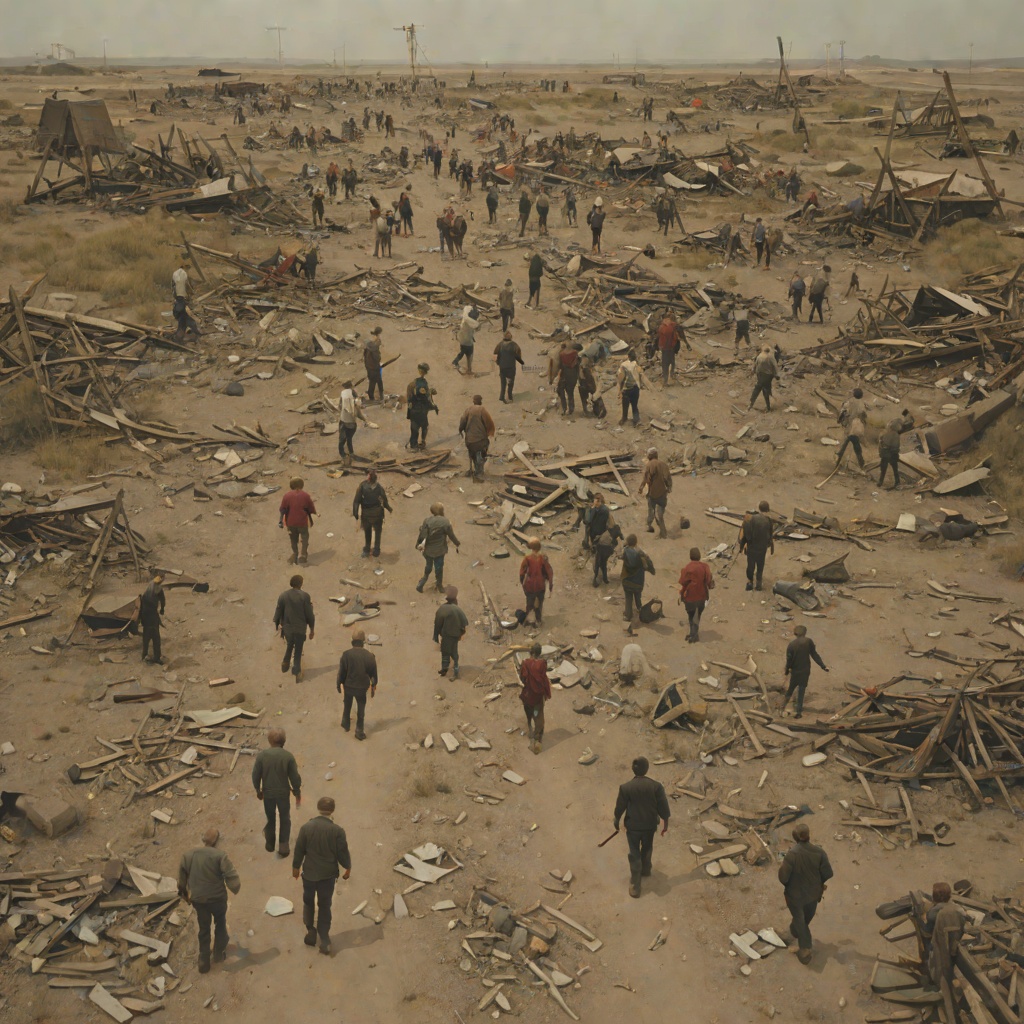
The race repeatedly converts individual lives into numerical information. The Major’s raised hand delays the start even after Garraty’s watch reaches 9:00, making the official gesture—not the boys’ private clocks—the measure that governs reality. After Ewing is shot, the survivors are described as odds adjusted in their favor; after further losses, Garraty imagines himself reduced to a name, number, elimination distance, and newspaper headline. Stebbins belongs to this system but seems to inhabit its logic consciously. Where others struggle against becoming statistics, he appears to know the mechanism that produces them.
Relationships and Revealed Motive
Stebbins’s relationship with Garraty develops through questions rather than intimacy. Garraty repeatedly seeks an explanation for his calm, his predictions, and his reason for remaining in the Walk. Stebbins answers selectively, preserving distance while encouraging Garraty to keep asking. This pattern makes him a kind of withholding interlocutor: he is not a guide in any benevolent sense, but the person who possesses a hidden key to the contest and releases it only when the surrounding ordeal has made the revelation most destabilizing.
His connection to the Major is the decisive secret. In the rain, Stebbins identifies himself as the rabbit and explains the image through the mechanical lure used in dog races: the greyhounds can never catch the cutout because it is not flesh and blood, while the dogs are. The analogy recasts the Walkers as pursuing bodies and Stebbins as an engineered object designed to remain just beyond their reach. It also explains why his position has seemed so fixed and why his confidence has exceeded ordinary competitive hope.
Stebbins then declares that the Major is his father. The revelation changes the meaning of his earlier behavior. His silence at the numbering, his uncanny certainty, and his ability to predict the Major’s arrival no longer look like isolated eccentricities. They become signs of a concealed relation to the official authority directing the Long Walk. Yet the confession does not make Stebbins fully intelligible. His eyes grow wild and gleeful, and his manner becomes unmistakably mad. The secret supplies a cause for his role without restoring psychological stability; instead, it binds family, spectacle, and violence into one disturbing structure.
The Rabbit Metaphor
Stebbins’s rabbit identity is more than a nickname. It describes a position within a system of pursuit in which the apparent contestant may also be part of the machinery that keeps the contest moving. The mechanical rabbit is reliable because it cannot be caught by accident, fatigue, or sympathy. Stebbins’s explanation consequently places his human body in tension with an artificial function. He walks among boys who bleed, weaken, and die, yet understands himself through an object whose purpose is to make pursuit endless.
The metaphor also exposes the false promise of competition. The other Walkers may imagine that they are moving toward the Prize, but the rabbit’s function is to keep desire directed forward while the bodies pursuing it are destroyed. Stebbins’s certainty that he will win can therefore sound less like ordinary ambition than identification with the race’s controlling design. He is both a participant and the lure that makes participation continue.
His final speech pushes the metaphor toward grotesque transformation. He suggests that the Major may have conjured him and changed him into a rabbit, while also imagining a possible end to the condition of being rabbits, grunting pigs, or sheep. The movement from animal labels to “people” is presented amid sexualized and degrading images, and his wild elation makes the aspiration feel contaminated rather than emancipatory. Stebbins briefly gestures toward human freedom, but he does so from within a language of madness produced by the same spectacle he claims to understand.
Narrative Role and Ending
Stebbins functions as the Long Walk’s delayed explanation of itself. Early scenes create an interpretive gap around him; later scenes fill that gap with prediction, endurance, metaphor, and finally genealogy. The narrative does not reveal his importance at once. Instead, it lets Garraty experience him first as a visual anomaly, then as a confident competitor, and only afterward as the Major’s son. This sequence makes the revelation retrospective: earlier details acquire new significance without becoming fully resolved.
His ending is inseparable from the Walk’s public violence. As Stebbins proclaims his parentage, the crowd responds with a huge, mindless cheer, but the crowd has not necessarily heard or understood him. The guns are what it celebrates, and Pastor rolls over dead. The juxtaposition is crucial. Stebbins’s deepest disclosure occurs inside a public noise that converts every human revelation into spectacle, while death remains the event the audience can recognize and reward. His private truth is swallowed by the machinery of the Event even as it exposes the machinery’s intimate connection to the Major.
Stebbins therefore remains both a character and a structural device: a hidden relation, a recurring omen, a rival who seems to know the rules from inside, and an image of the human body reduced to a moving target. His final disclosure does not liberate him from the Long Walk’s logic. It reveals how thoroughly he has been shaped by it, and leaves the reader with the unnerving possibility that the race’s most mysterious Walker is also one of its most intimate products.