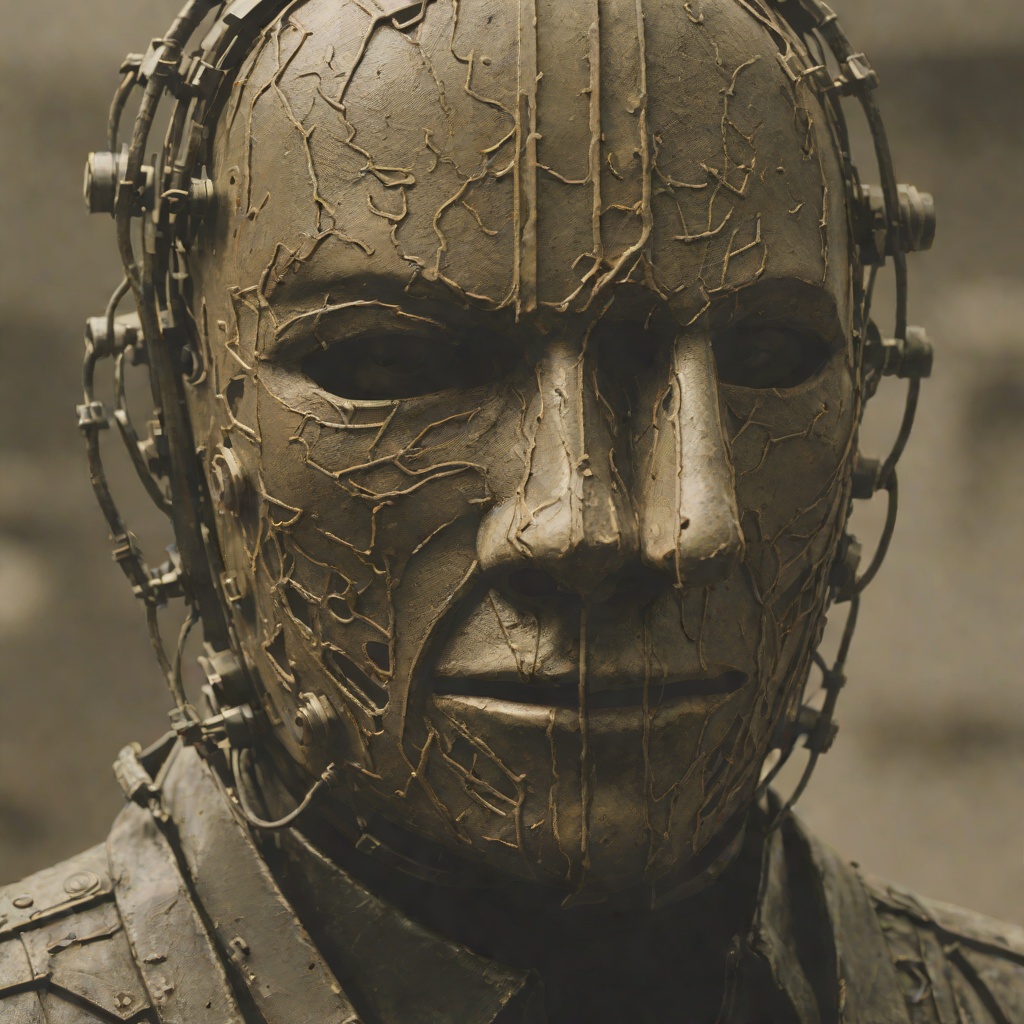
Stebbins’s revelation
The Long WalkStebbins’s revelation is the turning point at which Stebbins’s inscrutable role in the Long Walk becomes legible. After Garraty presses him to explain why he is there and why he walks, Stebbins identifies himself as the “rabbit,” then discloses that the Major is his father. The revelation joins a hidden family claim to the public machinery of the Walk: Stebbins has not merely endured the contest as one walker among many, but has been used to make the others run harder and farther, even as he pursues recognition from the man who designed his role.
The Confession and Its Immediate Setting
The disclosure follows a moment of pressure rather than voluntary intimacy. Garraty challenges Stebbins to speak now that the three of them may not remain together much longer, and Stebbins responds by vomiting the crackers and peanut butter he has eaten before receiving a warning. That physical failure matters because Stebbins has seemed almost unnaturally controlled throughout the Walk; his body finally contradicts the invulnerability he has performed. Garraty then demands that he explain himself, and Stebbins answers by distinguishing two questions: why he is present and why he continues to walk.
Stebbins’s first answer is the image of the mechanical rabbit at a dog race. The rabbit is a cutout attached to cogs and wheels, always just beyond the dogs’ reach; unlike the dogs, it is not flesh and blood and therefore does not tire or suffer in the same way. By calling himself that figure, Stebbins explains his practical function within the contest. He has been made into an unreachable standard whose pace keeps the other walkers pursuing an artificial target, although the supposed machine is revealed to be a vulnerable human body.
The Major’s Hidden Design
Stebbins then states that the Major is his father, making the revelation both a secret of parentage and an explanation of the Walk’s structure. He says that the Major made him his rabbit, a small gray lure intended to make the remaining “dogs” run faster and farther. The image clarifies why Stebbins has appeared so difficult to read: his apparent superiority is not simply an individual talent but part of a role assigned within the event’s design. His endurance has functioned as an instrument for increasing the pressure on everyone else.
The confession also casts earlier scenes in a harsher light. The Long Walk begins through official identity checks, with a blue plastic identification card consumed by a computer terminal at the guarded gate, and proceeds under the Major’s impersonal authority: when the starting signal comes, the walkers move under his expressionless gaze and the soldiers’ enforcement. Ewing’s shooting demonstrates the rule’s lethal finality, while Hank Olson’s attack on the halftrack shows the armed system responding to resistance with coordinated force. Against that background, Stebbins’s account reveals that the contest’s violence is not only policed from outside; it is also shaped from within by a human lure deliberately positioned to exhaust the participants.
Recognition, Revenge, and the Prize
Stebbins says he had not believed the Major knew that he was his son, and he describes his plan as a public surprise. His objective was not merely survival or victory. If he won, he intended to use the Prize to ask to be taken into the Major’s house. The desired reward therefore exposes the emotional center of the revelation: Stebbins wants acknowledgment from the father whose authority has simultaneously exploited and excluded him.
That motive gives the event the structure of a distorted recognition plot. The son seeks admission into the father’s household by conquering the father’s own lethal spectacle, while the father has converted the son into a tool for disciplining other bodies. Stebbins’s ambition is thus both rebellious and dependent. He wants to spring the truth on the Major and the public, yet the form of recognition he imagines remains incorporation into the Major’s house. The Prize becomes less a freedom than a demand that the system’s ruler finally name the relationship his system has concealed.
Exposure and Consequences
The confession does not produce reconciliation. Stebbins’s eyes become wild and gleeful, and Garraty and Peter McVries recoil from his stare; the disclosure makes him appear not liberated but dangerously unmoored. At the same time, the crowd’s immense cheer is directed toward gunfire and the death of Pastor, so the spectators do not meaningfully receive or answer the secret. The public setting absorbs the revelation into the event’s ongoing spectacle, where death is louder than explanation.
Stebbins’s admission also reverses the apparent hierarchy among the final walkers. He has seemed like the figure who can remain ahead of exhaustion, but he concedes that the rabbit is flesh and blood after all. He anticipates a progressive bodily collapse, from walking and talking toward crawling, and recognizes that the role designed to propel others has limits. The revelation therefore punctures the fantasy that the system possesses an inexhaustible human engine.
Narrative Significance and Ending
As a narrative device, Stebbins’s revelation converts mystery into causality. His cryptic behavior, extraordinary endurance, and psychological games are gathered into a single explanation: he has been both participant and instrument, driven by a hidden paternal relationship and positioned to intensify the contest. The disclosure also makes the Major’s authority more intimate and more sinister. The same figure who appears as the formal administrator of the Walk is revealed as Stebbins’s father, so institutional control and damaged family relation occupy the same structure.
The consequences continue after the secret is spoken. Peter McVries eventually surrenders by sitting cross-legged on the pavement despite Garraty’s attempt to keep him moving, and Stebbins’s own end follows after the final confrontation. Garraty is left alone on the road while the Major approaches in a jeep, saluting as though ready to grant the Prize, and Stebbins is shot again after already being dead. The promised recognition never becomes a repaired family bond. Instead, Stebbins’s revelation remains the knowledge that the Long Walk has used kinship, ambition, and bodily endurance alike as components of its machinery.