The Oldtown turnpike salute
The Long WalkThe Oldtown turnpike salute is the Long Walk’s most concentrated collision between military ceremony and exhausted human resistance. Entering Oldtown around midnight, the Walkers are absorbed into a carefully staged public spectacle of lights, noise, and official authority. The soldiers’ formal rifle salute is answered by the Walkers’ vulgar raspberry, transforming obedience into mockery for a single beat before the state’s ceremony resumes its control.
Setting and Preparation
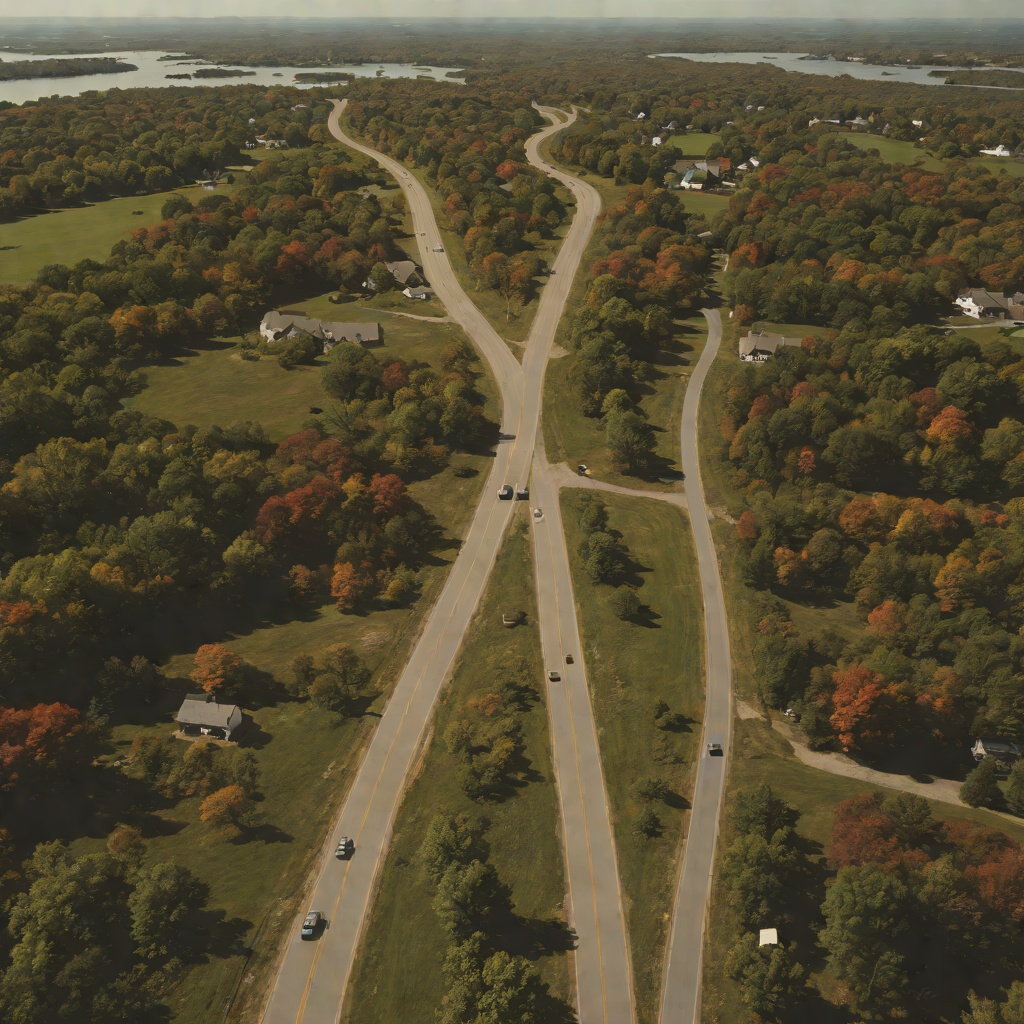
The event begins as the Walkers pass through Oldtown by way of feeder roads and Route 2. Their passage is already a spectacle: arc-sodium lamps turn night into a glaring, shadowless day, while confetti, newspaper, telephone-book fragments, and toilet paper stream from the upper stories. The celebration resembles a ticker-tape parade, but its apparent festivity is inseparable from the deaths and exhaustion accumulating along the road. The crowd receives the Walkers as public figures even as the state treats them as bodies moving through a regulated ordeal.
The turnpike provides a more controlled stage than the town center. Peter McVries wakes Ray Garraty and tells him that the Walkers are going onto the turnpike, where a color guard has been assembled and a four-hundred-gun salute is expected. Garraty, dulled by sleep and by the repeated sound of executions, initially shows no interest. Peter McVries insists that the important point is not merely what the soldiers will do, but what the Walkers will do afterward: they will answer with a raspberry. Because the group has been reduced and many participants are failing, the proposed gesture is revised from a forty-six-man response to a forty-man one. The shrinking number makes the joke darker; even the size of the insult is measured by attrition.
The Official Ceremony
The entrance ramp rises beneath the Walkers’ feet and leads them into the first wash of overhead light. The crowd has been displaced along the spiral ramp, leaving the route lined by soldiers in scarlet dress uniforms. Their polished appearance contrasts sharply with the dusty halftrack and the ordinary soldiers accompanying the Walkers. The color guard holds its rifles at high port, creating an image of ceremonial order above a restless sea of spectators.
The ramp seems endless, and its silence is almost more oppressive than the cheering below. The Walkers hear their own footfalls and breathing while the soldiers’ uniforms and weapons turn the ascent into a passage through state power. The ceremony does not offer the participants honor as autonomous people; it incorporates their suffering into an official display. Their bodies provide the moving center of the pageant, while the soldiers define its boundaries and possess the means to end any individual body’s participation.
The Major’s electronically amplified voice initiates the formal sequence. He commands, "Pre-sent harms!" and the weapons strike flesh as the rifles are brought into position. The command makes the scene’s contradiction explicit: a salute associated with respect is performed by men whose authority is grounded in the capacity to kill. The Walkers are required to continue through the ritual under the same military system that has already enforced the rules of the Long Walk with gunfire.
The Walkers’ Counter-Salute
The Walkers’ response is collective but precarious. They prepare to answer the soldiers’ formal display with a raspberry, a deliberately crude sound that refuses the emotional language of military honor. The act does not challenge the soldiers physically, and it cannot interrupt the rules. Its force lies in exposing the ceremony as vulnerable to ridicule. For a moment, the Walkers cease to be merely numbered subjects receiving orders and become a group capable of producing an answer together.
The Major gives the next command, "Salute ready!" Garraty draws breath and holds it. When the order "Fire!" comes, the Walkers produce only a pitiful, isolated noise. It is not repeated. The intended mass gesture collapses under exhaustion, fear, and the shrinking population of the Walk. The color guard’s wooden faces do not change, yet their stillness seems to communicate reproach. The official ceremony therefore wins on its own terms: disciplined, coordinated, and backed by weapons, it overwhelms the Walkers’ improvised act of defiance.
Peter McVries reacts by abandoning the attempt to participate in the spectacle. He turns around and walks frontwards again with his head down. His movement is a small withdrawal from the failed joke, but it also reveals the cost of the scene. The Walkers can mock the ceremony only briefly; they cannot escape the road, the soldiers, or the demand to keep moving.
Consequences and Significance
No death is recorded as occurring during the Oldtown passage itself, a temporary interruption in the otherwise continuous violence of the Long Walk. Yet the absence of a shooting does not make the event harmless. The Walkers enter Oldtown amid celebration and leave it along the Stillwater River in the early morning of May 3, surrounded by the ripe chemical smell of the paper mill, sawdust piles, pulpwood stacks, and the suggestion of industrial illness. The public festival gives way to a polluted landscape, linking the turnpike’s polished military spectacle to a broader world in which human life is organized, consumed, and discarded.
The salute also foreshadows later, larger spectacles. At the Massachusetts crossing, cannons, fireworks, bands, and an enormous crowd transform the Walk into an even greater public pageant. At the end, the Major stands in a jeep giving a stiff salute while offering the surviving Walker the Prize. The Oldtown exchange is therefore a miniature of the entire contest: official ceremony presents coercion as honor, the crowd converts suffering into entertainment, and the participants search for some remaining gesture of agency. The raspberry fails as a practical revolt, but its failure clarifies the Walk’s structure. The state can command bodies and control the meaning of the event in public, yet it cannot entirely prevent the participants from recognizing—and briefly ridiculing—the machinery that governs them.