Warning system
The Long WalkThe Warning system is the Long Walk’s central disciplinary device, translating exhaustion into a sequence of recorded infractions and making lethal state violence appear orderly, measurable, and rule-bound. Its decisive function is not merely to regulate speed. By placing each Walker under continuous observation, it forces him to manage his own body against a precise threshold while the soldiers, machines, officials, and crowd convert that struggle into an event.
Definition and Operation
The system is tied to the Walk’s four-mile-per-hour minimum. A Walker who falls below that speed receives a warning rather than immediate elimination, and the announcement is made publicly: the first recorded example is the shouted "Warning! Warning 88!" directed at Stebbins. The warning is therefore both a bodily judgment and a public signal. It identifies the failing Walker by number, tells everyone nearby that the monitored limit has been breached, and turns private fatigue into an observable status within the competition.
The rules allow three warnings. The fourth time a Walker falls below four miles an hour, he is out of the Walk. The system nevertheless includes a mechanism for erasing accumulated danger: if a Walker continues for an hour without receiving a fresh warning, one old warning disappears. With three warnings, three hours of uninterrupted walking can return him to safety. This arrangement gives the system a rhythm of threat and temporary reprieve, but it never removes the underlying danger. Recovery is not rest; it is continued performance under surveillance.
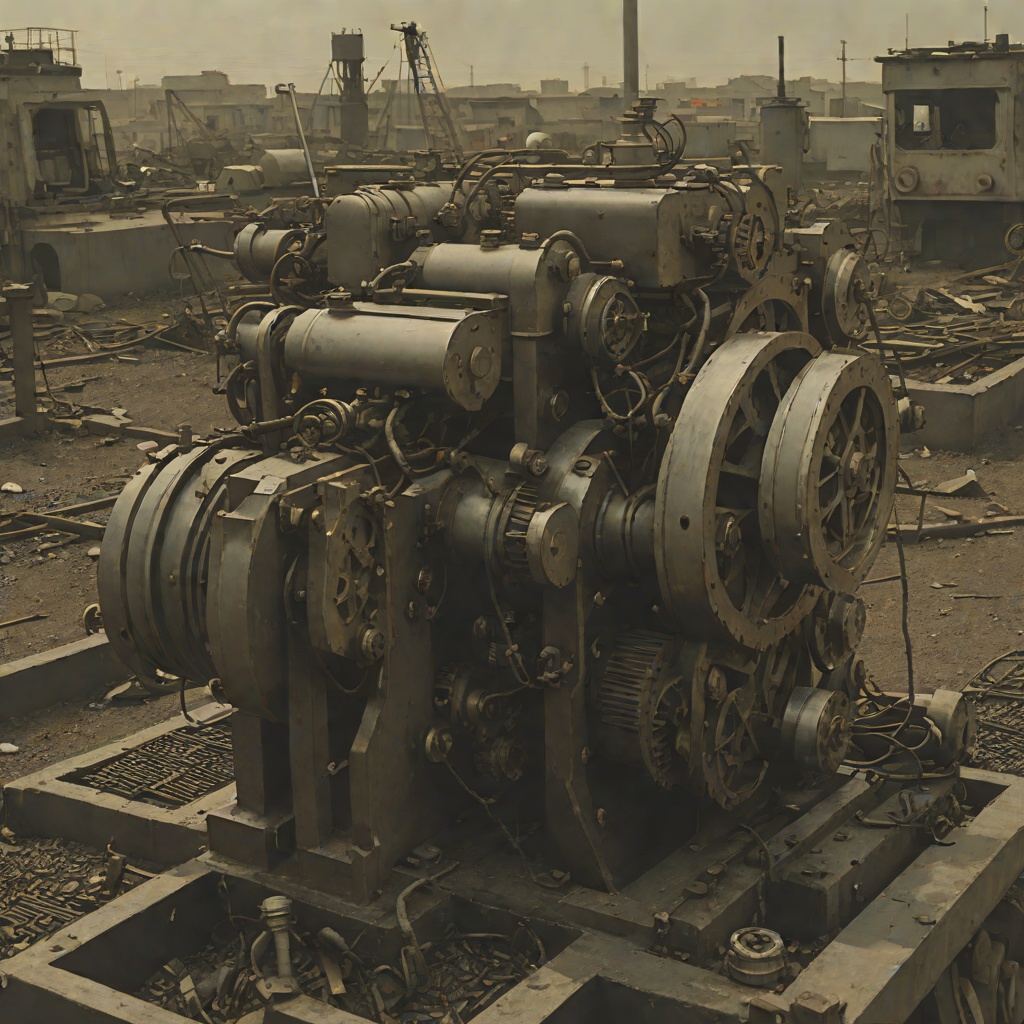
The machinery enforcing the rule is as important as the rule itself. A halftrack travels beside the Walkers, its small radar dishes turning busily while an onboard computer monitors each person’s speed. The cutoff is exactly four miles an hour. The warning system thus joins mechanical measurement to armed enforcement: the computer detects the infraction, the soldier announces it with a stainless-steel chronometer in hand, and the state retains the power to complete the process with a rifle.
Early Demonstrations of the Rule
Stebbins’s first warning shows how the system can be used strategically. Because he takes it while still fresh, Olson recognizes that he can learn where the limit lies and then shed the warning by walking long enough without another. The incident teaches the Walkers that warnings are not simply signs of weakness; they can also be deliberately tested, managed, and incorporated into a personal strategy. The warning is a penalty, but it is also information about the exact edge of survival.
The same logic becomes more frightening in Barkovitch’s case. After a warning, he stops to retie his shoe, and the announcement escalates to "Third warning, 5. Final warning." The other Walkers turn and walk backward to watch. Their attention is not compassionate so much as compelled: the system has made the remaining seconds of another boy’s life into a visible countdown. Barkovitch’s danger is especially stark because a trivial physical interruption, combined with the rigid speed rule, can place him immediately beside death.
Larson’s episode exposes the gap between ordinary bodily expectation and the Walk’s artificial law. He sits down and explains that he is only going to rest, asking whether a person can walk all the time. The soldier answers with a second warning. Larson believes that he can recover and catch up, but the system recognizes no distinction between resting, lagging, or permanently failing. It evaluates only the measurable relation between his body and the required speed. The warning’s apparent moderation therefore conceals a refusal to acknowledge ordinary human limits.
Enforcement and Consequences
The Warning system’s most consequential feature is the continuity between warning and execution. Ewing falls below speed for the last time while clustered with other boys. The soldiers push the group aside, drag him to the shoulder, pin his arms behind him, and shoot him in the head. His death demonstrates that the “ticket” is not a metaphorical loss or sporting disqualification. The final failure of the body is converted directly into authorized killing, carried out by trained soldiers as routine procedure.
The same structure governs Olson’s attack on the halftrack. The Walkers know that the soldiers are the agents behind the warnings and the shooting, so Olson’s assault is directed at the enforcement apparatus itself. He climbs onto the halftrack, seizes a rifle barrel, and yanks it from a soldier’s hands. The soldiers respond by bringing their guns around together; one bullet enters Olson’s belly and exits through his back, but he continues climbing and grabs another weapon as it fires. His action reveals the violence that the warning announcements keep partially hidden: behind the impersonal language of speed and numbers stands a fully armed power prepared to kill.
At the opposite end of the process stands the Major. He announces distances and addresses the Walkers as an official representative of the event, while the soldiers execute its penalties. When the Major later appears holding a stiff salute and ready to grant the Prize, the same authority that administers elimination is presented as the source of reward. The system binds punishment and prize together, making the state both the manager of the danger and the owner of the promised outcome.
Psychological and Social Effects
Because warnings are announced aloud, they reorganize the Walkers’ attention. A warning interrupts conversation, draws eyes toward the vulnerable boy, and makes everyone calculate how much time remains before another failure. The Walkers are not merely watched by officials; they watch one another through the categories supplied by the system. Olson interprets Stebbins’s warning, the group observes Barkovitch’s final warning, and Garraty feels the shrinking seconds of another person’s chance. Surveillance becomes collective, even when it produces disgust, fear, or helplessness rather than solidarity.
The system also teaches self-correction. Garraty knows the instruction to conserve energy whenever possible, yet when Barkovitch receives his final warning he cannot calmly continue; he turns back and watches. The rule therefore regulates more than pace. It shapes posture, attention, emotional response, and the use of time. A Walker must decide whether to spend energy looking backward, whether to accelerate, and whether a warning is worth risking as information. Every choice occurs within a narrowing field defined by the chronometer and the possibility of gunfire.
Its language creates a false separation between administration and death. “Warning,” “final warning,” and “out of the Walk” sound like procedural stages, but the narrative repeatedly reveals what those stages mean in flesh. Ewing’s convulsively kicking leg and Olson’s bullet-torn body expose the human consequence behind the official vocabulary. The system’s power depends on this translation of suffering into clean units: a number, a warning count, a distance, a time.
Narrative Significance
The Warning system gives the Long Walk a program-like structure in which every participant understands the rules and can, in principle, calculate his position. That calculability produces an appearance of fairness. The Walkers receive the same nominal threshold, the same warning allowance, and the same announced procedures. Yet the equal rule does not create equal conditions. Bodies tire differently, accidents occur, and a moment spent tying a shoe can have the same administrative consequence as a deeper physical collapse. The system individualizes responsibility while concealing the larger coercive arrangement that makes continued walking the only alternative to death.
Its most disturbing irony is that the warnings appear to preserve life. They postpone immediate punishment, offer a chance to recover an old warning, and allow a fresh Walker to learn the limit without being eliminated at once. But each concession extends participation in the same lethal mechanism. The Walkers are invited to regard survival as successful rule management, even though the rule has already defined their exhaustion as punishable failure.
The system also compresses the entire event into a repeatable formula: monitor the body, announce the breach, allow limited recovery, and shoot the final failure. The formula governs Stebbins, Barkovitch, Larson, and Ewing in different circumstances, while Olson’s rebellion exposes the armed structure beneath it. By the end, the Warning system has made death legible as an entry in the event’s progression, while the Prize gives that progression its final official justification. Its true achievement is administrative: it makes a mass spectacle of killing seem like the predictable outcome of a rule that the victims supposedly chose to enter.