
Objects as Maternal Doubles
The Lost DaughterMina, Elena’s doll, and the fruit-peel snake connect childhood play to maternal care, resentment, and Leda’s uncertain return to family life.
increasing Bearing strength in each event
 decreasing
Bearing strength in each eventdecreasingMina Remembered
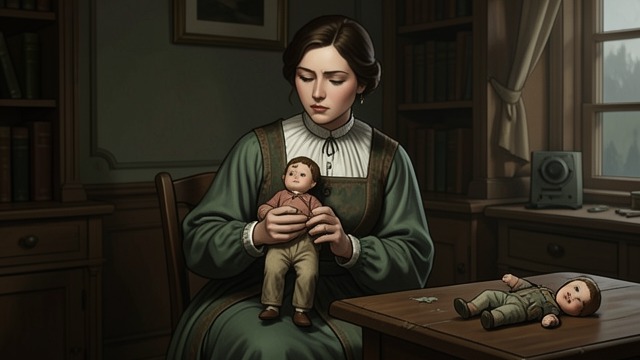
Mina Remembered
A childhood possession
The doll brings Leda back to Mina, her own childhood toy. She recalls how her mother resisted being treated as a doll, while Leda later tried to meet Bianca’s wish for such play.
Care and possession
The memory reveals that a toy can stand for intimacy, but also for the caregiver’s limits. Leda’s attachment to Nani is shaped by an older unresolved history of wanting to handle and care for another body.
Bianca Rejects Mina
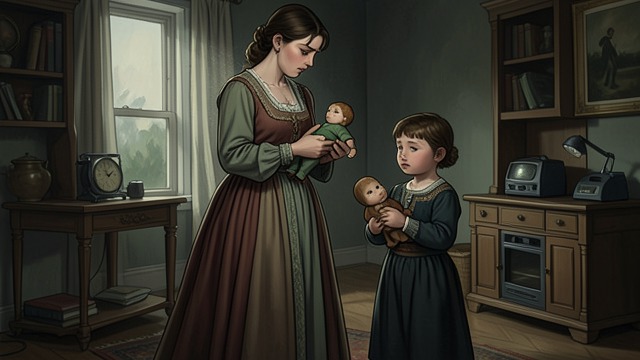
Bianca Rejects Mina
A gift refused
Leda gives Bianca Mina, expecting the child to love the doll as she had. Bianca prefers a different toy, and Leda experiences the choice as a personal slight.
Possessiveness erupts
When Bianca damages Mina, Leda takes the doll back and throws it away. The scene exposes a mother’s claim on her own childhood objects and the danger of turning a child’s play into an adult’s demand for recognition.
The Snake as Skill

The Snake as Skill
A repeated request
Bianca asks Leda to peel an apple into one unbroken strip, a small skill that appears almost magical to the child. Leda discovers that she values the admiration attached to this ordinary act.
A fragile intimacy
The fruit-peel snake becomes a ritual through which the girls seek Leda’s attention and competence. Its significance lies in the modest pleasure of being able to give something specific and recognizable.
The Last Orange
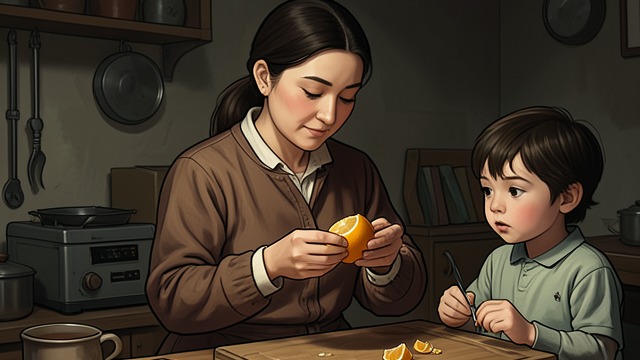
The Last Orange
A final performance
Before departing, Leda peels an orange for Bianca and Marta at their request. The girls watch her closely, hoping that the familiar gesture might hold her in the household.
Care cannot detain her
Leda leaves once the orange is peeled. The act preserves tenderness without preventing abandonment, showing why the same gesture can mean comfort to the children and an unbearable claim to their mother.
Nani as a Confession
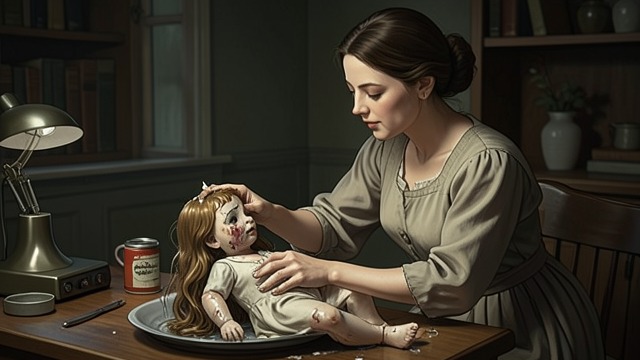
Nani as a Confession
A toy is tended
Leda dresses and washes Nani, addressing her with an affectionate nickname. She recognizes that her care for the doll is entangled with memories of her own daughters and with her refusal to return the toy.
Meaning remains unstable
The doll is neither merely stolen property nor a complete substitute for a child. It gathers Leda’s play, guilt, bodily memories, and desire for distance into one damaged object.
During Leda’s first night with Nani
When Bianca is about three
During the girls’ early childhood
When Leda leaves the girls
The final day with the doll
