Ambivalence of motherhood
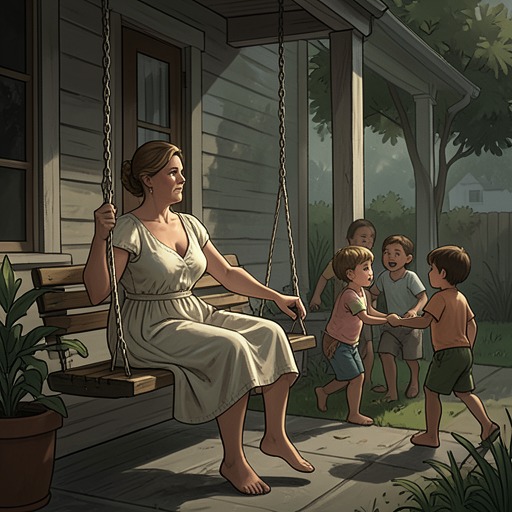
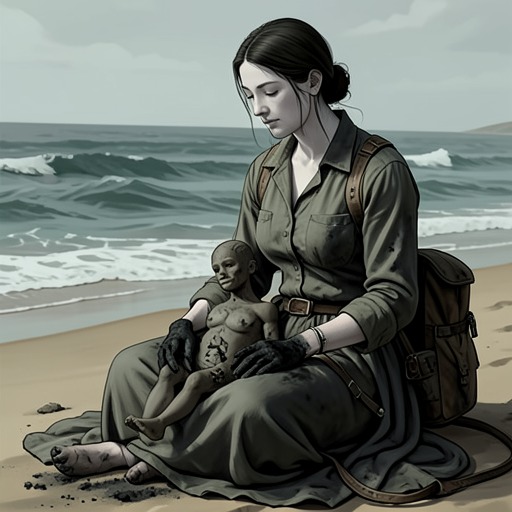
The Lost DaughterAmbivalence of motherhood is a recurring tension in Leda’s reflections: motherhood binds her to her daughters through love and practical care, yet also brings bodily estrangement, exhaustion, anger, and a desire to reclaim a life beyond caregiving. The novel refuses to reduce these contradictions to either maternal devotion or rejection. Instead, it follows how care and injury, responsibility and resentment, can occur within the same relationships—and how Leda’s unresolved understanding of her own past shapes her response to Nina and Elena.
The Body and the Idea of Motherhood
Leda’s account of becoming a mother begins with the difference between carrying a child and feeling that the child is simply an extension of oneself. Pregnancy is described as a process in which a life that is hers also seems to move away from her, bringing both a sense of fullness and a recoil from the bodily experience. That divided feeling complicates the familiar expectation that maternal attachment should be immediate and uncomplicated. She remembers having Bianca at twenty-three, while she and Gianni were struggling to secure university jobs; she later planned for Marta partly because people around them, including the couple themselves, believed Bianca should have a sibling. The family’s decision thus belongs not only to private desire but also to shared assumptions about what a child needs.
Leda’s recollection of early childcare makes the conflict more intimate. When Bianca was little, Leda tried to become the doll her daughter could care for, patiently allowing Bianca to give her pretend medicine, brush her teeth, and comb her hair. But Marta’s disrupted sleep and Bianca’s constant demands left Leda exhausted, unable to study, and unable to take pleasure in their play. When Marta cried in another room, Leda felt relief at being pulled away from Bianca, then justified her departure to herself as a response to the younger child’s need. The scene holds tenderness and escape together: she wanted to be a good mother, but caregiving also felt like an interruption from which she welcomed release.
Care, Resentment, and Harm
The gift of Mina exposes another instability in Leda’s maternal feelings. Feeling inadequate and hoping to ease Bianca’s envy of her younger sister, Leda gave her the doll that had belonged to her own childhood. Bianca did not cherish it; she preferred a different doll. Leda felt hurt, and that disappointment sharpened when she found Bianca sitting on Mina on the balcony. Already worn down by lack of sleep, financial strain, and the difficulty of finding time for her work, Leda scolded Bianca and reclaimed the doll as something precious to herself. The episode makes the gift less a simple act of generosity than an attempt to repair Leda’s own sense of failure—an attempt that could not control what Bianca valued.
Her memories also include moments when frustration crossed into violence. While working in the kitchen, absorbed in an essay and anxious about whether it would be completed or published, Leda was startled when five-year-old Bianca struck her ear. Leda responded by hitting Bianca several times, at first as if correcting her, then with an increasing awareness that the child was crying and that the encounter was no longer play. She took Bianca into the hall and shut the door so she could return to her work. Leda’s account does not present this as a successful act of discipline: it marks the point at which pressure and anger became real harm. Her ambition, need for recognition, and wish for time of her own were present in the same cramped domestic space as her daughter’s needs.
Adult Daughters and Unequal Measures of Care
The tension persists after Bianca and Marta grow up. Leda thinks of calling them but anticipates that the conversation will turn to requests and complaints. In her recollection, the sisters have long kept account of whether each received an equal share: first toys, sweets, and kisses, and later clothes, vehicles, and money. Leda recognizes that they read affection through the concrete services and goods she provides, and she imagines that they may eventually treat her as an inheritance to be divided. The thought is presented as her angry, sleepless apprehension, not as proof that her daughters feel no love for her. It shows how maternal care can become entangled with accounting, as affection is measured against what each daughter believes the other has received.
At the same time, Leda describes practical concessions she made to her daughters as adolescents. When Bianca and Marta asked to have the apartment to themselves, she generally gave it up, going to the library or cinema or staying with a friend. She understood this as a way to let them have privacy while avoiding less safe or comfortable alternatives. That history becomes a measure against which she judges Nina’s request to borrow her apartment: the arrangement that felt acceptable for her own daughters does not automatically feel owed to a young woman she barely knows. Leda’s hesitation reveals the limits of her generosity as well as her uncertainty about what responsibility she has assumed toward Nina.
Nina, Elena, and the Limits of Recognition
Leda’s response to Nina changes as she considers what the request means. She senses a bond between them despite their limited acquaintance and imagines that Nina may be asking her not only for access to the apartment but for guidance and support in making a difficult choice. Leda also recognizes that she has helped create the position Nina assigns her: she appeared independent and courageous, while keeping important parts of her own experience private. She had taken Elena’s doll, Nani, and had not told Nina the truth about keeping it. In the kitchen, with the doll on the table, she sees the confusion in her own choices and acknowledges that she has made Nina’s situation more difficult by taking something Elena wants back.
The comparison with Leda’s own departure from her family limits the ease of her self-identification with Nina. Leda left Gianni and her daughters when she believed she had the right to do so; she had professional and social support, and during the three years away she was not alone. She remembers that Gianni did not persecute her, and that she eventually returned to Bianca and Marta. Nina, Leda recognizes, does not have the same protections and faces a more dangerous world. The contrast does not erase Leda’s past or turn it into a simple model for Nina. Instead, it makes Leda confront the difference between being admired as a symbol of freedom and accepting responsibility for another person’s life.
When Nina discovers that Leda kept the doll while Elena was distressed, she reproaches her, takes Nani back, and leaves saying that she wants nothing more from Leda. Leda calls herself an unnatural mother, and Nina agrees; the label crystallizes their conflict without resolving its causes. Leda then offers Nina the apartment keys and says the house will be empty until the end of the month, before turning away and apologizing. The gesture joins belated practical care to an admission that her earlier conduct failed Nina and Elena. Motherhood here is neither absolution nor a fixed identity: it is a relation tested through particular acts, with affection and responsibility unable to undo the consequences of concealment, anger, or neglect.