Leda Leaves Her Husband and Daughters
The Lost DaughterLeda’s departure from Gianni and their daughters is both a decisive break with family life and an act whose motives she struggles to state plainly. She presents the separation as necessary to discover her real possibilities, but her recollection also reveals a less orderly mixture of intellectual ambition, hunger for recognition, attraction to new relationships, and an urgent desire to escape domestic demands. She leaves the children with Gianni and disappears from their lives for three years, turning a private crisis into a prolonged rupture whose consequences reach beyond the moment of departure.
Background and Pressures
Leda’s account places the decision against years in which motherhood and intellectual work competed for time and energy. She had Bianca at twenty-three, while she and Gianni were trying to secure university jobs; he succeeded, while she did not. Marta followed soon afterward. Leda describes pregnancy as an intensely divided bodily experience: the child was part of her life and yet seemed to be moving away from her, toward becoming someone else. The expectation that Bianca needed a sibling helped shape the decision to have Marta, but did not make the demands of caring for two young children easier to bear.
In the years after Marta’s birth, Leda felt unable to study, played with Bianca without joy, and experienced her body as without desire. When Marta cried in another room, attending to her could feel like release from Bianca’s demands. Leda understood that she was repeatedly breaking off one child’s play to care for the other, yet also felt innocent, as if the younger child were pulling her away. This conflicted pattern matters to the later departure: Leda’s account does not describe an uncomplicated rejection of her daughters, but a life in which care, exhaustion, guilt, and the wish to reclaim herself had become difficult to separate.
Recognition and the Decision to Leave
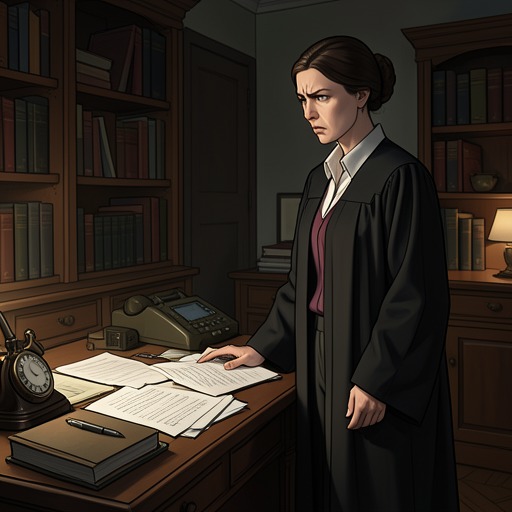
A change in Leda’s professional prospects intensified the conflict. Her academic work began receiving attention, and Professor Hardy was among those who believed in her abilities. Leda later acknowledges that Brenda had given Hardy her text, a crucial contribution she kept secret. She wanted to believe that her recognition was entirely her own achievement, and concealed Brenda’s role even from Gianni and her professor. That concealment reflects how closely intellectual success was tied to Leda’s effort to establish an independent self-image.
Leda travelled to England and returned, then left again. Gianni became alarmed and protested that he could not manage both work and the children. When she told him she was leaving, he thought she might be depressed, sought solutions, and appealed to Leda’s Mother, as well as to Leda’s concern for the children. Leda explained that she needed to find out who she was and what she could do. In retrospect, she recognizes that this was not the whole truth: she already felt newly certain of her abilities, was pursuing ideas and study, and was drawn to men who affirmed her intelligence and helped her test herself. Her stated need for self-understanding was therefore sincere but incomplete, a way to express a break she could not fully explain to her husband.
Absence and Return
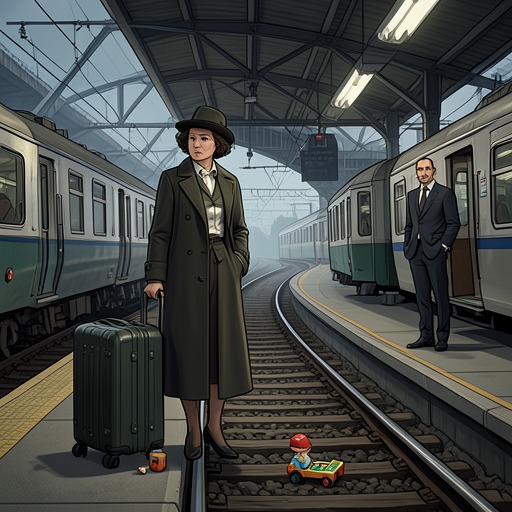
Gianni first tried to be understanding, then suspected that Leda was lying, became angry, and eventually told her to leave if that was what she wanted. He had not believed she could go without the children. Leda did go, leaving them in his care for two months without calling. Gianni pursued her from a distance, but her return was not a reconciliation: she came back only to collect her books and notes, intending to leave for good.
The brief return makes the separation especially tangible. Leda bought dresses for Bianca and Marta and brought them as gifts. The girls wanted help putting them on, while Gianni took Leda aside, asked her to try again, and cried as he told her he loved her. She refused. After their quarrel, Leda shut herself in the kitchen. The children came in together, dressed in their new clothes, and asked her to make a snake from an orange peel. Leda prepared the peel while they watched, but she felt the pull of a life outside the household as irreconcilable with the domestic world they were asking her to re-enter. She finished peeling the orange and left. The small family ritual did not change her decision; it sharpened the contrast between the children’s expectation of their mother and her determination to go.
Consequences and Narrative Significance
From that departure, Leda did not see or hear Bianca and Marta for three years. The separation is not presented as a clean passage from confinement to freedom: it gives Leda distance from domestic life, but her later account is marked by the knowledge of what that distance meant to the children and by the limits of her explanations to them. Her memories hold together the wish to develop her talents, the relief she associated with escape, and the fact that the daughters were left behind while still expecting her care.
The episode also resonates in Leda’s later encounter with Nina. Nina confronts her over the doll and says that Leda had kept it while Nina was overwhelmed by her crying daughter, without telling her or intervening. That accusation does not erase the circumstances of Leda’s departure, but it gives the earlier pattern of absence a renewed consequence: Leda’s private choices have become part of another mother’s crisis. The departure thus functions not only as a biographical turning point, but as the source of a continuing tension between maternal responsibility and a woman’s attempt to claim a life beyond it.